Introduction
You’ve heard whispers about a mysterious book that inspired video games, films, and generations of science fiction writers. Maybe you’ve spotted references to “Stalkers” and strange alien artifacts in gaming forums. The truth is, most science fiction fans miss out on experiencing the raw, philosophical depth of the Strugatsky brothers’ groundbreaking novel. This happens because finding reliable information about Roadside Picinic—from where to get quality versions to understanding its cultural impact—feels scattered across the internet. What if you could access everything you need about this legendary work in one place? This guide delivers exactly that.
What Is Roadside Picnic and Why Does It Matter?
Roadside Picnic stands as a landmark achievement in science fiction literature. Written by Russian authors Arkady and Boris Strugatsky in 1971, this novel presents a world forever changed by an alien visitation. The visitors never made contact—they simply stopped briefly on Earth, leaving behind dangerous artifacts and altered zones of reality.
The story follows Redrick “Red” Schuhart, a stalker who illegally ventures into these hazardous Zones to retrieve alien objects for profit. The narrative explores profound questions about human nature, greed, sacrifice, and the incomprehensibility of truly alien intelligence. The title itself serves as a metaphor: imagine aliens treating Earth like humans treat a roadside stop during a picnic, leaving behind trash and debris without considering the impact on local ant colonies.
This book influenced countless creators, from Andrei Tarkovsky’s film “Stalker” to the S.T.A.L.K.E.R. video game series. Understanding Roadside Picnic means grasping a cornerstone of modern speculative fiction.
The Strugatsky Brothers: Authors Who Defied Convention
Arkady and Boris Strugatsky created some of the most thoughtful science fiction during the Soviet era. They worked as a team—Arkady handled plot and structure while Boris focused on language and philosophical depth. Their collaboration produced works that questioned authority, explored human morality, and challenged readers to think beyond conventional narratives.
Writing Roadside Picnic required courage. Soviet censors viewed the manuscript with suspicion, delaying its publication and forcing edits. The authors embedded social criticism within alien metaphors, a technique that allowed them to discuss forbidden topics. Their approach created layers of meaning that reward careful reading.
The brothers published their uncensored version only after significant struggle. This history adds weight to every page—you’re reading words that survived ideological battles and censorship attempts.
Understanding the Roadside Picnic Book Structure and Plot
The novel unfolds through eight chapters spanning several years of Red Schuhart’s life. Each section reveals more about the Zones, the mysterious artifacts, and the toll this new reality takes on those who dare enter contaminated areas.
The Visitation changed six locations worldwide overnight. Scientists cannot explain what happened. Governments quarantine these areas, but valuable artifacts drive people to risk everything. Stalkers like Red become the only source for these objects, which possess properties that defy physics.
Key artifacts include:
- Empty batteries that produce endless power
- Witches’ jelly that traps and kills intruders
- Death lamps that emit fatal radiation
- Full empties (containers that seem full but weigh nothing)
- A fabled relic believed to fulfill desires is the Golden Sphere.
Red struggles between providing for his family and the moral cost of his work. His daughter Monkey was born with mutations from his Zone exposure. His friend Kirill died during a retrieval mission. These personal tragedies ground the fantastic elements in human suffering.
The story builds toward Red’s final desperate journey into the Zone, seeking the Golden Sphere to save his daughter. The climax forces readers to confront what they would sacrifice for those they love.
Where to Find the Roadside Picnic Book: Editions and Translations
Finding quality versions of this classic requires knowing which editions offer the best translation and complete text. The roadside picnic book exists in multiple English translations, each with distinct characteristics.
Best Print Editions:
- Chicago Review Press (2012) – Features the uncensored text translated by Olena Bormashenko, widely considered the definitive English version
- Gollancz SF Masterworks – UK edition with excellent production quality and thoughtful introduction
- Penguin Modern Classics – Recent release bringing the work to new audiences with updated cover art
What to Look For:
Always verify you’re getting the complete, uncensored translation. Early English versions omitted sections deemed too controversial. The Bormashenko translation restores material that Soviet censors originally removed. Check the copyright page for translator credits and publication notes confirming which source text was used.
Major bookstores stock these editions, but independent science fiction shops often carry multiple versions. While local bookstores promote literary communities that encourage difficult works like these, online vendors offer easy access.
Roadside Picnic PDF: Legal Options and Digital Access
Searching for a roadside picnic pdf leads many readers to pirated copies, but legitimate digital options exist that respect the authors’ estate and current rights holders.
Legal Digital Sources:
- Project Gutenberg – Check if regional copyright allows free access in your country
- Publisher direct sales – Chicago Review Press offers authorized ebook versions through their website
- Library systems – Many public libraries provide digital loans through OverDrive and Libby apps
- Academic databases – University library access sometimes includes the text for research purposes
Format Considerations:
EPUB files work best for most e-readers and tablets. PDF versions maintain original formatting but may display poorly on smaller screens. MOBI formats suit Kindle devices specifically.
Supporting official releases ensures future translations and editions remain economically viable. The small cost compared to pirated versions directly benefits literary preservation efforts. Publishers who see continued interest in translated science fiction invest in bringing more international works to English readers.
Experiencing the Roadside Picnic Audiobook
The roadside picnic audiobook offers a powerful alternative way to experience this atmospheric story. Audio performances bring the grim Zone setting and character desperation to vivid life through skilled narration.
Top Audiobook Versions:
- Audible exclusive – Narrated by Robert Forster, this production captures the bleak Soviet setting with appropriate tone
- Libro.fm – Same recording available through this independent audiobook platform that supports local bookstores
- Library audiobook services – Free checkout options through Hoopla and library partnership platforms
Listening Experience:
The runtime spans approximately 6-7 hours depending on the version. Narrator choice significantly impacts enjoyment—Robert Forster’s gravelly delivery matches Red’s world-weary perspective perfectly. His pacing allows time to absorb philosophical passages without rushing through action sequences.
Audiobooks work exceptionally well for this particular novel because the narrative voice stays intimate and immediate. Red’s first-person accounts feel like confessions, making the audio format natural and immersive. Commutes, workouts, or evening relaxation all provide good contexts for listening.
Sound design in premium productions adds atmospheric effects during Zone sequences, though purists may prefer straight narration without embellishment.
Books Like Roadside Picnic: Essential Recommendations
Readers finishing this novel often crave similar works combining philosophical depth with speculative concepts. Finding books like roadside picnic requires looking for specific qualities: moral ambiguity, incomprehensible alien perspectives, and focus on ordinary people facing extraordinary circumstances.
Must-Read Similar Works:
Annihilation by Jeff VanderMeer – Features an unexplained Zone called Area X where reality operates by alien rules. Scientists enter knowing they likely won’t return unchanged. The ecological horror and transformation themes echo Strugatsky territory while offering unique biological speculation.
Solaris by Stanisław Lem – Explores the impossibility of communication with truly alien intelligence. Scientists studying a sentient ocean planet face manifestations of their deepest memories. Like Roadside Picnic, this questions whether humans can comprehend non-human consciousness.
The Three-Body Problem by Liu Cixin – Combines hard science fiction with cultural revolution history. Humanity discovers alien contact brings existential threat rather than enlightenment. The cosmic perspective and moral complexity match the Strugatsky approach.
Blindsight by Peter Watts – Questions consciousness itself while depicting first contact with incomprehensible aliens. Dense scientific concepts serve philosophical exploration about awareness, intelligence, and what makes us human.
The Southern Reach Trilogy (complete series) – VanderMeer’s full exploration of Area X builds on the Annihilation foundation with bureaucratic horror and reality-warping Zone concepts directly influenced by Roadside Picnic.
Metro 2033 by Dmitry Glukhovsky – Post-apocalyptic Moscow metro system houses survivors of nuclear war facing mutants and mysterious phenomena. The Russian setting and existential dread connect to Roadside Picnic’s atmosphere.
These recommendations share core DNA with the Strugatsky masterwork while offering fresh perspectives on similar themes.
Roadside Picnic Art: Visual Interpretations and Cultural Impact
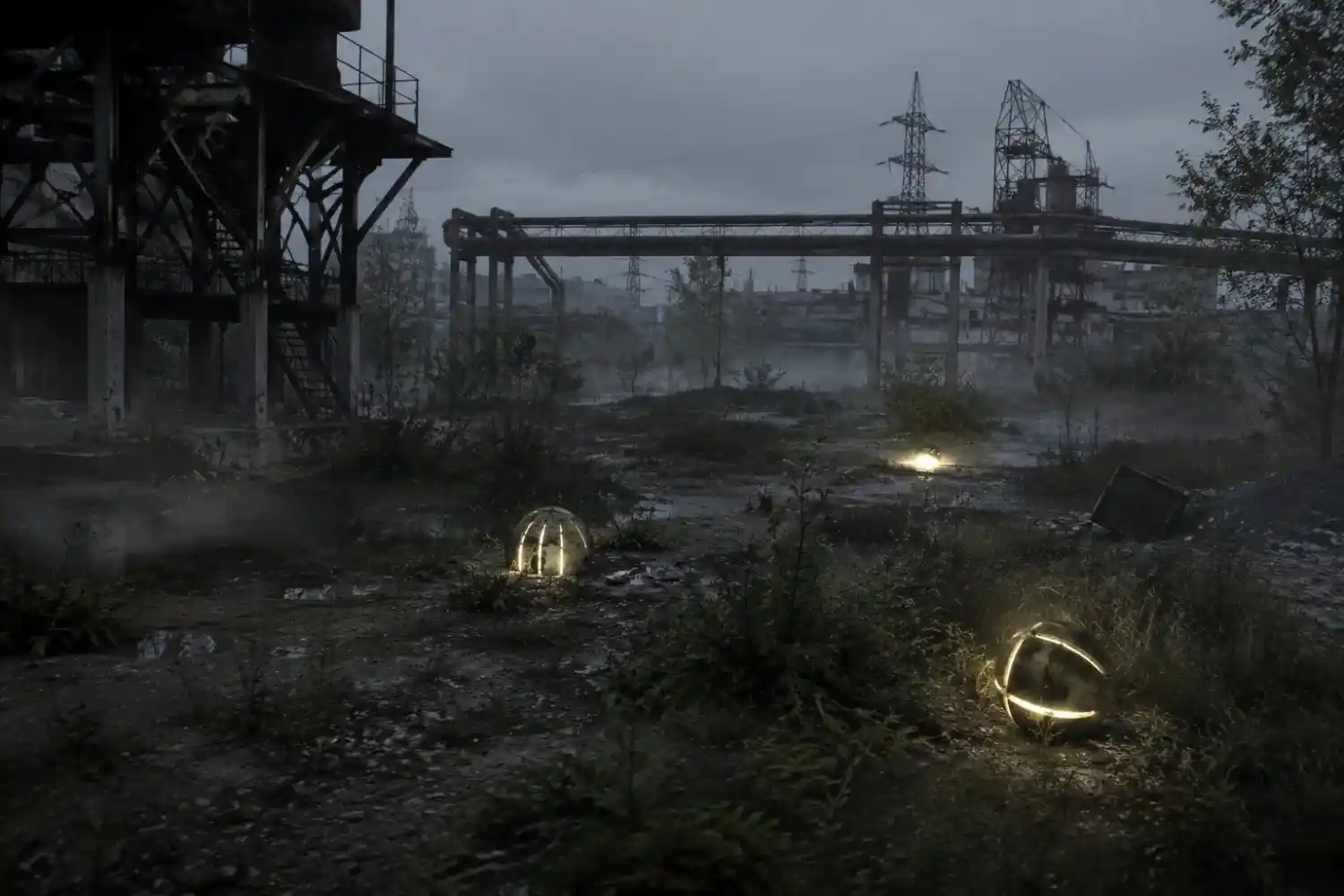
The roadside picnic art created by fans and professional artists reveals how deeply this story penetrates creative imagination. Visual interpretations range from realistic Zone depictions to abstract representations of alien artifacts.
Notable Artistic Interpretations:
- S.T.A.L.K.E.R. game concept art – Designers created hundreds of pieces depicting abandoned Soviet infrastructure and artifact effects
- Film “Stalker” cinematography – Tarkovsky’s long takes of industrial decay inspired by the novel’s atmosphere
- Book cover evolution – Decades of editions showcase different artistic approaches, from realistic to surreal
- Fan illustrations – Communities on platforms like DeviantArt and ArtStation produce continuous creative responses
Artistic Themes:
Common visual motifs include rusted metal, overgrown industrial sites, eerie lighting effects, and human figures dwarfed by mysterious landscapes. Artists capture the contrast between banal Soviet architecture and reality-defying Zone phenomena.
The novel’s influence appears in video game environmental design beyond S.T.A.L.K.E.R. Games like Control, Half-Life 2, and even Fallout series echo the abandoned, dangerous, artifact-filled spaces the Strugatskys imagined. This visual language became shorthand for mysterious, transformed environments in gaming culture.
Collectors seek out limited edition covers featuring commissioned art from science fiction illustrators. The varied interpretations demonstrate how the novel’s core concepts inspire endless creative variation.
The Zone Explained: Artifacts, Dangers, and Mysteries
Understanding the Zone requires accepting that complete understanding remains impossible. The novel deliberately withholds explanations, forcing readers to accept mystery and ambiguity.
Known Zone Characteristics:
- Spatial anomalies – Distance and direction become unreliable; straight paths lead walkers in circles
- Temporal effects – Time flows differently in certain areas, sometimes faster or slower than normal reality
- Gravity variations – Some locations feature reduced or reversed gravitational pull
- Reality fluctuations – Physical laws become negotiable in certain spots
Survival Methods:
Experienced stalkers develop techniques for navigating dangers. They throw bolt nuts ahead to detect invisible anomalies. They memorize safe paths through deadly areas. They move during specific weather conditions when certain threats diminish. These practical details ground the fantastic elements in concrete problem-solving.
The grittiness of stalker life contrasts sharply with romantic adventure narratives. Stalkers die frequently. Injuries from Zone exposure cause slow, painful deterioration. Success means surviving to sell artifacts, not achieving heroic glory.
The Institute researches the Zone through official channels but makes little progress. Scientific method proves inadequate for comprehending the truly alien. This futility emphasizes the novel’s central theme about the limits of human understanding.
Themes and Philosophy: What Roadside Picnic Really Means
The depth of Roadside Picnic emerges from layered themes that reward analysis and discussion. Surface adventure narrative conceals profound philosophical questions.
Core Themes:
The Incomprehensibility of the Truly Alien – Humans assume alien visitors came deliberately, had purposes, left messages. The novel suggests something more humbling: we might mean nothing to intelligences operating beyond our conceptual frameworks. The picnic metaphor captures this perfectly—do humans consider ants when choosing a roadside stop?
Exploitation and Capitalism – Stalkers risk death so wealthy collectors can own curiosities. The Institute uses stalkers as expendable resources. Governments prioritize containment over helping affected populations. The Zone becomes another resource to extract value from, regardless of human cost.
Sacrifice and Redemption – Red’s journey questions what price redemption requires. His ultimate decision compels readers to think about what they would give up for loved ones. The ambiguous ending refuses easy answers about whether his sacrifice matters.
Soviet Social Commentary – Written during Brezhnev’s stagnation period, the novel criticizes bureaucratic indifference, scientific arrogance, and the grinding poverty that drives desperate choices. Censors recognized these critiques, hence their publication resistance.
These themes interweave rather than existing separately. The philosophical density means each reading reveals new layers and connections.
Roadside Picnic vs. Stalker Film: Key Differences
Andrei Tarkovsky’s 1979 film “Stalker” draws inspiration from the novel but transforms it into something distinct. Understanding the differences enhances appreciation for both works.
Major Changes:
Setting and Atmosphere – Tarkovsky removes specific Soviet context, creating a timeless, universal setting. His Zone looks more like industrial decay than alien transformation. The film emphasizes spiritual searching over physical danger.
Character Focus – The film features three characters—Stalker, Writer, and Professor—on a single journey. Red’s family struggles and multiple Zone trips disappear. Tarkovsky explores faith, meaning, and desire through philosophical dialogue.
Pacing – The novel moves through years with action sequences and dramatic events. The film unfolds in real-time contemplation with minimal physical action. Tarkovsky’s long takes force meditative viewing rather than narrative consumption.
The Room – Both feature a wish-granting destination, but Tarkovsky makes the Room central while keeping its power ambiguous. His characters question whether they truly want their wishes fulfilled, adding layers of psychological complexity.
Philosophical Approach – The book questions human comprehension of alien intelligence. The film questions human comprehension of ourselves, our desires, and spiritual meaning. Tarkovsky shifts from science fiction to religious allegory.
Both stand as masterworks in their respective mediums. The film works as spiritual companion rather than faithful adaptation.
Cultural Legacy: How Roadside Picnic Changed Science Fiction
The influence of Roadside Picnic extends far beyond its original publication. Tracking its impact reveals how single works can reshape entire genres and creative fields.
Direct Influences:
- S.T.A.L.K.E.R. game series – Ukrainian developers created detailed game worlds directly based on the novel’s concepts, introducing millions to the Zone idea
- Glukhovsky recognized the Strugatskys as significant influences on his post-apocalyptic vision in the Metro series.
- New Weird movement – Authors like China Miéville and Jeff VanderMeer cite the novel’s incomprehensible alien elements as foundational
Broader Impact:
The book helped establish “Zone fiction” as a recognized subgenre. Stories featuring cordoned areas where reality operates by different rules now appear regularly. The concept proves flexible enough for horror, thriller, and literary fiction applications.
Soviet science fiction gained Western recognition partly through this work’s translation success. Publishers became more willing to invest in Eastern European speculative fiction after seeing reader response.
The philosophical approach—using fantastic elements to explore human nature rather than technology—influenced writers to deepen genre fiction’s intellectual ambitions. Science fiction could be both entertaining and profound, accessible yet complex.
Reading Guide: Getting the Most from Roadside Picnic
Approaching this novel with preparation enhances the reading experience significantly. Certain contextual knowledge and reading strategies unlock deeper appreciation.
Pre-Reading Preparation:
Research basic Soviet history and daily life during the 1960s-70s. Understanding the economic hardships, bureaucratic systems, and cultural context illuminates character motivations. Red’s desperate choices make more sense when you grasp Soviet working-class struggles.
Accept that mysteries remain unsolved. The novel deliberately refuses to explain everything. Readers expecting complete answers about the Visitation or artifact purposes will feel frustrated. Embracing ambiguity allows appreciation of the book’s philosophical approach.
During Reading:
Pay attention to small details about artifacts and their effects. The Strugatskys embedded significant world-building in brief mentions and offhand comments. Careful readers notice patterns and implications that casual reading misses.
Track Red’s moral deterioration and rationalizations. His character arc from reluctant stalker to desperate father drives the emotional core. Notice how his language and justifications shift across chapters.
Consider the wish-granting finale carefully. The ending deliberately creates interpretive space. What Red wishes for, whether the Sphere grants it, and what that means philosophically all remain open to reader judgment.
Post-Reading:
Discuss or journal about the major themes. This novel rewards reflection and conversation. Online communities dedicated to the book offer excellent discussion forums where readers share interpretations.
Explore adaptations and influenced works. Playing S.T.A.L.K.E.R., watching “Stalker,” or reading VanderMeer provides new perspectives on the source material’s concepts.
Teaching Roadside Picnic: Educational Applications
Educators increasingly include Roadside Picnic in science fiction courses, translation studies, and comparative literature programs. The novel offers multiple teaching opportunities across disciplines.
Academic Approaches:
Literature Classes – Examine narrative structure, character development, and theme integration. Compare Soviet science fiction conventions with Western traditions. Analyze translation choices and their impact on meaning.
Philosophy Courses – Use the novel to explore epistemology (how we know what we know), ethics of exploitation, and questions about consciousness and understanding. The Visitation concept provides excellent material for discussing limits of human comprehension.
History and Political Science – Study the novel as historical document revealing Soviet daily life and social criticism. Examine how artists navigated censorship and embedded political commentary in genre fiction.
Creative Writing Programs – Analyze the Strugatsky techniques for world-building through implication rather than exposition. Study how they balance philosophical depth with narrative momentum.
Discussion Questions for Students:
- How does the picnic metaphor shape your understanding of human-alien relations?
- What does Red’s final wish reveal about human nature?
- How do artifacts function as both plot devices and symbolic elements?
- What makes the Zone frightening beyond physical danger?
The novel’s accessibility combined with intellectual depth makes it ideal for classroom use at high school and university levels.
Collecting Roadside Picnic: Editions, Value, and Preservation
Book collectors prize certain editions of Roadside Picnic for their rarity, translation quality, or production values. Understanding the collecting landscape helps enthusiasts make informed decisions.
Valuable Editions:
First Russian Edition (1972) – Original “Piknik na obochine” printings command high prices among Russian literature collectors. Condition greatly affects value, with dust jackets particularly sought after.
First English Translation (1977) – Macmillan published the first English version translated by Antonina Bouis. Early printings, especially signed copies, attract collectors despite translation limitations.
Limited Editions – Specialty publishers occasionally produce numbered, signed editions with unique cover art or introductions by notable science fiction authors. These appreciate in value over time.
Foreign Translations – Complete collections include translations in German, French, Japanese, and other languages, each with distinct cover art and cultural interpretations.
Condition Factors:
Collectors evaluate dust jacket condition, page quality, binding integrity, and previous ownership marks. First editions in pristine condition with intact dust jackets reach premium prices. Reading copies cost significantly less while offering the same textual experience.
Preservation requires proper storage away from direct sunlight, humidity control, and archival-quality protective covers for valuable editions. Serious collectors invest in climate-controlled environments for rare printings.
Frequently Asked Questions
What is the main point of Roadside Picnic?
The novel explores humanity’s insignificance in the cosmic scale and our inability to comprehend truly alien intelligence. The Strugatsky brothers use the Zone and mysterious artifacts to question human assumptions about our importance and ability to understand the universe. The story follows stalker Red Schuhart as he risks everything retrieving alien objects, ultimately seeking a wish-granting artifact to save his mutant daughter. The philosophical core suggests that alien visitors might view Earth with the same indifference humans show to insects at a roadside picnic—we’re simply not significant enough to consider.
Is Roadside Picnic hard to read?
The novel features straightforward prose and clear narrative structure, making it accessible despite deep themes. The Bormashenko translation renders the Russian into natural English without academic stiffness. Chapters follow Red through different periods of his life, creating episodic structure that allows reading in sessions. The philosophical elements emerge through story rather than abstract lectures. Most readers find the book engaging and page-turning rather than difficult, though the ambiguous ending and unexplained mysteries frustrate those expecting complete answers. The emotional impact and human drama carry readers through more abstract concepts.
What should I read after Roadside Picnic?
Start with Solaris by Stanisław Lem for similar themes about incomprehensible alien intelligence and human limitations. Then move to Annihilation by Jeff VanderMeer for a modern take on dangerous transformed zones. The Three-Body Problem by Liu Cixin offers hard science fiction with philosophical depth and cultural richness. For more Strugatsky works, try “Hard to Be a God” or “Definitely Maybe.” The Metro 2033 series provides post-apocalyptic Russian settings with existential themes. Each recommendation shares core qualities—moral ambiguity, ordinary people facing extraordinary situations, and questioning human assumptions about reality and consciousness.
Where can I legally get a Roadside Picnic PDF?
Buy approved ebook copies straight from Chicago Review Press or from well-known ebook sellers including Kobo, Amazon Kindle, Apple Books, and Barnes & Noble Nook. . Many public library systems offer free digital loans through apps like Libby and OverDrive—check your library card eligibility for instant access. Some university libraries provide digital access to students and faculty through academic databases. Project Gutenberg may offer the text if copyright has expired in your region, though this varies by country. Supporting official channels ensures the authors’ estate and current rights holders receive compensation, encouraging future translations of important international science fiction works.
How does the S.T.A.L.K.E.R. game relate to the book?
The game series draws inspiration from Roadside Picnic concepts rather than directly adapting the plot. Developers created the Chernobyl Exclusion Zone as their setting, blending real nuclear disaster history with the novel’s fictional Zone dangers and artifacts. Game mechanics like anomaly detection, artifact hunting, and faction conflicts expand on stalker life described in the book. Character motivations echo Red’s desperation and moral compromises. The atmosphere of abandoned Soviet infrastructure and reality-warping dangers directly channels the Strugatsky vision. Playing the games offers a complementary experience that brings the novel’s concepts to interactive life, though each medium stands independently with distinct strengths.
Why was Roadside Picnic controversial when published?
Soviet censors recognized the embedded social criticism about bureaucratic indifference, scientific arrogance, and the grinding poverty forcing desperate choices. The novel suggested that official institutions failed ordinary people, a dangerous theme during Brezhnev’s era. The ambiguous portrayal of alien contact—neither optimistic nor propagandistic—violated expectations for Soviet science fiction celebrating human achievement and progress. The focus on black market activity, government incompetence, and human suffering contradicted approved narratives about Soviet life. Censors forced cuts and delayed publication repeatedly. Only after persistent negotiation did a modified version appear, with the complete uncensored text emerging later. This struggle against censorship adds historical weight to the reading experience.
Conclusion
Roadside Picnic rewards every minute invested in its pages. By demonstrating that genre works may acquire literary depth while retaining compelling plots, this book revolutionized science fiction. The Strugatsky brothers created characters who feel authentically human facing incomprehensibly alien circumstances. Red’s journey from reluctant stalker to desperate father carries emotional weight that transcends cultural and temporal boundaries.
Whether you choose the traditional book format, engage with a roadside picnic pdf through legitimate channels, or experience the roadside picnic audiobook during your commute, you’re accessing a foundational text of modern speculative fiction. The story’s influence appears in countless games, films, and novels you may have already enjoyed without knowing the source.
Start your journey into the Zone today. Purchase a copy, visit your library, or download the authorized audiobook. Experience the work that asked profound questions about human nature, cosmic insignificance, and the price of love. Then share your thoughts with the global community of readers who continue discovering new meanings in this masterpiece decades after publication.
The Zone awaits. What will you sacrifice to retrieve your deepest wish?