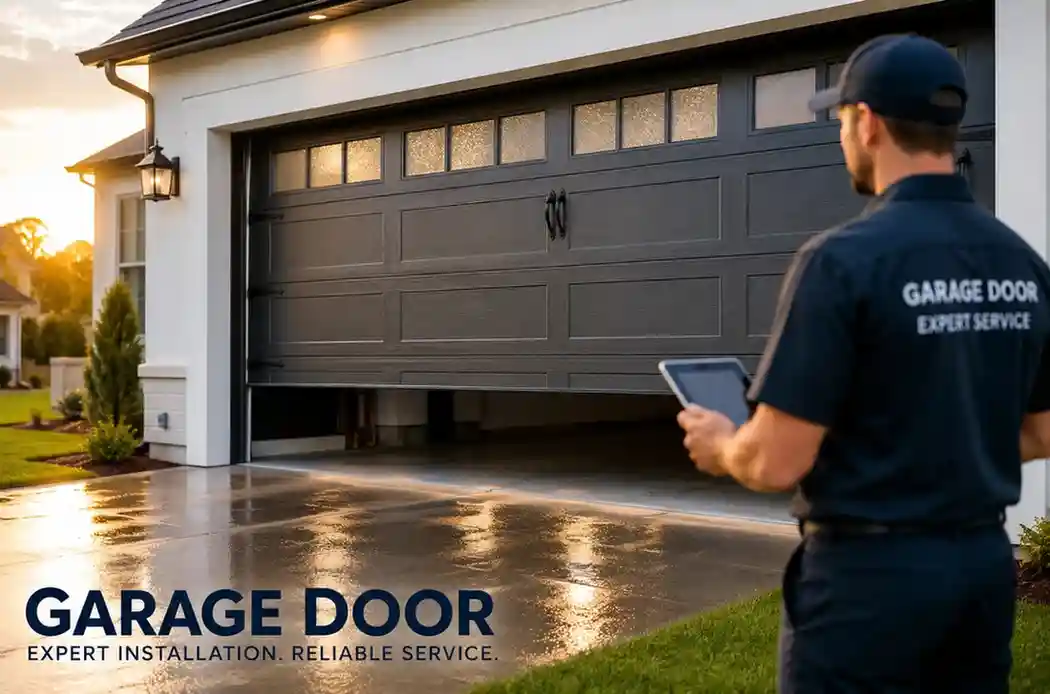
A stuck garage door traps your car, risks your security, and drains your wallet with urgent repair calls. That Stress levels skyrocket when there is an unexpected grinding sound or a door that would not move. This complete manual hands you the exact steps for flawless garage door installation, immediate emergency garage door repair tactics, and maintenance routines that prevent surprises. Take full control—no guesswork, no panic.
Understand Your Garage Door: Types, Materials, and Key Components
There is more to your garage door than just opening and closing. . It shapes curb appeal, insulates your home, and secures everything inside. Pick the wrong type and you face constant repairs. Pick right and it runs silently for decades.
Four main styles dominate the market. Sectional doors roll up on vertical tracks and sit parallel to the ceiling. Roller doors coil into a compact drum above the opening—perfect for short driveways. Side-hinged doors swing outward from the center. Tilt-up canopy doors lift in one piece and slide back.
Material choices directly impact weight, insulation, and upkeep. Steel doors offer strength and low maintenance. Aluminum resists rust in coastal climates. Solid wood gives unmatched character but needs regular painting. Fiberglass handles humidity without warping. Composite wood blends durability with a genuine timber look.
Every garage door depends on a handful of core parts. Heavy-duty torsion springs or extension springs counterbalance the weight. Tracks guide the rollers. A garage door opener pulls or pushes the door using a belt, chain, or screw drive. Safety sensors stop movement if something crosses the path. Cables, hinges, and weatherstripping complete the system. Knowing these components lets you spot trouble before it escalates.
Garage Door Installation: A Professional Process You Can Trust
Garage door installation demands precision. A single miscalculated spring can release stored energy violently.Strict safety procedures are followed by certified specialists to safeguard your family and belongings.
The process begins with exact measurements of the opening, headroom, and side room. Old hardware gets stripped away. New vertical tracks bolt to the wall, leveled to within 1/16 of an inch. Horizontal tracks slope slightly toward the rear to help the door close smoothly. Torsion springs wind to a specific torque using calibrated bars, matching the door’s exact weight. The opener mounts to structural ceiling supports, never to drywall alone. Finally, photo-eye sensors align within six inches of the floor and hardwired to the opener to comply with UL 325 standards (Federal Trade Commission, Automatic Reverse Systems, ftc.gov). A professional team then cycles the door multiple times, fine-tunes the force settings, and confirms the auto-reverse stops on a 2×4 test block.
Choosing professional garage door installation eliminates guesswork. The International Door Association (IDA) reports that improperly installed doors cause a large share of residential garage-related injuries. Protect your warranty too—most manufacturers void coverage if you skip certified installation.
When to Call for Emergency Garage Door Repair
A broken garage door at midnight or before a big storm becomes a security emergency. Emergency garage door repair services respond fast to prevent theft, water damage, and physical danger.
Act immediately when you notice these signs:
- Door hangs crooked or drops fast when released.
- Loud snapping sound from the torsion spring area.
- Opener runs but the door stays shut.
- Bottom panel buckles or splits.
- Door slams to the ground instead of closing gently.
Emergency garage door repair technicians carry common spring sizes, cables, and roller assemblies in their service vans. They reinforce or replace the broken part, rebalance the door, and verify safety reversal within the first hour on site. Many providers offer same-day response for urgent calls. Save a trusted number in your phone before you need it. A quick fix now prevents a burglar from walking straight into your home.
Common Garage Door Problems and Quick Fixes
Most garage door headaches trace back to a handful of simple causes. Fix the small things before they grow into expensive replacements.
- Door won’t open or close: Check the remote battery and wall switch. Clear debris from the safety sensor lenses. Realign sensors until the indicator lights glow steady.
- Noisy operation: Tighten loose bolts on the track brackets. Lubricate rollers and hinges with a silicone spray, not grease. A grinding noise often signals worn bearings in the opener motor.
- Reverses before hitting the floor: Adjust the close-force setting on the opener. Clean or replace grimy safety sensors.
- Sagging sections: Install a strut support bar across the top panel to reinforce it.
- Frozen door to the floor: Gently chip ice away from the bottom seal and pour warm (not boiling) water along the threshold.
Regular inspection of cables and springs uncovers fraying before a dangerous snap. Replace torsion springs only as a matched pair—aging springs weaken at the same rate.
Seasonal Garage Door Maintenance Checklist
A garage door open and close cycles roughly 1,500 times a year. Each season piles on dust, moisture, and temperature swings that degrade moving parts. Stick to a simple schedule.
Spring
- Wash exterior panels with car soap and a soft brush.
- Inspect weatherstripping for cracks, replace with bulb-style vinyl seal.
- Test balance by disconnecting the opener and lifting the door halfway—it must stay still.
Summer
- Lubricate torsion springs with a lithium-based spray; coat hinges, rollers, and bearing plates.
- Listen for squeaks after high-heat expansion.
- Check opener belt or chain tension.
Fall
- Clear leaves and debris from bottom tracks.
- Tighten all track brackets and opener mounting bolts.
- Run the auto-reverse test with a roll of paper towels: door should reverse within two seconds of contact.
Winter
- Apply garage door lubricant rated for sub-zero temperatures.
- Ensure the bottom seal sits flat to block drafts.
- Disconnect the opener and operate manually to detect frozen binds.
A 15-minute seasonal check slashes emergency garage door repair calls by catching wear early.
Safety First: How to Prevent Garage Door Accidents
A garage door weighs between 130 and 400 pounds. That weight becomes lethal when safety systems fail. The U.S. Consumer Product Safety Commission records multiple child injuries from garage doors every year. Prevention demands unshakeable habits.
Teach everyone in the house:
- Never walk under a moving door.
- Keep fingers away from section joints.
- Do not play with the wall button or remote.
- Store remotes out of children’s reach.
Test safety features monthly. Place a 2-inch block of wood flat under the door’s path. Close the door. It must reverse and open within two seconds of touching the block. If it crushes the wood, dial down the closing force or call a pro. Also, block the photo-eye beam while the door closes; the door should immediately reverse. Garage door openers manufactured after 1993 must include this auto-reverse mechanism per federal law. Never disable safety sensors to fix an intermittent problem—you strip away the primary protection.
Smart Garage Door Openers: Upgrade Your Security and Convenience
Modern garage door openers connect to your phone, watch, and voice assistant. Smart controllers let you open or close the garage door from anywhere, check real-time status, and share temporary access with delivery drivers.
Top-rated models from brands like Chamberlain and Genie use encrypted Wi-Fi and deliver instant activity alerts. A built-in camera and two-way audio in premium units allow you to see and speak to anyone in the garage. For homes with uneven floors, battery backup openers ensure the garage door still operates during power outages—crucial in storm zones. Consumer Reports rates belt-drive smart openers as the quietest and most reliable for attached garages.
Installation pairs the opener to an app in minutes. You can then set auto-close timers to never leave the garage door open overnight. Integration with Amazon Key, for instance, lets verified couriers drop packages inside your garage rather than on the porch. This simple upgrade rewrites your home’s entire security posture.
Garage Door Insulation: Lower Energy Bills Instantly
An uninsulated garage door acts like a giant metal heat sink. If your garage is attached or you use it as a workshop, insulation returns its cost in just a few seasons.
Polystyrene and polyurethane are the two insulation types. Polystyrene panels slide into door frames and deliver R-values between 6 and 9.The entire door cavity is filled with polyurethane foam, which adheres to the steel skins and raises R-values above 18 (U.S. Department of Energy, energy.gov). Polyurethane-insulated doors also add strength, resist dents, and dampen noise.
Even a single-layer steel door can gain a thermal barrier by applying reflective foil or rigid foam board to the interior panels. Combine insulation with weatherstripping around the perimeter and a bottom seal enclosed in nylon. You slash heat loss through the garage door by over 70% and stabilize temperatures enough to protect stored paint, tools, and a second refrigerator.
How Much Does a New Garage Door Cost? (And What Impacts the Price)
A new garage door ranges from $750 for basic single-layer steel to $5,000 or more for custom wood with insulated glass. The National Association of Home Builders’ Cost vs. Value report consistently ranks garage door replacement among the top three projects for return on investment—up to 94% of the cost recouped at resale.
Price drivers:
- Size: Single versus double bay.
- Material: Steel costs less than fiberglass, which costs less than solid wood.
- Insulation: Polyurethane adds $200–$600 over non-insulated.
- Windows: Decorative glass inserts raise material and labor.
- Opener inclusion: A new smart opener adds $300–$500 installed.
- Labor: Professional installation accounts for 30–40% of the total.
Warranties shift the long-term value. Steel doors from manufacturers like Clopay often carry lifetime rust-through and 10-year paint warranties. Compare at least three quotes and verify that each includes haul-away of the old garage door, track re-use evaluation, and post-install weather seal.
Choosing the Right Garage Door for Your Home’s Curb Appeal
Your garage door takes up 30% of the home’s front façade. It must echo the architecture, not clash with it.
- Modern farmhouse: Carriage-house steel doors with crossbuck pattern and decorative handles, painted deep charcoal or crisp white.
- Mid-century modern: Clean flush panels, horizontal grooves, solid wood or wood-look composite in warm walnut.
- Coastal cottage: Fiberglass with faux wood grain in driftwood gray; corrosion-resistant hardware.
- Traditional colonial: Raised-panel steel in classic white or almond with arched window insets.
Ask for a digital mockup from your dealer. See the exact door on a photo of your home before spending a dollar. Paint the door to coordinate with the front door and shutters—not to match them perfectly. A two-tone contrast boosts perception of height and value.
DIY Garage Door Repair vs. Hiring a Pro: The Real Trade-offs
Tempting as it is to grab a wrench, garage door repair splits into safe DIY and dangerous pro-only work.
Safe for DIY:
- Sensor alignment and cleaning
- Replacing remote batteries
- Lubricating hinges and rollers
- Reprogramming the keypad
- Weather seal replacement
Leave to a pro:
- Torsion and extension spring replacement
- Cable repair or replacement
- Track realignment or welding
- Opener motor or logic board replacement
- Panel section replacement
Torsion springs store incredible kinetic energy. A slip can slash skin, shatter bones, or worse. The $150–$350 you pay a certified technician for emergency garage door repair or standard spring swap includes calibrated winding tools, correct spring match, and a balanced door. It also brings insurance coverage if anything goes wrong. Weigh the risk honestly. Your safety is worth the service fee.
Extend Your Garage Door’s Life: Lubrication, Balance, and Alignment
Neglect kills garage doors 10 years early. Three simple actions double the lifespan.
- Lubricate twice a year. Spray silicone or white lithium on the torsion spring coils, hinge pins, roller ball bearings, and the opener chain or screw. Wipe remove extra to avoid dirt accumulation.
- Verify the balance each season. To disconnect the opener, pull the emergency release cord. Manually lift the door halfway. It must not drift up or slide down. A door that drops heavily has worn springs and forces The motor burns out due to the opener’s effort.
- Align tracks and tighten hardware. The track gap at the bottom should stay consistent—typically ⅛-inch between the track and the door edge. Loose bolts rattle parts into misalignment fast. Snug everything with a socket wrench.
These three habits prevent most breakdowns that lead to emergency garage door repair calls. They cost almost nothing and take under 20 minutes.
Frequently Asked Questions About Your Garage Door
How frequently should the springs on my garage door be replaced?
Standard torsion springs last 10,000 cycles, roughly 7–10 years for the average household. Heavy-use homes with frequent daily cycling may need replacement in 5 years.Replace both springs simultaneously every time.
Can I install a new garage door opener on my own?
Yes, if you have moderate DIY skills and the opener kit includes a full manual. However, professional garage door installation of the opener guarantees that the safety reversal and photo-eye sensors meet UL 325 standards and won’t void the manufacturer’s warranty.
Why does my garage door reverse for no reason?
Dirty or misaligned safety sensors cause phantom reversing. Clean the lenses with a dry cloth, secure the brackets, and confirm the LED lights on both sensors glow solid. Adjusting the close-force limiter resolves most remaining cases.
For two cars, what size garage door is required?
A standard double garage door measures 16 feet wide by 7 feet high. Some homes require 18×7 or 16×8 dimensions. Measure the rough opening width and headroom before ordering any door.
How much time does it take to fix an emergency garage door?
Most emergency garage door repair jobs—broken spring, snapped cable, off-track door—finish within 60–90 minutes once the technician arrives with the right parts.
Do insulated garage doors really keep the house warmer?
Absolutely. An insulated garage door with an R-value of 12 or higher reduces heat transfer into an attached garage by up to 70%, stabilizing adjacent room temperatures and cutting heating bills in winter months.
Your Next Move: Secure Your Garage Door Today
Don’t wait for the crash, the sudden lockout, or the repair bill that could have been prevented. Walk through your garage with this guide in hand. Test the balance. Listen for grinding. Examine those springs and cables. Write down the model of your opener and save a certified garage door technician’s contact on speed dial.
Bookmark this page now. Share it with a neighbor who still hand-lifts a clunky old door. Every season you spend on a 15-minute check adds years to the door’s life and thousands of trouble-free cycles.
Your garage door protects your family, your vehicles, and your peace of mind. Treat it that way. If you spot a sag, a snap, or a sensor flash that won’t quit, schedule an emergency garage door repair visit or a professional garage door installation upgrade immediately. Secure today, relax tonight.