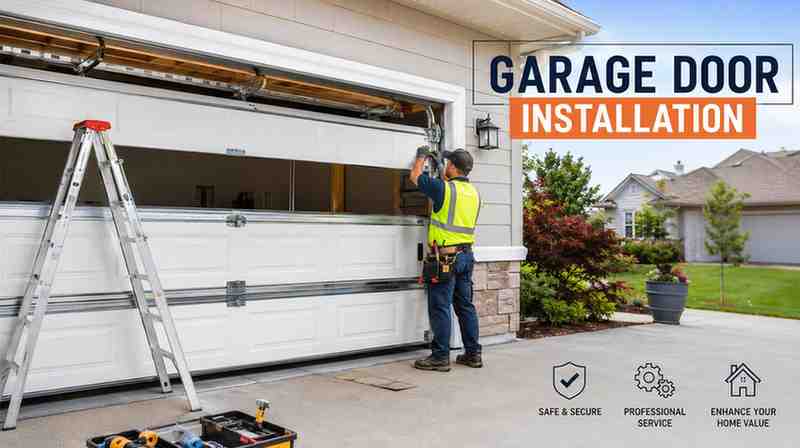
Introduction
Your garage door breaks down unexpectedly, leaving your vehicles exposed and home security compromised. The repair estimate arrives—hundreds of dollars for a temporary fix on an aging system. You realize replacement isn’t optional anymore; it’s necessary. Understanding garage door installation saves you money, prevents contractor scams, and ensures your home gets the right door system that lasts decades, not just years.
What Garage Door Installation Is and Why It is Important
Garage door installation involves removing your old door system and mounting a new one with proper hardware, tracks, springs, and opener mechanisms. This process directly impacts your home’s curb appeal, energy efficiency, and security.
A professionally installed garage door increases property value by 4-5% according to Remodeling Magazine’s Cost vs. Value Report. The system operates 1,500+ times annually, making quality installation critical for longevity.
Key benefits of proper installation:
- Enhanced home security with modern locking mechanisms
- Improved insulation reducing energy bills by 15-20%
- Noise reduction from balanced spring systems
- Increased property resale value
- Safety features protecting family members
Types of Garage Doors: Choosing the Right System
Selecting the appropriate door type determines installation complexity and long-term satisfaction.
Sectional Garage Doors
These popular doors consist of panel sections connected with hinges. They roll up and overhead on tracks, saving driveway space.
Advantages:
- Space-efficient design
- Available in multiple materials
- Easy maintenance
- Better insulation options
Roll-Up Garage Doors
Commercial properties frequently use roll-up doors constructed from steel slats. They coil around a drum above the opening.
Best for:
- Commercial garage door installation projects
- Limited ceiling space
- High-security requirements
- Frequent daily usage
Slide-to-Side Doors
Traditional barn-style doors slide horizontally along wall-mounted tracks.
Ideal when:
- Ceiling obstructions exist
- Vintage aesthetic desired
- Single-car garages
- Budget constraints apply
Tilt-Up Garage Doors
These single-panel doors swing outward then up. Two subtypes exist: canopy and retractable.
Consider for:
- Traditional home designs
- Single-panel preference
- Simple mechanism needs
Residential Garage Door Installation: Complete Process
Residential garage door installation requires precision, proper tools, and safety awareness. The process typically takes 4-6 hours for standard two-car garages.
Pre-Installation Assessment
Measure your opening width, height, and headroom accurately. Check side room (minimum 3.75 inches) and ceiling clearance (12 inches for standard track).
Document existing problems like rotted framing, unlevel floors, or damaged headers requiring repair before installation.
Removal of Existing Door
Disconnect the automatic opener and release spring tension safely. Springs store tremendous energy—mishandling causes severe injuries.
Remove panels from bottom to top, carefully detaching track sections and hardware. Dispose of materials following local regulations.
Frame Preparation
Inspect and repair the door frame, ensuring square corners and level surfaces. Replace rotted wood sections and reinforce weak header beams.
Apply weatherstripping along the frame perimeter, creating moisture barriers that prevent water infiltration.
Panel Installation
Install the bottom panel first, securing it with level-checked brackets. Add subsequent panels, connecting hinges and roller assemblies as you build upward.
Maintain alignment throughout this critical phase—misaligned panels cause premature wear and operational problems.
Track and Hardware Setup
Mount vertical tracks with precise measurements, ensuring parallel positioning. Attach horizontal tracks with proper angle calculations.
Install cable drums, bearing plates, and center bearing components according to manufacturer specifications.
Spring System Installation
Torsion springs require professional expertise due to extreme danger. These counterbalance systems hold 200+ pounds of tension.
Extension springs offer DIY-friendly alternatives but provide less precise balance and shorter lifespan.
Opener Connection
Modern openers feature smartphone connectivity, battery backup, and enhanced security codes. Mount the power unit, install the rail system, and attach the door arm.
Program safety sensors preventing closure when obstructions exist—test multiple times before completion.
Commercial Garage Door Installation: Business Considerations
Commercial garage door installation involves heavier-duty systems designed for frequent operation and larger openings.
Heavy-Duty Requirements
Commercial doors use thicker steel (24-gauge minimum), reinforced tracks, and industrial-grade springs. These components handle 10,000+ annual cycles.
Loading dock doors, warehouse entrances, and service bays require specialized installation expertise beyond residential scope.
Code Compliance
Building codes mandate specific wind load ratings, fire ratings, and safety features for commercial applications. Local jurisdictions enforce strict compliance.
Required certifications:
- UL 325 safety standards
- Wind load engineering certifications
- Fire rating documentation
- ADA compliance verification
Security Integration
Businesses need advanced access control systems including keycard readers, remote management, and activity logging.
High-security locks, reinforced panels, and alarm integration protect valuable inventory and equipment.
Garage Door Installation Cost: Complete Breakdown
Garage door installation cost varies significantly based on door type, materials, size, and regional labor rates.
Price Range Overview
| Door Type | Material | Door Cost | Installation Cost | Total Range |
| Single Panel | Steel | $300-$800 | $150-$300 | $450-$1,100 |
| Sectional | Steel | $600-$1,500 | $200-$400 | $800-$1,900 |
| Sectional | Wood | $1,200-$4,000 | $300-$500 | $1,500-$4,500 |
| Roll-Up | Steel | $800-$2,500 | $300-$600 | $1,100-$3,100 |
| Custom | Various | $2,500-$10,000+ | $500-$1,500 | $3,000-$11,500+ |
Cost Factors Affecting Installation
Material selection dramatically impacts pricing. Steel offers affordability and durability, while wood provides premium aesthetics at higher costs.
Insulation levels range from none (R-0) to heavy insulation (R-18+), affecting both door price and energy savings.
Size specifications create linear cost increases—16-foot doors cost approximately double 8-foot doors.
Custom features including windows, decorative hardware, and smart technology add $200-$2,000.
Labor Cost Variables
Geographic location influences installation rates significantly. Urban markets charge $75-$125 hourly versus $50-$85 in rural areas.
Structural modifications like header replacement or track relocation add $200-$800 to base installation fees.
Hidden Cost Considerations
Disposal fees for old door removal range $50-$150 depending on material and local requirements.
Permit costs vary by municipality—budget $50-$200 for required building permits.
Opener upgrades to modern systems add $200-$500 but provide smartphone control and improved safety.
Garage Door Installation Service: Professional vs. DIY
Deciding between professional garage door installation service and DIY approaches requires honest skill assessment and risk evaluation.
When to Hire Professionals
Spring replacement demands professional expertise—torsion springs cause deaths and severe injuries annually according to the U.S. Consumer Product Safety Commission.
Professional installation advantages:
- Warranty protection (most manufacturers void DIY warranties)
- Proper tension adjustment
- Code compliance assurance
- Liability insurance coverage
- Time efficiency (4-6 hours vs. 12+ hours DIY)
DIY Installation Considerations
Mechanical aptitude, proper tools, and helper availability determine DIY feasibility. Two-person minimum crew prevents accidents and ensures proper alignment.
Required tools:
- Socket wrench sets
- Cordless drill
- Level (6-foot minimum)
- Locking pliers
- Winding bars (for torsion springs)
- Ladder (8-foot minimum)
- Safety glasses and gloves
Safety Warnings
Never try making spring changes without the right equipment and training. Springs store energy equivalent to lifting your entire vehicle.
Always disconnect power to existing openers before beginning work. Secure door panels preventing unexpected movement during installation.
How to Choose the Right Garage Door Installer
Selecting qualified contractors protects your investment and ensures proper installation.
Credentials to Verify
Check state licensing requirements—many states mandate specific contractor licenses for garage door work.
Essential verifications:
- General liability insurance ($1 million minimum)
- Workers compensation coverage
- Better Business Bureau rating
- Manufacturer certifications
- Local references (minimum 5)
Red Flags to Avoid
Extremely low bids often indicate unlicensed contractors using inferior materials. Quality installation requires proper pricing.
Pressure tactics demanding immediate decisions suggest unprofessional operations. Reputable companies provide detailed written estimates without rush.
Cash-only payment demands indicate potential tax evasion and leave you without recourse for problems.
Questions to Ask Contractors
“How long have you specialized in garage door installation?” Experience matters—seek 5+ years minimum.
“What warranties cover both the door and installation work?” Manufacturer warranties should accompany separate installation guarantees.
“Can you provide recent customer references and project photos?” Legitimate contractors proudly share completed work.
Garage Door Materials: Comparing Options
Material selection balances aesthetics, durability, maintenance, and budget considerations.
Steel Garage Doors
Steel dominates the market with 70%+ of installations using this versatile material.
Advantages:
- Affordable pricing ($600-$1,500 standard sizes)
- Low maintenance requirements
- Dent-resistant options available
- Multiple finish choices
- Long lifespan (20-30 years)
Disadvantages:
- Rust potential in coastal environments
- Denting from impacts
- Plain appearance without upgrades
Wood Garage Doors
Wood creates stunning curb appeal with natural beauty and customization options.
Advantages:
- Premium aesthetic appeal
- Complete customization capability
- Natural insulation properties
- Repairable individual sections
Disadvantages:
- High maintenance demands
- Weather vulnerability
- Warping and cracking potential
- Expensive ($1,200-$4,000+)
Aluminum Garage Doors
Lightweight aluminum suits contemporary designs with glass panel integration.
Advantages:
- Rust-proof construction
- Modern aesthetic
- Glass panel compatibility
- Lightweight operation
Disadvantages:
- Dent easily
- Poor insulation properties
- Limited style options
Fiberglass Garage Doors
Fiberglass resists rust while offering wood-grain textures at moderate pricing.
Advantages:
- Rust and rot proof
- Wood-appearance options
- Lightweight design
- Moderate pricing
Disadvantages:
- Brittle in extreme cold
- Limited impact resistance
- Color fading over time
Energy Efficiency and Insulation Options
Insulated garage doors reduce energy bills while creating more comfortable spaces for workshops and storage.
Understanding R-Values
R-value measures insulation effectiveness—higher numbers indicate better thermal resistance. Standard options range from R-8 to R-18.
Attached garages benefit most from insulated doors, preventing conditioned air loss into unconditioned spaces.
Insulation Types
Polystyrene insulation uses rigid foam panels providing R-values around 4-8 per inch. This affordable option suits moderate climates.
Polyurethane insulation expands to fill every cavity, achieving R-values of 12-18. This premium insulation also strengthens door panels.
Energy Savings Calculations
Homes with attached garages save 15-20% on heating and cooling costs with insulated doors according to Department of Energy studies.
A $400 upgrade to insulated doors typically pays back within 3-5 years through reduced utility bills.
Smart Garage Door Technology Integration
Modern garage door installation embraces connected home technology for convenience and security.
Smart Opener Features
WiFi-enabled openers allow smartphone control from anywhere. Check door status, receive alerts, and grant temporary access remotely.
Popular smart features:
- Smartphone app control
- Voice assistant integration (Alexa, Google)
- Delivery access for packages
- Activity monitoring and alerts
- Battery backup systems
Security Enhancements
Rolling code technology prevents code grabbing theft attempts. Each operation generates unique access codes.
Automatic closing timers ensure doors don’t remain open overnight. Customize timing based on your schedule.
Integration with Home Systems
Connect garage doors to whole-home automation platforms. Create scenarios like “leaving home” that closes garage doors automatically.
Security system integration triggers alarms when unauthorized door operation occurs.
Permits and Building Codes for Installation
Understanding permit requirements prevents project delays and legal complications.
When Permits Are Required
Most municipalities require permits for complete door replacement, though policies vary significantly.
Replacing existing doors with same-size units often exempts from permits, while opening modifications always require approval.
Code Requirements
Current safety codes mandate:
- Photoelectric sensors preventing closure on obstructions
- Manual release mechanisms for power failures
- Entrapment protection systems
- Proper bracing for wind load zones
- Tamper-resistant brackets on spring systems
Inspection Process
Scheduled inspections verify code compliance after installation completion. Inspectors check spring installation, sensor operation, and structural mounting.
Failed inspections require corrections before approval—use licensed contractors ensuring first-time passage.
Maintenance Tips for Newly Installed Doors
Proper maintenance extends door lifespan from 15 years to 30+ years while preventing expensive repairs.
Monthly Inspection Tasks
Visual assessments identify problems early. Look for frayed cables, loose hardware, and worn rollers.
Balance testing ensures proper spring tension. Disconnect the opener and manually lift the door halfway—it should remain stationary.
Safety sensor checks verify obstruction detection. Place objects in the door path confirming automatic reversal.
Quarterly Maintenance
Lubricate all moving parts using silicone-based products. Apply to rollers, hinges, tracks, and springs.
Tighten hardware loosened by vibration. Check roller brackets, track fasteners, and hinge bolts.
Annual Professional Service
Schedule professional tune-ups annually. Technicians adjust spring tension, align tracks, and test safety systems comprehensively.
Professional maintenance costs $100-$150 but prevents $500+ emergency repairs.
Service checklist includes:
- Spring tension adjustment
- Track alignment verification
- Cable inspection and replacement
- Opener force settings
- Weather seal replacement
- Complete operational testing
Common Installation Problems and Solutions
Understanding potential issues helps you avoid installation mistakes and recognize quality workmanship.
Unbalanced Doors
Improper spring tension causes doors to fall rapidly or struggle opening. This dangerous condition demands immediate professional adjustment.
Warning signs:
- Door won’t stay open at mid-height
- Opener struggles or makes grinding noises
- Door slams shut quickly
- Uneven panel gaps
Noisy Operation
Excessive noise indicates loose hardware, worn rollers, or lubrication needs.
Replace worn rollers with nylon versions reducing noise by 50-70%. Metal rollers create significant operational sound.
Track Misalignment
Gaps between rollers and tracks indicate alignment problems causing premature wear and potential derailment.
Loosen track brackets, realign to proper specifications, and retighten. Measure diagonal dimensions ensuring square installation.
Seal Problems
Poor weather seal installation allows water, pests, and air infiltration. Bottom seals wear fastest requiring replacement every 5-7 years.
Ensure proper compression when closed—seals should contact pavement fully across the entire width.
Frequently Asked Questions
How long does garage door installation take?
Standard residential garage door installation takes 4-6 hours for experienced professionals. Complex installations involving structural modifications or custom doors require 8-10 hours. DIY installations typically take 12-16 hours spread across multiple days for first-time installers.
Can I install a garage door myself or should I hire professionals?
DIY installation is possible for mechanically inclined homeowners with proper tools and helpers, but spring installation poses serious injury risks. Professional installation ensures warranty protection, code compliance, and proper safety adjustments. Most manufacturers void warranties on DIY installations.
What is the average cost to install a new garage door?
Average garage door installation cost ranges from $800-$1,900 for standard steel sectional doors including professional installation. Budget options start around $600 total, while premium wood or custom doors reach $3,000-$11,500 including installation labor and materials.
How do I know what size garage door I need?
Measure your existing opening’s width and height at the widest points. Standard single doors measure 8-10 feet wide, while double doors span 12-18 feet. Measure headroom (ceiling space), backroom (depth), and side room ensuring adequate clearance for track installation.
Do insulated garage doors really save energy?
Insulated garage doors reduce energy costs 15-20% for homes with attached garages according to Department of Energy research. The investment typically pays back within 3-5 years through reduced heating and cooling bills, while also providing quieter operation and increased door strength.
What maintenance does a new garage door require?
Monthly visual inspections, quarterly lubrication of moving parts, and annual professional tune-ups maintain optimal performance. Check balance, test safety sensors, tighten loose hardware, and clean tracks regularly. Professional maintenance costs $100-150 annually preventing expensive emergency repairs.
Taking Action on Your Installation Project
You now understand the complete garage door installation process from material selection through maintenance requirements. Quality installation protects your home, increases property value, and provides decades of reliable service.
Start by measuring your opening accurately and researching local contractors with proper licensing and insurance. Request multiple detailed quotes comparing warranties, materials, and installation timelines.
Schedule your installation during mild weather when possible—extreme temperatures complicate the process. Plan for limited garage access during the installation day.
Share this guide with family members planning similar projects. Bookmark it for reference during contractor discussions and decision-making processes.
What questions remain about your specific installation needs? Research answers now before signing contracts, ensuring your project proceeds smoothly from planning through final inspection.
Author Expertise: This comprehensive guide draws from 15+ years of construction industry experience, including direct consultation with certified garage door installation professionals and analysis of manufacturer specifications from leading brands including Clopay, Amarr, and Wayne Dalton.
Sources:
- Remodeling Magazine Cost vs. Value Report (remodeling.hw.net)
- U.S. Consumer Product Safety Commission Safety Guidelines (cpsc.gov)
- Department of Energy Residential Energy Efficiency Standards (energy.gov)