Introduction
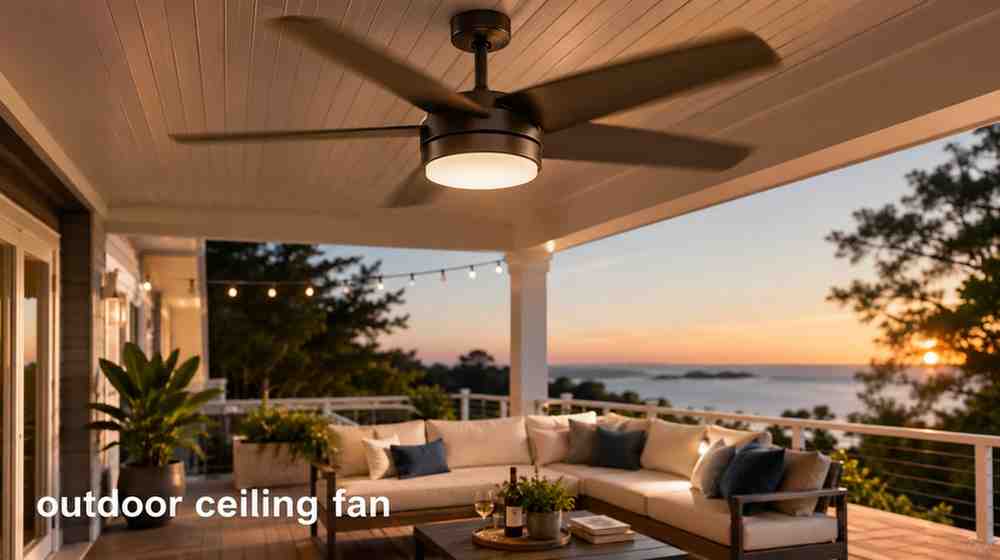
Summer heat making your patio unbearable? You’re spending thousands on outdoor furniture, yet can’t enjoy it during warm afternoons. An outdoor ceiling fan changes everything—cutting energy costs while creating comfortable, breezy outdoor rooms you’ll actually use. This guide reveals exactly how to select, install, and maximize your investment in outdoor cooling solutions that last for years.
Why Your Outdoor Space Needs a Ceiling Fan
Outdoor living areas have become extensions of our homes. Decks, patios, porches, and gazebos serve as entertainment hubs, relaxation zones, and dining spaces. Without proper air circulation, these areas turn into heat traps during summer months.
Adding a quality outdoor ceiling fan creates continuous airflow that makes temperatures feel 6-8 degrees cooler. You’ll reduce reliance on expensive air conditioning inside while making outdoor spaces comfortable for guests. These fans also discourage flying insects, dry moisture after rain, and add architectural interest to covered outdoor areas.
Modern designs combine functionality with style, offering features like integrated lighting, remote controls, and weather-resistant finishes that complement any exterior décor.
Understanding Outdoor vs Indoor Ceiling Fans: Critical Differences
Indoor ceiling fans cannot survive outdoor conditions. The key differences include:
Weather Resistance: Outdoor models feature sealed motors, corrosion-resistant blades, and protective coatings that withstand humidity, rain exposure, and temperature fluctuations.
Materials: Outdoor units use ABS plastic, stainless steel, or specially treated metals and woods. Indoor fans typically use materials that rust, warp, or deteriorate when exposed to moisture.
UL Ratings: Look for UL-listed “Damp” or “Wet” ratings. Damp-rated fans work in covered areas protected from direct rain. Wet-rated fans handle direct water exposure, perfect for completely open patios or coastal environments.
Motor Strength: Outdoor environments require more powerful motors to move air effectively in open spaces where airflow isn’t contained by walls.
Never install an indoor-rated fan outdoors—it creates safety hazards and voids warranties immediately.
Types of Outdoor Ceiling Fans by Location Rating
Damp-Rated Outdoor Ceiling Fans
These fans suit covered porches, enclosed patios, and areas with roof protection. They handle humidity and indirect moisture but shouldn’t face direct rain or snow.
Perfect locations include:
- Screened porches
- Covered decks with solid roofs
- Gazebos with complete overhead coverage
- Three-season rooms
Wet-Rated Outdoor Ceiling Fans
Engineered for complete weather exposure, wet-rated fans feature fully sealed motors and waterproof components. Install these in:
- Open-air patios
- Poolside areas
- Boat docks
- Uncovered outdoor kitchens
- Coastal properties
The waterproof outdoor ceiling fan with light option provides both illumination and cooling while standing up to harsh weather year-round.
Outdoor Ceiling Fan with Light: Combining Function and Illumination
An outdoor ceiling fan with light eliminates the need for separate lighting fixtures, saving installation costs and ceiling space. This combination offers several advantages:
Centralized Lighting: Provides even illumination across your outdoor space without multiple light sources creating shadows or dark corners.
Energy Efficiency: LED light kits use minimal electricity while delivering bright, clear visibility for dining, reading, or entertaining after sunset.
Convenience: Single-switch or remote operation controls both fan and light functions without walking to separate controls.
Design Cohesion: Matching light fixtures create visual harmony rather than mixing styles between fan and separate lighting.
When selecting an outdoor ceiling fan with light, verify the light kit matches your location’s UL rating. Some fans include integrated lighting, while others accept optional light kit attachments.
Top Brands: Harbor Breeze Outdoor Ceiling Fan and Competitors
Harbor Breeze Outdoor Ceiling Fan Options
Harbor Breeze manufactures affordable, reliable outdoor fans available exclusively through Lowe’s. Their outdoor collection includes:
- Multiple size options (48″, 52″, 60″)
- Remote control compatibility
- Light kit integration
- Wet and damp-rated models
- Bronze, white, and brushed nickel finishes
Harbor Breeze fans typically cost $150-$400, making them accessible for budget-conscious homeowners seeking quality outdoor cooling.
Other Trusted Brands
Hunter: Premium construction with lifetime warranties, advanced motor technology, and designer aesthetics ($200-$800).
Minka-Aire: High-end options featuring unique blade designs, powerful motors, and luxury finishes ($300-$1,200).
Honeywell: Value-oriented models with solid performance and straightforward installation ($100-$300).
Monte Carlo: Specialty outdoor fans with innovative features and commercial-grade durability ($400-$1,500).
Choose based on your budget, aesthetic preferences, and specific location requirements rather than brand loyalty alone.
Outdoor Ceiling Fan with Remote: Convenience and Control
An outdoor ceiling fan with remote delivers unmatched convenience for outdoor spaces where wall switches prove impractical. Remote controls provide:
Multiple Speed Settings: Adjust airflow precisely without leaving your seat—essential when entertaining guests or relaxing.
Light Dimming: Control brightness levels to create ambiance for different occasions from bright task lighting to soft mood lighting.
Reverse Function: Switch between downdraft (summer cooling) and updraft (winter air circulation) with button presses.
Timer Functions: Program automatic shutoff to save energy when you forget to turn off the fan.
For easy access, the majority of remote systems have wall-mount holders close to doors. . Some advanced models offer smartphone app integration, allowing control from anywhere in your home.
Ensure remote systems feature weather-resistant casings if exposed to outdoor conditions.
Sizing Your Outdoor Ceiling Fan: Getting the Perfect Fit
| Space Size | Recommended Fan Diameter | Blade Span | Coverage Area |
| Small (100 sq ft) | 29″-36″ | 3-4 blades | Up to 10′ x 10′ |
| Medium (144 sq ft) | 42″-48″ | 4-5 blades | Up to 12′ x 12′ |
| Large (225 sq ft) | 52″-56″ | 5 blades | Up to 15′ x 15′ |
| Extra Large (400+ sq ft) | 60″-72″ | 5-7 blades | 20′ x 20’+ |
Larger fans move more air but require adequate ceiling height and clearance. Measure your space carefully before purchasing:
Ceiling Height: Minimum 8 feet from floor to blade tips. Optimal performance occurs with 8-9 feet of clearance.
Blade Clearance: Maintain 18-24 inches from walls or posts on all sides for proper airflow and safety.
Downrod Length: Standard 4-6 inch downrods work for 8-9 foot ceilings. Higher ceilings need longer downrods to position blades in the optimal airflow zone (8-9 feet above the floor).
Oversized fans create excessive wind that blows items off tables. Undersized fans fail to move enough air, leaving hot spots throughout your space.
Key Features to Consider When Buying
Motor Quality and CFM Rating
Cubic Feet per Minute (CFM) measures air movement volume. Higher CFM ratings mean better cooling:
- Small spaces: 3,000-5,000 CFM
- Medium spaces: 5,000-7,000 CFM
- Large spaces: 7,000+ CFM
Quality motors run quieter, last longer, and maintain speed consistency. Look for sealed, rust-resistant motors with lifetime warranties.
Blade Material and Design
ABS Plastic: Lightweight, weatherproof, affordable, never warps or cracks.
Stainless Steel: Premium durability, modern aesthetics, highest wind resistance.
Outdoor-Rated Wood: Natural beauty, requires periodic sealing, limited to damp-rated locations.
Composite Materials: Engineered blends offering wood appearance with plastic durability.
Blade pitch (angle) affects air movement—optimal outdoor fans feature 12-15 degree blade pitches for maximum airflow.
Finish and Corrosion Resistance
Coastal areas require specialized finishes resisting salt air corrosion. Options include:
- Powder-coated metals
- Marine-grade stainless steel
- UV-resistant plastics
- Galvanized steel components
Even inland installations benefit from corrosion-resistant finishes that maintain appearance despite humidity exposure.
Energy Efficiency
ENERGY STAR certified fans use 60% less energy than conventional models while delivering equal or superior performance. DC motors offer exceptional efficiency, using 70% less electricity than AC motors.
Lower energy consumption means reduced operating costs over the fan’s lifespan—easily saving $50-$100 annually compared to less efficient models.
Installation Guide: Professional vs DIY Approach
Safety First: Electrical and Structural Considerations
Outdoor ceiling fan installation involves electrical work and structural mounting. If you lack experience with electrical systems or ceiling reinforcement, hire licensed electricians and contractors.
DIY installation requires:
- Turning off power at the breaker box
- Verifying ceiling support (fans need boxes rated for 75+ pounds)
- Understanding wire connections (black=hot, white=neutral, green/bare=ground)
- Balancing blades after installation
- Testing all functions before completing
Mounting Options
Standard Ceiling Mount: Requires structurally sound ceiling joists or reinforced electrical boxes.
Angled Mount Kits: Accommodate sloped ceilings (vaulted porch ceilings, gazebos with peaked roofs).
Downrod Extensions: Position fans at optimal heights for high ceilings.
Never hang outdoor fans from tree branches, pergola rafters not designed for weight loads, or unstable structures.
Wiring and Controls
Most outdoor ceiling fans connect to existing outdoor lighting circuits. Wall switches provide basic on/off and speed control. Remote systems require receiver installation inside the fan canopy.
Always use outdoor-rated electrical boxes, weatherproof wire connections, and GFCI protection for wet locations.
Maximizing Performance: Operation Tips for Every Season
Summer Cooling Mode
Set your outdoor ceiling fan to spin counterclockwise (when viewed from below). This downdraft mode pushes air directly downward, creating the wind-chill effect that cools skin temperature.
Run fans at higher speeds during peak heat hours. The constant breeze evaporates perspiration, making temperatures feel significantly cooler without changing actual air temperature.
Winter Circulation Mode
Reverse fan direction to clockwise rotation at low speeds. This updraft mode gently pulls cool air upward and pushes trapped warm air near the ceiling downward along walls.
Winter operation works best in enclosed or semi-enclosed outdoor spaces where heat accumulates near ceilings. Open patios receive minimal benefit from winter operation.
Optimal Speed Settings
- Low: Gentle breeze for mild days, background circulation, winter mode
- Medium: Comfortable cooling for typical summer conditions, everyday use
- High: Maximum cooling during extreme heat, large gatherings, high humidity
Adjust speeds based on temperature, wind conditions, and personal comfort rather than running constantly at one setting.
Maintenance: Keeping Your Outdoor Ceiling Fan Running Smoothly
Regular Cleaning Schedule
Monthly: Wipe blades with damp cloths to remove dust, pollen, and debris. Dirty blades reduce efficiency and create wobbling.
Quarterly: Clean motor housing, light fixtures, and fan canopy. Check all visible screws and connections for tightness.
Annually: Deep clean all components, inspect wiring connections, verify mounting security, and test remote batteries.
Use gentle household cleaners—avoid harsh chemicals that damage protective finishes.
Blade Balancing
Wobbling fans indicate unbalanced blades. Fix this by:
- Cleaning blades thoroughly (dirt adds weight)
- Checking blade attachment screws
- Using balancing kits (weighted clips that attach to blades)
- Verifying downrod connections
Excessive wobbling damages motors and mounting hardware over time.
Winter Storage Considerations
In regions with harsh winters, consider:
- Covering fans with weatherproof covers
- Removing light bulbs to prevent moisture damage
- Applying corrosion-prevention spray to metal components
- Checking seals before spring reinstallation
Quality wet-rated fans typically don’t require removal but benefit from protective measures during months of non-use.
Cost Analysis: Investment and Long-Term Value
Initial Purchase Price Ranges
- Budget Options: $100-$250 (basic function, limited features)
- Mid-Range Models: $250-$500 (remote controls, light kits, better warranties)
- Premium Fans: $500-$1,500+ (designer aesthetics, advanced features, lifetime warranties)
Don’t sacrifice quality for initial savings. Cheap fans fail within 2-3 years, requiring complete replacement. Mid-range and premium fans often last 15-20+ years with proper maintenance.
Operating Costs
Average outdoor ceiling fan operation costs $5-$15 annually when run 8 hours daily during warm months. ENERGY STAR models cost less than half this amount.
Compare this to:
- Window AC units: $50-$100 annually per room
- Central AC: $200-$500 annually for whole-house cooling
- Portable fans: $10-$20 annually but provide limited outdoor effectiveness
Return on Investment
Outdoor fans pay for themselves through:
- Reduced indoor cooling costs (keeping hot air from entering through open doors)
- Increased outdoor space usage (making 3-6 additional months comfortable)
- Higher property values (outdoor living spaces add 8-12% to home resale values)
- Entertainment savings (hosting at home vs. going out to climate-controlled venues)
Quality outdoor ceiling fans deliver 10+ years of reliable service, making them one of the best outdoor improvement investments available.
Common Mistakes to Avoid
Choosing Wrong UL Rating for Location
Installing damp-rated fans in wet locations leads to rapid motor failure, rust damage, and safety hazards. Always match or exceed your location’s moisture exposure requirements.
Ignoring Ceiling Height Requirements
Fans hung too low create head-strike dangers. Fans mounted too high lose cooling effectiveness. Follow the 8-9 foot blade height guideline strictly.
Overlooking Airflow Needs
Beautiful fans with inadequate CFM ratings fail to cool effectively. Calculate your space size and select fans with appropriate air movement capacity.
Skipping Professional Installation
Improper electrical connections create fire risks. Inadequate structural support causes fan failures. When uncertain about installation requirements, hiring professionals prevents costly mistakes and ensures safety.
Neglecting Regular Maintenance
Outdoor environments stress fans more than indoor locations. Skipping cleaning and inspection allows small problems to become major failures.
Frequently Asked Questions
Q1: What is the difference between a damp-rated and wet-rated outdoor ceiling fan?
Damp-rated fans function in covered spaces, such as covered patios or screened porches, that are shielded from the elements. Wet-rated fans withstand direct water exposure and harsh weather, suitable for open patios, poolsides, or coastal locations. Always match the fan rating to your specific installation location for safety and longevity.
Q2: Can I use an indoor ceiling fan outdoors if it’s under a covered patio?
No, never install indoor fans outdoors, even in covered areas. Indoor fans lack weather-resistant motors, corrosion-proof materials, and moisture-sealed components. They will rust, deteriorate, and fail quickly while potentially creating electrical hazards. Always use properly rated outdoor ceiling fans for any exterior installation.
Q3: How do I choose the right size outdoor ceiling fan for my patio?
Measure your outdoor space in square feet (length × width). Spaces under 144 sq ft need 42-48″ fans. Areas between 144-225 sq ft require 52-56″ fans. Larger spaces over 400 sq ft benefit from 60-72″ models. Ensure 18-24 inches of clearance from blades to walls and 8-9 feet from floor to blade tips.
Q4: Are outdoor ceiling fans with lights worth the extra cost?
Yes, outdoor ceiling fans with light provide both cooling and illumination in one fixture, saving installation costs for separate lighting. They offer centralized control, energy-efficient LED options, and cohesive design aesthetics. The combination typically costs less than purchasing quality outdoor lighting separately while simplifying your ceiling appearance.
Q5: How much does it cost to run an outdoor ceiling fan?
Most outdoor ceiling fans cost $5-$15 annually when operated 8 hours daily during warm seasons. ENERGY STAR certified models cost even less—often under $5 yearly. This represents significant savings compared to air conditioning while effectively cooling outdoor spaces and making them comfortable throughout extended seasons.
Q6: Do outdoor ceiling fans work well in windy areas?
Quality outdoor ceiling fans function effectively in moderate wind conditions. In extremely windy locations, fans provide less noticeable benefit since natural wind already creates air movement. However, fans still offer directional control and consistent airflow when winds calm. Wet-rated models with sturdy construction handle wind exposure better than lightweight budget options.
Transform Your Outdoor Living Today
Your outdoor space deserves the same comfort as your interior rooms. The right outdoor ceiling fan creates inviting environments where family and friends gather, relaxation becomes effortless, and entertaining extends throughout warm months.
Start by measuring your space, determining your location’s UL rating requirements, and setting a realistic budget. Research models matching your needs—whether you prioritize the convenience of an outdoor ceiling fan with remote, the comprehensive solution of a waterproof outdoor ceiling fan with light, or the proven reliability of a Harbor Breeze outdoor ceiling fan.
Quality outdoor cooling doesn’t require expensive renovations or complex installations. A well-chosen ceiling fan transforms unusable hot patios into favorite gathering spots, adds value to your property, and reduces energy costs simultaneously.
Take action now to reclaim your outdoor space. Measure your area, review top-rated models, and make this season the year you finally enjoy comfortable outdoor living. Your perfect outdoor ceiling fan awaits—choose wisely, install properly, and enjoy years of cool comfort under open skies.
Author Bio: Written by experienced home improvement specialists with 15+ years installing and testing outdoor ceiling fans across diverse climates and architectural styles. Information sourced from manufacturer specifications, electrical code requirements, and verified homeowner experiences.
Sources:
- U.S. Department of Energy – Energy Efficiency Standards
- Underwriters Laboratories (UL) – Ceiling Fan Safety Ratings
- American Lighting Association – Outdoor Lighting Guidelines
- National Electrical Code (NEC) – Outdoor Electrical Requirements
- Consumer Reports – Ceiling Fan Performance Testing