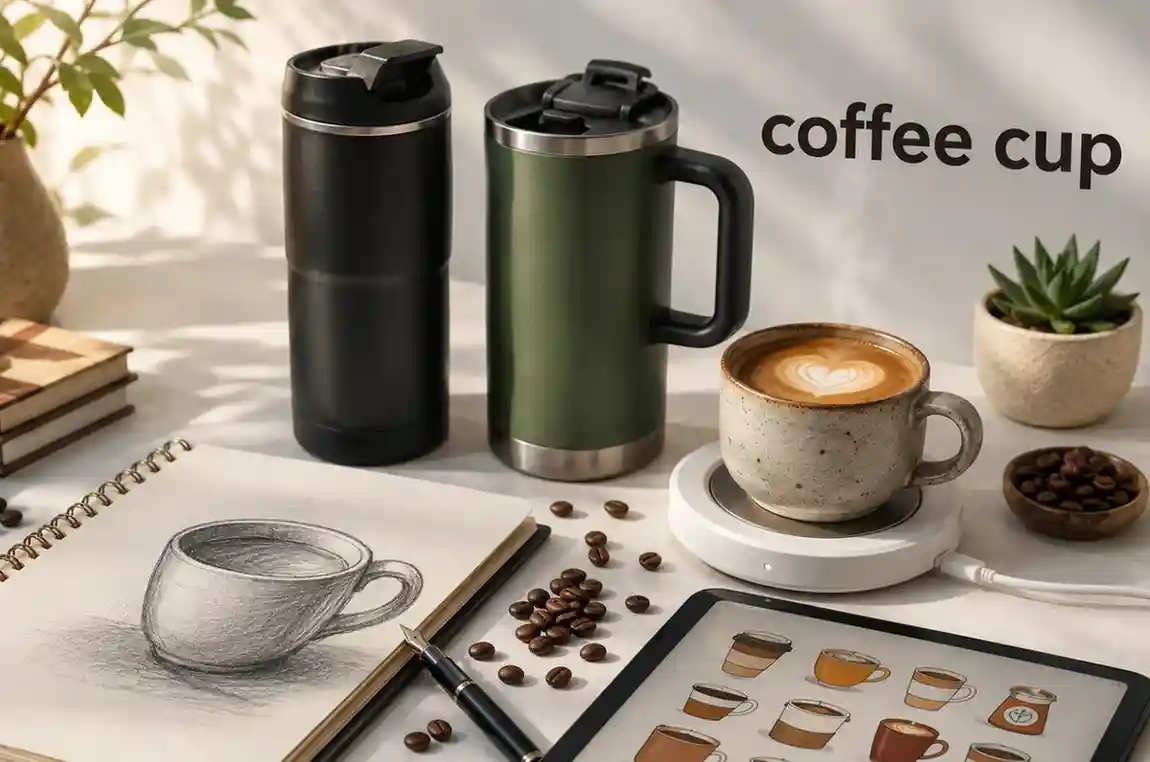
You pour a fresh, steaming brew, only to find it lukewarm minutes later. The rich aroma vanishes before your first real sip. A mismatched or poorly designed coffee cup quietly sabotages your entire morning ritual. This guide unpacks every layer of the perfect coffee cup—from battle-tested brands like Owala and Stanley to desktop warmers, artistic projects, and material science. You’ll walk away ready to choose, customize, and elevate every single sip.
What Defines the Perfect Coffee Cup?
A coffee cup does far more than hold liquid. It dictates heat retention, aroma perception, and even the pace of your morning. Three factors create a flawless experience.
First, thermal mass and insulation keep your coffee at the Specialty Coffee Association’s recommended holding range of 150–160°F without scalding your tongue. A thick ceramic wall or double-wall stainless steel construction locks that heat in.Second, the curvature of your lips controls how coffee moves across your palate. A thin, rounded rim feels luxurious; a thick, blunt rim spills liquid awkwardly. Third, the handle (or lack of one) defines comfort. An ergonomically curved handle lets you cradle the coffee cup without straining your wrist, while a sleek tumbler fits car cup holders and backpack pockets.
I’ve tested dozens of coffee cups over ten years of home brewing and travel, and the single biggest mistake people make is grabbing whatever vessel is closest. The right coffee cup turns a rushed gulp into a mindful ritual.
The Science Behind Coffee Cup Shape and Taste
Your coffee cup’s geometry directly alters how you experience flavor. A 2018 study published in Food Quality and Preference found that a tulip-shaped cup concentrates volatile aroma compounds near the nose, making the coffee taste fuller and sweeter. A wide, shallow mug lets those same aromas dissipate before you detect them, leaving the coffee flatter.
Straight-walled cylindrical coffee cups offer balanced drinking. Flared rims cool coffee faster and expose more surface area to air, which accelerates oxidation. If you drink slowly, a narrower opening preserves heat and intensity. If you pour a latte, a wide-mouthed cup showcases latte art but sacrifices thermal stability. Choose your coffee cup geometry based on how fast you drink and which notes you want to amplify.
Materials Matter: Ceramic, Glass, Stainless Steel, and More
Each material shapes the behavior of your coffee cup in profound ways.
- Ceramic: The classic choice. High heat retention, excellent flavor neutrality, and endless glaze colors. Handmade ceramic coffee cups often carry subtle rim variations that enhance mouthfeel. They do chip and crack if dropped.
- Glass: Double-walled borosilicate glass coffee cups create a floating-coffee illusion and decent insulation. Single-wall glass cools rapidly but lets you admire the crema. Glass won’t absorb odors.
- Stainless Steel: The king of travel. A vacuum-insulated stainless steel coffee cup keeps beverages hot for 4–6 hours, verified by independent insulation tests from leading thermos manufacturers. It’s indestructible, but some drinkers notice a faint metallic taste; quality electropolished interiors eliminate that.
- Plastic with Bamboo Fiber: Reusable on-the-go coffee mugs that are lightweight and frequently used . BPA-free plastics are safe, but they retain oils and scratches that host bacteria. Use these only when you prioritize weight over longevity.
My daily driver rotates between a hand-thrown ceramic coffee cup for slow mornings and a stainless steel travel mug for the commute. Matching material to your setting is the fastest route to satisfaction.
How a Coffee Cup Warmer Keeps Your Brew Hot
A coffee cup warmer acts like a personal barista, maintaining your ideal sipping temperature for hours. This small heated plate—usually USB-powered or wall-plugged—radiates steady low warmth to the base of your coffee cup. I’ve used a simple gravity-sensing warmer for three years, and it transformed my desk routine.
Key features to evaluate:
- Temperature setting: Single-setting warmers hover around 130°F, safe for most ceramic coffee cups. Multi-setting models let you push to 150–160°F for larger mugs.
- Auto-shutoff: Essential safety. My warmer turns off after 8 hours and reactivates with a tap.
- Surface compatibility: Flat-bottomed ceramic and stainless steel coffee cups conduct heat efficiently. Glass and contoured bases often lose contact and warmth.
Place a preheated ceramic coffee cup on the warmer immediately after pouring. Do not let a nearly empty cup sit—the constant heat can cook residual coffee into a bitter, acrid sludge. A quality coffee cup warmer preserves the fresh-brewed taste instead of ruining it.
Owala Coffee Cup: A Leak-Proof Companion for On-the-Go
The Owala coffee cup, specifically the FreeSip model, solves a problem every commuter loathes: dribbles and leaks. I carried an Owala coffee cup through airports, bumpy bus rides, and a week of hiking. Not once did a drop escape.
Its dual-function lid lets you sip through a built-in straw (perfect for iced coffee) or tilt and swig from the wide-mouth opening. The triple-layer stainless steel insulation kept my coffee above 145°F for nearly five hours. A locking push-button lid adds security when you toss it into a bag. Owala’s coffee cup also disassembles without tools, so cleaning the silicone gaskets takes under a minute. The carry loop feels sturdy, and the powder-coated exterior resists scratches. If you want a travel coffee cup that matches stainless steel durability with genuinely clever lid engineering, Owala earns its cult following.
Stanley Coffee Cup: The Icon of Durability and Temperature Retention
The Stanley coffee cup legacy stretches back over a century, built on vacuum insulation that shrugs off abuse. I own the classic trigger-action travel mug, and after two years of daily use, it looks nearly new. The double-wall stainless steel keeps coffee scalding hot for four hours and drinkably warm past six. In freezing temperatures, that performance barely dips.
A steel carabiner-style handle on many Stanley coffee cup models hooks onto tool belts, backpacks, and kayak rigging. The trigger-action lid operates with one thumb, snapping open and closed cleanly. Unlike twist caps, there is zero chance of cross-threading. The 18/8 stainless interior leaves no metallic aftertaste, and the wide base prevents tip-overs on uneven ground. Stanley’s lifetime warranty signals confidence. This coffee cup is for anyone who treats gear hard and refuses to compromise on heat.
Coffee Cup Drawing: A Simple Guide for Artists and Beginners
Creating a convincing coffee cup drawing starts with a cylinder and an ellipse, not with perfection. I teach a beginner-friendly approach:
- Sketch a vertical center line, then a long horizontal ellipse for the cup’s rim.
- Drop two parallel lines downward and close the base with a matching ellipse—slightly more curved than the top to mimic perspective.
- Attach a C-shaped handle on one side, keeping thickness consistent.
- Draw a curved line just below the rim for the coffee surface, and add soft, rising steam wisps.
- Shade the inside shadow of the coffee cup to deepen the illusion of liquid, then blend the outer shading along the cylinder.
Use 2B graphite for deep interior shadows and a kneaded eraser to lift highlights on the rim. A coffee cup drawing becomes dynamic when you include a saucer, a spoon, or scattered coffee beans for context. Practice ellipses daily; mastery of that single shape unlocks realistic cups, bowls, and mugs.
Coffee Cup Clipart: Creative Digital Resources for Your Projects
Coffee cup clipart adds instant warmth to menus, social media posts, invitations, and branding. High-quality coffee cup clipart comes in two flavors: scalable vector files (SVG, AI) that never pixelate, and transparent PNGs for quick placement.
Free sources like Pixabay and Openclipart offer thousands of options, but quality varies wildly. Premium marketplaces such as Creative Market and The Noun Project deliver stylistically consistent sets—flat minimalist cups, vintage engravings, watercolor splashes. I filter for “coffee cup clipart PNG” and always check usage rights. Commercial license requirements differ; a attribution-free license saves legal headaches. Save your favorites in organized folders separated by mood (morning energetic, cozy vintage, festive) so you can drag-and-drop without hunting.
Selecting the Correct Size: From Latte to Espresso
Coffee cup sizes govern strength, drink temperature, and ritual pacing.
- 2–3 oz demitasse: Built for straight espresso. Its thick walls hold heat in a small volume.
- 6–8 oz flat white or cappuccino cup: Wide bowl shape encourages microfoam integration.
- 10–12 oz standard mug: The American diner classic, suitable for drip coffee with room for cream.
- 16–20 oz travel coffee cup: Best for long commutes and iced lattes. These require robust insulation.
When you use a tiny shot of espresso in an oversized coffee cup, it quickly cools and becomes diluted. . Match the vessel size to the drink’s final volume—including milk, ice, or syrups—for optimal heat and concentration.
The Environmental Impact: Reusable vs. Disposable Coffee Cups
Over 16 billion disposable coffee cups hit landfills each year, according to the National Coffee Association’s sustainability tracking. Their polyethylene lining makes recycling rare. A single reusable ceramic or stainless steel coffee cup can displace over 300 disposables annually.
Vacuum-insulated stainless steel coffee cups cut paper waste and keep your drink hot three times longer. Even a lightweight bamboo fiber cup reduces your footprint drastically. Some coffee shops now offer discounts for bringing your own coffee cup—Starbucks, for example, grants a 10-cent credit. I keep a collapsible silicone cup in my laptop bag for spur-of-the-moment café stops. Small habits compound.
Cleaning and Maintenance Tips to Preserve Flavor
Coffee oils cling to cup surfaces and turn rancid, tainting fresh brews. I deep-clean every coffee cup weekly.
- Ceramic and glass: A paste of baking soda and water scrubs away brown residue without scratching. Rinse thoroughly to avoid soapy flavors.
- Stainless steel: White vinegar removes protein buildup. Fill the coffee cup with a 1:1 vinegar-water mix, let it sit 15 minutes, wash, and dry immediately.
- Lids and gaskets: Disassemble completely. Soak silicone rings in warm soapy water, then air dry separately to prevent mold.
Smell your coffee cup when it’s empty. Any off-odor signals a cleaning session. A fresh cup begets fresh coffee.
Personalizing Your Coffee Cup: DIY Designs and Customization
A personalized coffee cup sparks more joy than a factory generic. Porcelain paint pens let you doodle names, mandalas, or witty quotes directly onto a plain white ceramic coffee cup. Bake the cup at 300°F for 35 minutes to set the paint permanently. Dishwasher-safe mod podge formulas seal photos and decorative paper collages onto glass or ceramic exteriors.
For stainless steel tumblers, permanent adhesive vinyl cut with a craft machine adds monograms and vibrant patterns. I’ve customized an Owala coffee cup with a matte black decal that shows zero wear after a year of hand washing. Your daily coffee cup becomes a small canvas.
The Psychology of Coffee Cup Design and Daily Rituals
Color, weight, and texture quietly shape your emotional response to a coffee cup. Warm hues like terracotta and deep reds psychologically enhance perceived richness. A heavy, solid ceramic coffee cup signals stability and slows your sipping pace, while a lightweight plastic cup encourages faster drinking. Textured matte glazes feel earthy; glossy finishes appear crisp and modern.
Holding a coffee cup that looks and feels intentional transforms a caffeine fix into a self-care checkpoint. I’ve watched clients in my coffee workshop sessions linger over a hand-thrown mug in ways they never would with a foam cup. Your coffee cup sets the tone for the entire ritual.
FAQs About Coffee Cups
Which material keeps coffee hottest in a coffee cup?
Vacuum-insulated stainless steel outperforms all others. It maintains safe drinking temperatures for 4–6 hours, far longer than ceramic or glass coffee cups.
Can a coffee cup warmer alter the taste of my coffee?
Yes, if left too long with very little coffee. Constant low heat oxidizes and bitterens the last sip. Use a coffee cup warmer with an auto-shutoff and keep your cup at least one-third full.
Is the Owala coffee cup truly leak-proof?
Yes. The locking lid and double-gasket seal prevent spills even when the cup is inverted in a bag. I’ve tested this repeatedly during travel.
What are the best pencils for a realistic coffee cup drawing?
Use a 2H pencil for light construction lines, HB for general shading, and 2B or 4B for deep interior shadows. A blending stump smoothes curved surfaces.
Where can I find free coffee cup clipart for commercial use?
Openclipart and Pixabay offer zero-attribution options. Always filter by license type and download SVG or transparent PNG formats for maximum flexibility.
How does the Stanley coffee cup compare to other vacuum insulated mugs?
Stanley’s trigger-action lid and rugged build surpass most competitors. Its heat retention matches premium brands, but the lifetime warranty and replaceable parts give it a durability edge few match.
Start Your Next Sip Right
Every element of your coffee cup—shape, material, brand, size, and even a simple warmer—orchestrates the drinking experience. I’ve seen friends switch from a chipped ceramic hand-me-down to a thoughtfully chosen Stanley coffee cup and instantly savor their morning brew more. Pull out your favorite mug, test a warmer, doodle a coffee cup drawing for fun, or download a fresh coffee cup clipart set for your next project. Small upgrades deliver outsized daily pleasure. Which coffee cup will you reach for tomorrow? Drop your top pick in the comments and share this guide with a fellow coffee lover who deserves a better sip.