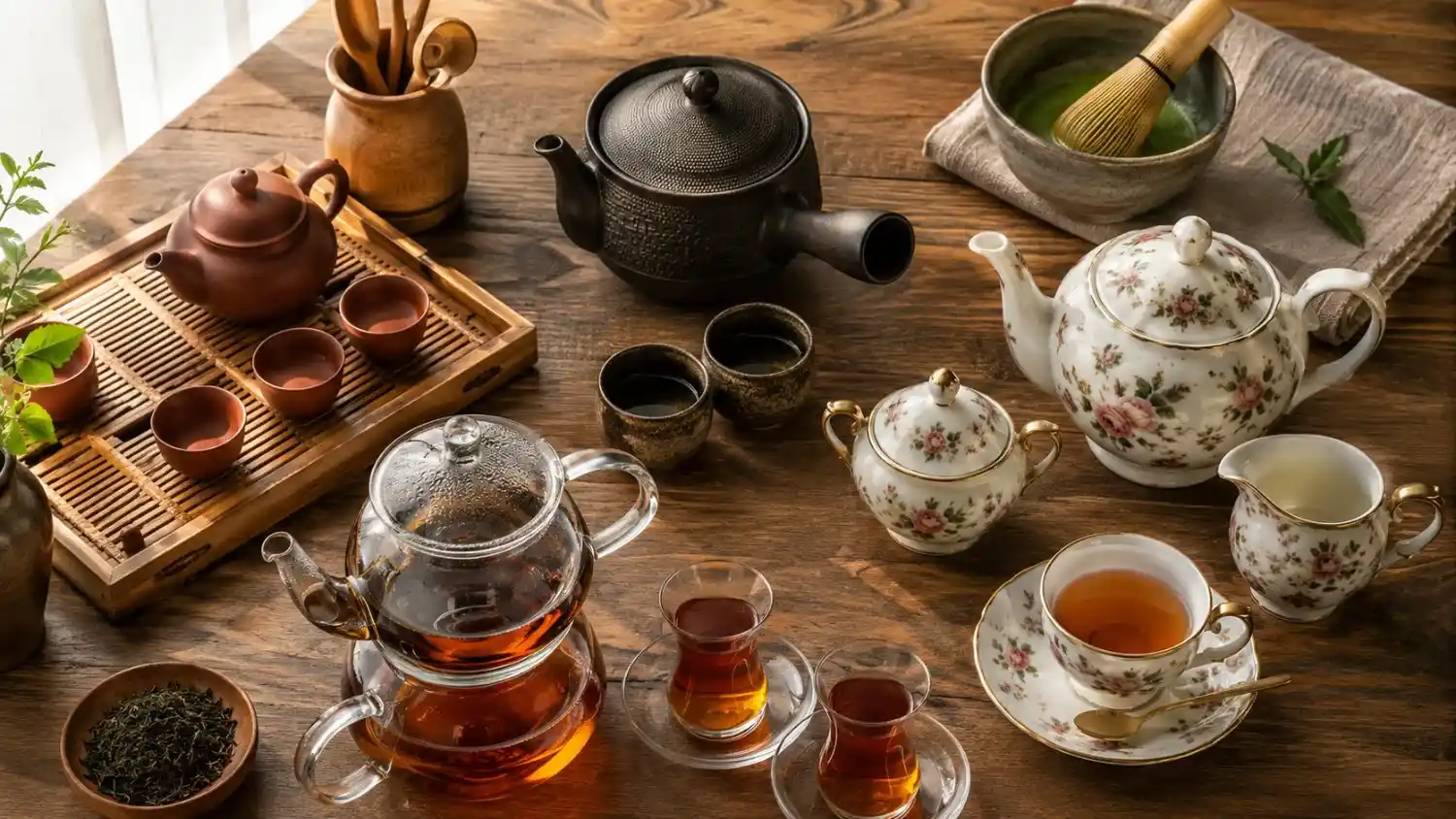
Selecting a tea set isn’t just about matching your kitchen tiles. The wrong choice leads to drippy spouts, cracked glaze, and a brewing experience that falls flat. Our guide helps you pick a tea set that fits your ritual—whether that’s a quiet matcha moment or a lively afternoon tea—so every pour feels intentional.
Below, a quick-reference table maps the main tea set styles to their standout features.
| Tea Set Style | Distinct Features | Common Materials | Best For |
| Japanese | Minimalist kyusu pot, small handleless cups | Tokoname clay, cast iron, porcelain | Everyday green tea, sencha |
| Chinese | Gongfu tray, tiny aroma cups, seasoning clay pot | Yixing clay, porcelain, glass | Oolong, pu-erh, gongfu cha |
| English | Stout teapot, sugar bowl, creamer, delicate cups and saucers | Bone china, fine porcelain | Formal afternoon tea |
| Turkish | Stacked double teapot, tulip-shaped glasses | Glass, stainless steel, copper | Strong black tea, social sipping |
| Matcha | Wide bowl (chawan), bamboo whisk (chasen), bamboo scoop (chashaku) | Ceramic, bamboo | Whisking powdered matcha |
| Kids | Small scale, durable build, playful motifs | Tin, enamel, wood, BPA-free plastic | Child-safe tea parties |
| Vintage | Ornate hand-painting, gold trim, often heirloom | Porcelain, silver plate, lusterware | Collectors, decorative display |
What Makes a Quality Tea Set?
A well-built tea set balances beauty and function. The spout must pour cleanly, the handle stay cool, and the glaze resist micro-cracks from heat. Weight tells you a lot—too light signals thin walls that cool quickly; too heavy makes pouring a chore. Joints on metal or ceramic teapots should appear seamless. These touches transform a basic item into a daily delight, whether you are reaching for a vintage treasure or a Japanese tea set.
Japanese Harmony: The Kyusu and More
A Japanese tea set brings quiet precision to your table. The side-handled kyusu teapot often holds a fine mesh strainer designed for whole-leaf sencha, gyokuro, or hojicha. Cups (yunomi) lack handles, encouraging you to feel the tea’s warmth. Master potters in Tokoname and Banko use iron-rich clays that gently round out astringency. The book The Japanese Tea Ceremony by A.L. Sadler explains that every curve—from spout tip to lid knob—serves a sensory purpose. To experience mindful simplicity, start with a kyusu and two yunomi. You need nothing else.
Chinese Gongfu Traditions
A Chinese tea set designed for gongfu cha turns brewing into a focused ritual. The tiny Yixing clay teapot seasons with use, absorbing oils from oolong or pu-erh leaves so each session deepens the flavor. Aroma cups trap fragrance before you sip from tasting cups. The setup includes a draining tray, a fairness pitcher, and bamboo tools. Water temperature, steep duration, and pour height all shape the outcome. Clay selection matters: zisha (purple sand) from Yixing remains the gold standard. Dedicate one pot to one tea type, and the tea set rewards you for decades.
English Afternoon Elegance
An English tea set transforms black tea into a social event. Bone china gives the teapot, cups, saucers, sugar bowl, and creamer a translucent glow and a ring that sounds like a soft bell. Floral or gilded patterns dominate, and shapes feel generous—the pot holds enough for four to six cups. The ritual invites clotted cream, scones, and finger sandwiches. The Victoria and Albert Museum’s ceramics collection documents how English tea sets from Spode, Wedgwood, and Royal Doulton defined 19th-century hospitality. Serve with milk already in the cup or after pouring—the set doesn’t judge; it just shines.
Turkish Two-Tiered Brewing
A Turkish tea set stacks two kettles (çaydanlık). The lower kettle boils water; the upper one steeps a strong concentrate of loose black tea. You dilute the concentrate to taste with hot water from the base, creating a layered, amber pour. Small tulip-shaped glasses showcase the color and keep the tea hot at the lip while cooling enough to sip. Glass transparency is essential—Rize tea should glow a deep ruby. Families and shopkeepers gather around this tea set for hours; the kettle stays on low heat, ready to refill. It’s less about ceremony and more about connection.
Matcha Whisking Tools
Your matcha tea set centers on three tools: a wide ceramic bowl (chawan), a bamboo whisk (chasen), and a bamboo scoop (chashaku). The bowl’s broad base lets you whisk vigorously without splashing. Fine-pronged chasen beat the powder into a frothy suspension with no clumps. A chashaku measures just the right amount—about 1 gram per scoop. Pre-warm the bowl, sift the matcha, add water at 80°C, and whisk in a zigzag motion. This tea set doesn’t include a teapot; the bowl itself becomes the brewing and drinking vessel. Ceramic retains heat well, so look for a thick-walled, lead-free glaze.
Settings for Adult Gatherings
Picking a tea set for adults means choosing pieces that handle real use and spark conversation. Capacity matters: a 600–900 ml teapot serves two to four people without constant refilling. Handles must provide a secure grip. Bone china or porcelain with a matte or satin glaze resists scratches from spoons. Neutral palettes—cream, slate, celadon—fit dinner parties, while bold geometric patterns suit modern brunches. If your group enjoys variety, pair the tea set with a matching serving tray and a stack of small plates. Adult gatherings call for function wrapped in style, not fragile decorations.
Playful Options for Children
A tea set for kids should prioritize safety and imagination. Look for lightweight materials: enamel-coated steel, BPA-free melamine, or sustainably harvested wood. Tiny teapots and cups sized for small hands make role-play feel real. Avoid sharp edges and breakable ceramics. Many sets include plates, spoons, and a carrying case—perfect for indoor picnics or garden play. Brands like Green Toys and Hape design durable sets that withstand drops and dishwasher runs. A child’s tea set teaches sharing, pouring, and routine, all while keeping them delightfully occupied.
Tiffany & Co. Luxury
A Tiffany tea set carries the iconic 1837 craftsmanship into your home. Made from fine bone china, often rimmed with platinum or 24-karat gold, each piece reflects the jeweler’s precision. The “Tiffany Blue” box alone signals occasion, but the designs—like the classic “Blue Mirage” or “Vine” patterns—layer hand-brushed florals over a crisp white base. These tea sets aren’t daily drivers; they mark anniversaries, bridal showers, and milestone toasts. A single teapot can range from $200 to $2,000, depending on rarity. Store them carefully and hand-wash only, because Tiffany pieces appreciate in both sentiment and resale value.
Collecting Vintage Treasures
A vintage tea set holds stories in its crazing lines and faded marks. Collectors hunt for specific periods: Art Deco geometrics, 1920s lusterware with iridescent glaze, or mid-century modern studio pottery. Hallmarks and backstamps reveal the maker’s identity and date. Before buying, check for hairlines, repairs, and mismatched lids—flaws that halve the value. Use a UV light to spot invisible restorations. A pristine Royal Albert “Old Country Roses” tea set from the 1960s still fetches high prices at auction. Display these sets on open shelves, or use them gently; a chip on a rare cup stings far more than one on a modern replacement.
Materials That Shape Your Brew
Material choice changes how your tea set performs and lasts.
- Porcelain/Bone China: Lightweight, chip-resistant when properly fired, and neutral-tasting. Bone china adds warmth and translucency.
- Yixing Clay: Porous, unglazed, and ideal for a single tea type. Never use soap; rinse with water only.
- Cast Iron: Retains heat for 30 minutes or more. Enamel-lined pots resist rust. Heavy, so pour with both hands.
- Glass: Perfect for blooming teas or Turkish brewing. Compared to soda-lime glass, borosilicate glass is more resilient to heat shock. Ceramic/Stoneware: Affordable and microwave-safe. Thick walls keep tea hot but can mute delicate aromas.
- Silver Plate/Sterling: Classic vintage look; a tarnish-resistant lining prevents metallic taste. Polishing required.
Match the material to your brewing style. A porous clay tea set sings with aged pu-erh; a glass one showcases floral infusions.
How to Care for Your Collection
Proper care keeps a tea set functional for generations.
- Rinse promptly after each use. Tannins cling and stain.
- Hand-wash porcelain and bone china with mild soap and a soft sponge. Avoid abrasive pads.
- Never put a Yixing clay tea set in soapy water—warm water and a bamboo brush are enough.
- Air-dry upside down on a lint-free towel. Sudden temperature changes crack ceramics.
- If stacking is inevitable, store lids individually wrapped in cotton.
- Polish silver mounts with a gentle, ammonia-free cream; don’t submerge the attached ceramic.
For daily dishware-safe sets, confirm the manufacturer’s “dishwasher safe” stamp. Even then, use the top rack and a gentle cycle.
Finding Your Perfect Match
Choose a tea set that aligns with your space and habits. Measure your shelf before buying a tall Turkish çaydanlık. If mornings rush, a sturdy porcelain set suits the microwave and dishwasher. When guests linger, an English bone china set elevates the table. For solitary reflection, a matcha tea set needs only a bowl and whisk. Start with two to four cups—any more, and storage becomes a headache. Let the tea set reflect how you drink, not how a catalog photoshoot suggests.
FAQs About Tea Sets
Can I use the dishwasher on my tea set?
Only if the manufacturer’s mark clearly states “dishwasher safe.” Hand-painted, gold-trimmed, or unglazed clay tea set pieces should always be washed by hand to preserve their finish.
What is the difference between a Japanese tea set and a Chinese tea set?
A Japanese tea set focuses on clean lines, side-handled kyusu, and handleless cups for everyday green tea. A Chinese tea set for gongfu cha emphasizes tiny Yixing clay pots, aroma cups, and multiple infusions of oolong or pu-erh.
How do I season a Yixing clay tea set?
Pour strong brewed tea into the teapot, rinse it with boiling water, and leave it to soak overnight. Repeat a few times. Never use soap. Over months, the clay absorbs oils and deepens the brew’s complexity.
Is a vintage tea set safe to use?
Yes, if the glaze is intact and the set shows no signs of lead-based paints or heavy cadmium glazes (common in pre-1970s bright colors). Test with a home lead-check swab or have a lab assay if you plan to use it daily.
What makes a Tiffany tea set valuable?
Authenticity, condition, and pattern rarity. Original Tiffany blue packaging and a documented history lift resale value. Limited-edition collaborations or discontinued hand-painted designs command the highest premiums.
What size tea set should I buy for two people?
A 400–600 ml teapot with two 150–200 ml cups works perfectly. This size allows each person two full cups without wasting tea or reheating water constantly.
Written by Alexander Reed, a certified tea sommelier and ceramic collector with 12 years of experience studying tea cultures across Asia, Europe, and the Middle East. He collaborates with pottery studios and tea estates to bring honest, functional craftsmanship into modern homes.