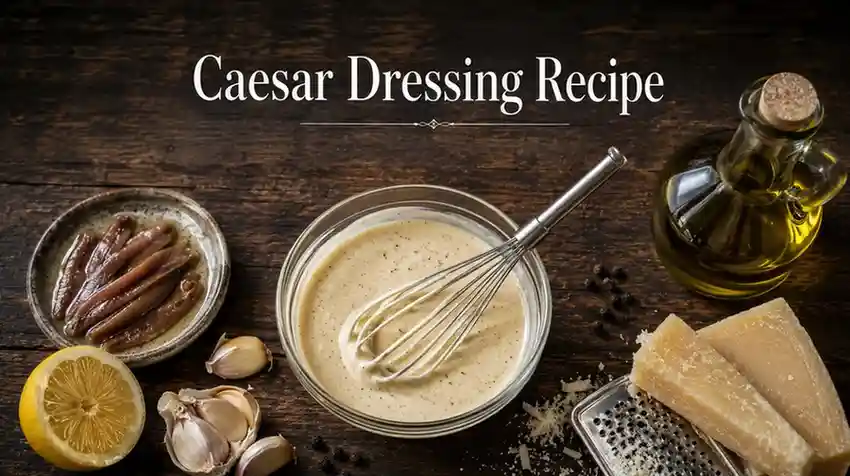
Stop letting bottled dressings water down your salads. A great Caesar should punch with garlic, wrap your tongue in silky richness, and leave a clean, lemony finish. This Caesar dressing recipe delivers all that in five minutes flat. No fancy gear, no stabilizers, no muted flavors — just hand-whisked magic that transforms ordinary romaine into a restaurant-worthy plate.
What Makes a True Caesar Dressing?
An authentic Caesar dressing is an emulsified, cold sauce built on oil, egg yolk, acid, and powerful umami anchors. Chef Caesar Cardini first shook it up tableside in Tijuana in 1924, using whole garlic cloves, Worcestershire sauce, lemon, coddled egg, Parmesan, and olive oil. The original formula skipped anchovy fillets — the Worcestershire supplied the fishy depth — but modern palates demand the punch of oil-packed anchovies.
Key traits of a true Caesar dressing:
- Creamy yet pourable, never gloppy
- A bold garlic-lemon backbone balanced by savory cheese and anchovy
- Fully emulsified, so it clings to every lettuce leaf without separating
- Made fresh, never cooked, to preserve raw, vibrant character
Essential Ingredients for the Best Caesar Dressing Recipe
Below is the complete ingredient blueprint. Each component has a job, and swapping or skipping changes the final character dramatically.
| Ingredient | US Amount | Metric Amount | Why It Matters |
| Oil-packed anchovy fillets | 4–5 fillets | 20–25 g | Core umami; creates deep savory foundation |
| Garlic clove, large | 1 | 5 g | Pungent heat that mellows when mashed with salt |
| Kosher salt | ¼ tsp | 1.5 g | Breaks down garlic and brightens all flavors |
| Fresh lemon juice | 2 tbsp | 30 ml | Bright, clean acidity that lifts the richness |
| Dijon mustard | 1 tsp | 5 g | Emulsifier and tangy background note |
| Worcestershire sauce | 1 tsp | 5 ml | Anchovy-adjacent depth plus subtle sweetness |
| Large egg yolk, room temperature | 1 | 18–20 g | The emulsification engine; adds silkiness |
| Extra-virgin olive oil | ½ cup | 120 ml | Fruity, peppery body — the dressing’s backbone |
| Freshly grated Parmesan | ⅓ cup | 30 g | Nutty saltiness that thickens and seasons |
| Freshly ground black pepper | ¼ tsp | 0.5 g | Gentle heat that ties everything together |
Room temperature ingredients are non-negotiable. Cold egg yolk can seize and break the emulsion. Pull the yolk and lemon juice out 30 minutes before you start. Serious Eats food scientists confirm that same-temperature components form a stabler, creamier emulsion.
Step-by-Step: How to Make Caesar Dressing from Scratch
Follow this Caesar dressing recipe exactly once, then trust your instincts for every batch after.
- Mash the anchovies and garlic into a paste. Place anchovy fillets, peeled garlic, and salt on a cutting board. Use the side of a chef’s knife to crush and smear the mixture repeatedly until it turns into a smooth, reddish-brown paste. This releases allicin from the garlic and blends the anchovy fat evenly.
- Build the flavor base. Scrape the paste into a medium mixing bowl.Add Worcestershire sauce, Dijon mustard, and lemon juice. Whisk until fully incorporated and the salt dissolves completely.
- Introduce the egg yolk. Drop the room-temperature yolk into the bowl and whisk vigorously for 20 seconds. The mixture will lighten in color and thicken slightly — this is the first stage of your emulsion.
- Stream in the oil, drop by drop at first. While whisking constantly, drizzle in extra-virgin olive oil as slowly as possible, starting with a literal drop-by-drop rhythm. After about one-quarter of the oil is incorporated and the mixture looks like thin mayonnaise, you can pour the rest in a thin, steady stream. Constant, rapid whisking keeps the tiny oil droplets suspended.
- Finish with Parmesan and pepper. Fold in the freshly grated Parmesan and black pepper. Taste. Adjust salt or lemon — the dressing should be punchy, creamy, and sharp all at once.
- Rest for 10 minutes. Letting the Caesar dressing rest melds the garlic and anchovy heat. If it tightens up too much, whisk in a teaspoon of cold water to loosen.
The Anchovy Question: Why They’re Non-Negotiable
Anchovies make this Caesar dressing recipe unmistakably bold. They dissolve completely into the paste, so nobody bites into a fishy chunk. The glutamate in cured anchovies binds with garlic’s sulfur compounds to create an umami bomb that flatters Parmesan and olive oil. Skipping them produces a flat, lemony mayo — fine, but not Caesar. If you have a true aversion, replace the anchovy fillets with 1 teaspoon of white miso paste plus an extra dash of Worcestershire. The results are different but respectably deep.
Mastering Emulsification for a Creamy Texture
Caesar dressing is a temporary emulsion — no industrial stabilizers, just whisk action and egg lecithin. Three rules keep it foolproof:
- Start slow. Drizzle oil one droplet at a time at the beginning. Rushing floods the yolk and breaks the sauce.
- Keep everything at room temp. Cold oil or yolk can cause the fat to solidify and split.
- Whisk direction doesn’t matter; speed does. A tight, fast back-and-forth motion works better than a lazy circular stir.
If the sauce breaks (turns grainy and liquid), don’t panic. Place a fresh egg yolk in a clean bowl, and slowly whisk the broken dressing into it. The emulsion will tighten up within seconds.
Flavor Balancing: Salt, Acid, and Umami
A perfect Caesar dressing recipe hits three notes in equal measure: salty (anchovy, Parmesan, salt), acidic (lemon, mustard), and umami-rich (anchovy, Worcestershire, aged cheese). Taste with a piece of lettuce, not your finger. Romaine’s water content tones down the intensity. Add a pinch more salt if the dressing tastes flat. Squeeze in extra lemon if the oil dominates. A tiny scrape of lemon zest brings aromatic lift without extra sourness.
Variations: Quick Coleslaw Dressing Recipe and Tangy Russian Dressing
Once you master this emulsified technique, branching into other classic dressings becomes effortless. A speedy coleslaw dressing recipe uses the same mayo-style base but swaps the anchovy, garlic, and Parmesan for sugar, celery seed, and a splash of apple cider vinegar. It coats shredded cabbage with a sweet-tangy creaminess that balances barbecue and fried foods perfectly. (Grab the full coleslaw dressing recipe from our cluster guide.)
Russian dressing takes the stage as a zippy, ketchup-spiked cousin. Blend this Caesar’s emulsified base with tomato paste or ketchup, sweet pickle relish, and a pinch of smoked paprika. It delivers the iconic Reuben sandwich punch and doubles as a fantastic burger spread. Both dressings rely on the exact same hand-whisking rhythm you’ve already learned.
Common Mistakes That Ruin Caesar Dressing (and How to Fix Them)
- Skipping the anchovy paste step. Tossing whole anchovies straight into the bowl leaves stringy chunks. Always crush them with garlic and salt first.
- Using pre-grated Parmesan. Packaged grated cheese contains anti-caking agents that make the dressing grainy. Grate your own block with a microplane.
- Pouring all the oil at once. This is the number one cause of broken emulsion. Respect the slow start.
- Adding cold egg yolk directly from the fridge. Give it 30 minutes on the counter. Submerge a cold egg in warm water for 5 minutes if you’re short on time.
- Underseasoning. Cold food mutes salt perception. Taste the finished dressing at room temperature and again after it chills.
How to Store Homemade Caesar Dressing Safely
Homemade Caesar dressing contains raw egg yolk. Keep it refrigerated in an airtight glass jar at 40°F (4°C) or below. Use within 4 days to enjoy peak freshness and food safety. The olive oil will solidify slightly in the cold — simply let the jar sit at room temperature for 10 minutes and shake or stir before serving. Do not freeze; the emulsion will crack upon thawing and the texture turns unpleasantly watery.
Best Uses Beyond Salad: Caesar as a Dip and Marinade
This Caesar dressing recipe refuses to stay in the salad bowl. Slather it on grilled sourdough for the ultimate crouton. Use it as a dip for raw vegetables, sweet potato fries, or crispy chicken tenders. Thin it with a little buttermilk and drizzle over roasted broccoli or grilled shrimp. Marinate chicken thighs in the dressing for 30 minutes before grilling — the acids and enzymes tenderize the meat while building a charred, savory crust.
Pro Tips for a Restaurant-Worthy Caesar Salad
- Hand-tear cold, crisp romaine hearts. Pre-cut bagged lettuce wilts fast. Dry leaves thoroughly; water is the enemy of a good emulsion.
- Toss the lettuce with half the dressing first. Add croutons and extra Parmesan, then spoon more dressing on top. This ensures every leaf is coated evenly, not drenched.
- Make your own croutons. Cube day-old bread, toss with olive oil, salt, and a smashed garlic clove, and bake at 375°F (190°C) for 12 minutes. The crunch holds up better than store-bought.
- Grate extra Parmesan over the finished salad using a fine microplane. The fluffy cheese catches the dressing and amplifies the nutty taste.
Frequently Asked Questions About Caesar Dressing
Can I make this Caesar dressing recipe without raw eggs?
Yes. Swap the raw egg yolk with 2 tablespoons of high-quality mayonnaise. The result is slightly less airy but fully emulsified and safe. Pasteurized shell eggs or liquid pasteurized yolks also eliminate risk without changing the texture.
How long does homemade Caesar dressing last in the fridge?
Store it in a sealed glass jar and use it within 4 days. Because the recipe contains raw egg yolk, discard any leftovers beyond that window for food safety.
What can I put in Caesar dressing in place of anchovies?
Worcestershire sauce already provides some anchovy flavor. To fully replace fillets, use 1 teaspoon white miso paste plus an extra ½ teaspoon Worcestershire. The umami depth stays strong, though the character shifts slightly.
Is Caesar dressing gluten-free?
This Caesar dressing recipe is naturally gluten-free as long as your Worcestershire sauce is labeled gluten-free. Most Parmesan and Dijon mustard are also gluten-free, but always check labels.
Can I freeze Caesar dressing?
Freezing is not recommended. The emulsion breaks upon thawing, leaving a separated, watery layer and a grainy texture. Fresh, refrigerated Caesar dressing always outperforms thawed versions.
How does coleslaw dressing differ from Caesar dressing?
A classic coleslaw dressing recipe starts with a mayo base but leans sweet and tangy, using sugar and vinegar instead of anchovy, garlic, and Parmesan. Caesar is savory and umami-driven; coleslaw dressing is bright, creamy, and perfect for crisp cabbage.
Now It’s Your Turn
You’ve just unlocked a Caesar dressing recipe that turns every salad into a main event. The anchovy-garlic paste, slow-emulsion technique, and room-temperature rule are yours to keep forever. Whip up a jar today, drench a bowl of cold romaine, and tag your creation. Hungry for more from-scratch dressings? Explore our detailed guides on a vibrant coleslaw dressing recipe and the bold Russian dressing that completes any Reuben sandwich. With a whisk in your hand, fresh flavor begins.
hisk in your hand.Written by Chef Maria Santos, recipe developer and culinary instructor with 18 years of professional kitchen experience.
Sources: Caesar’s Restaurants historical archive (caesarsrestaurants.com); Serious Eats “The Food Lab” emulsification guidelines; Bon Appétit test kitchen notes on anchovy paste technique.