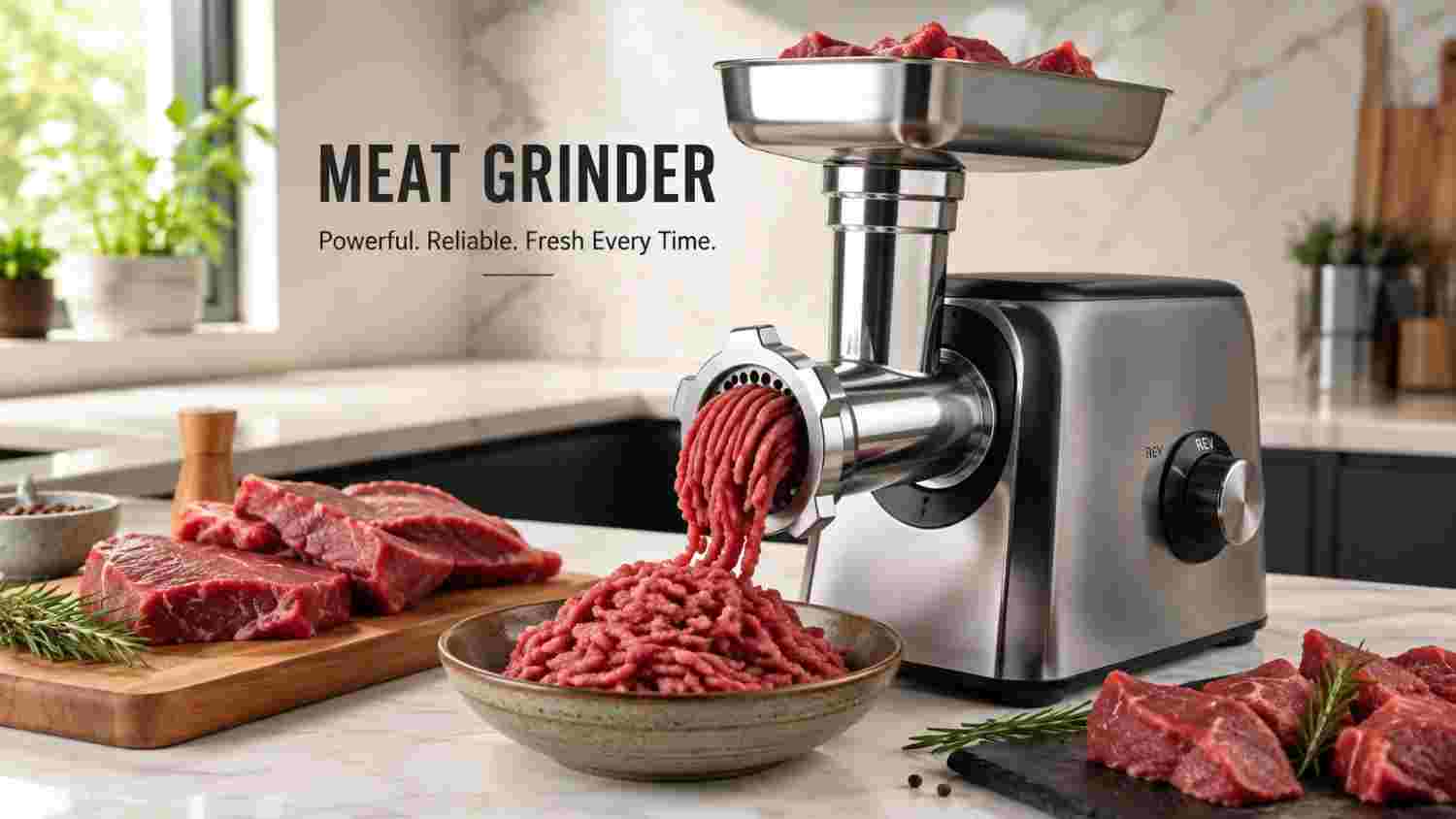
Most home cooks throw away hundreds of dollars every year on pre-ground meat that tastes flat, dries out on the grill, and carries a mystery blend of who-knows-what. The fix is embarrassingly simple and costs less than you think.
Grinding your own meat at home turns ordinary burgers, sausages, tacos, and meatballs into something your guests will genuinely beg the recipe for. The texture is juicier, the flavor is deeper, and you know exactly what went into every single bite.
Whether you need a powerful electric meat grinder for weekly meal prep or a basic manual meat grinder for the occasional batch of chili, this guide strips away the marketing fluff. You will walk away knowing exactly which meat grinder machine deserves a permanent spot on your counter.
Why Owning a Meat Grinder Machine Changes Your Cooking Forever
Freshly ground beef has a texture and juiciness that supermarket packages simply cannot match. When you control the grind, you control the fat ratio, the coarseness, and the freshness down to the exact minute you cook.
A dedicated meat grinder machine also lets you experiment with custom blends you would never find at the grocery store. Think short rib mixed with brisket for the ultimate smash burger, or pork shoulder cut with a touch of bacon fat for homemade Italian sausage.
Food safety is another massive win that most people overlook entirely. Pre-ground meat sits in processing plants for days, mixing cuts from hundreds of different animals into a single package. Grinding at home means one clean cut, one clean machine, and zero guesswork about what is actually in your food.
The flavor difference is so dramatic that most first-time users say they will never go back to store-bought ground beef again. That alone justifies the investment within the first month.
Electric Meat Grinder vs Manual Meat Grinder: Pick Your Style
An electric meat grinder handles large batches without breaking a sweat or your arms. If you regularly process five or ten pounds of meat in a single session, the motor does all the heavy lifting while you simply feed the hopper.
A manual meat grinder, on the other hand, costs a fraction of the price and takes up almost no storage space at all. It clamps to your countertop and runs entirely on elbow grease, making it perfect for small batches, camping trips, or off-grid cooking scenarios.
The real deciding factor is your weekly volume. Weekend warriors who grind a couple of pounds for Saturday burgers will love the simplicity and low cost of a manual meat grinder. Serious hunters, meal-preppers, and large families should invest in an electric meat grinder that can chew through tough cuts without stalling or overheating.
Noise is another consideration worth mentioning. Electric models hum loudly for a few minutes, while a manual meat grinder is completely silent. If you cook late at night in an apartment, that detail matters more than you might think.
The KitchenAid Meat Grinder Attachment That Changed Everything
If you already own a KitchenAid stand mixer, the KitchenAid meat grinder attachment is the fastest shortcut to fresh-ground meat without buying a standalone unit. It locks directly into the mixer’s power hub and uses the motor you already paid for.
The standard KitchenAid meat grinder attachment ships with coarse and fine grinding plates plus a sausage stuffer tube. It handles beef, pork, chicken, and even soft vegetables with surprising ease for its remarkably compact size.
Many home cooks prefer the meat grinder KitchenAid setup over a bulky standalone machine because it saves precious counter space. You store the attachment in a kitchen drawer and pull it out only when you need it, which is a huge deal in smaller apartments and condos.
One practical heads-up: the Kitchen Aid meat grinder attachment works best with well-chilled meat cut into one-inch cubes. Warm or overly fatty cuts can smear inside the housing, so pop your meat in the freezer for about twenty minutes before you start grinding.
LEM Meat Grinder and Commercial Meat Grinder Picks for Power Users
The LEM meat grinder line is a favorite among hunters who process entire deer in a single afternoon without slowing down. Their stainless-steel builds resist corrosion, and the motors run cool even during marathon sessions that would overheat cheaper home units.
A commercial meat grinder takes raw power to another level entirely. These machines feature all-metal gears, high-torque motors, and grinding capacities that can exceed 300 pounds per hour. They are purpose-built for butcher shops, restaurants, and serious homesteaders who process whole animals.
If you regularly process wild game or buy whole animals from local farms, a LEM meat grinder or a mid-range commercial meat grinder will pay for itself within the first year. The speed, consistency, and durability you gain over a basic home unit is a night-and-day difference.
Quick Comparison: Top Meat Grinder Types at a Glance
| Grinder Type | Best For | Avg. Price | Grind Speed | Noise Level |
| Manual Meat Grinder | Small batches, camping | $20 – $50 | Slow | Silent |
| KitchenAid Meat Grinder Attachment | Stand mixer owners | $50 – $80 | Medium | Low |
| Electric Meat Grinder (Home) | Weekly meal prep | $80 – $200 | Fast | Moderate |
| LEM Meat Grinder | Hunters, large batches | $200 – $500 | Very Fast | Moderate |
| Commercial Meat Grinder | Butcher shops, farms | $500 – $2,000+ | Ultra Fast | Loud |
The table above reveals a clear pattern. You pay more for speed and long-term durability, but the jump from manual to electric is where most home cooks experience the biggest quality-of-life improvement in the kitchen.
5 Rookie Mistakes That Ruin Your First Grind
Skipping the chill step entirely. Warm fat smears instead of cutting cleanly, giving you a mushy, paste-like texture. Always freeze your meat and grinder parts for at least twenty minutes before you start.
Using the wrong grinding plate. The coarse plate is for burgers and chili. The fine plate is for hot dogs and bologna. Mixing them up leads to disappointing results every single time you fire up the machine.
Overloading the hopper with too much meat. Feeding chunks too fast jams the auger and strains the motor. Use the stomper gently and let the meat grinder machine do the work at its own pace.
Ignoring the blade orientation during assembly. The flat side of the cutting blade must face the grinding plate directly. Installing it backward produces torn, uneven meat instead of a clean, professional grind.
Forgetting to clean the unit immediately after use. Dried meat residue hardens like cement inside the housing within hours. Disassemble and wash every single part with hot soapy water the moment you finish grinding.
Frequently Asked Questions
Which meat grinder is the best for use at home?
For most kitchens, a mid-range electric meat grinder in the $100 to $200 range offers the best balance of power and everyday convenience. If you already own a stand mixer, the KitchenAid meat grinder attachment is a smart, budget-friendly alternative that delivers surprisingly good results for the price.
Can I grind chicken bones in a meat grinder machine?
Most home-grade units cannot handle bones and will break or jam badly. If you need to grind soft poultry bones for raw pet food, look for a commercial meat grinder or a heavy-duty LEM meat grinder specifically rated for bone processing.
How do I clean a Kitchen Aid meat grinder attachment?
Disassemble every piece immediately after use and hand wash the grinding plates, blade, and housing in hot soapy water. Never put aluminum parts in the dishwasher, as the harsh detergent will oxidize and permanently discolor them.
Is a manual meat grinder actually worth buying?
Absolutely, if you only grind small amounts a few times a year. A manual meat grinder is cheap, portable, and requires zero electricity to operate. It also makes a fantastic backup tool for camping trips or emergency preparedness kits.
How long does a LEM meat grinder typically last?
With proper cleaning and occasional gear lubrication, a LEM meat grinder can easily last ten to fifteen years or more. Their stainless-steel construction and fully replaceable parts make them one of the most durable options on the entire market.
What size electric meat grinder should I buy for my family?
For families grinding five to ten pounds per session, a #8 or #12 electric meat grinder is ideal. Hunters and bulk processors should step up to a #22 or #32 size for significantly faster throughput and less strain on the motor.
Your Next Move
Stop settling for bland, oxidized supermarket meat that was ground days before you ever picked it up. A quality meat grinder puts you in total control of freshness, fat content, and flavor in a way no store package ever will.
Start small with a KitchenAid meat grinder attachment if you already own the mixer, or jump straight to a standalone electric meat grinder if you cook for a crowd. Either way, your very first bite of a truly fresh-ground burger will make you wonder why you waited this long to make the switch.