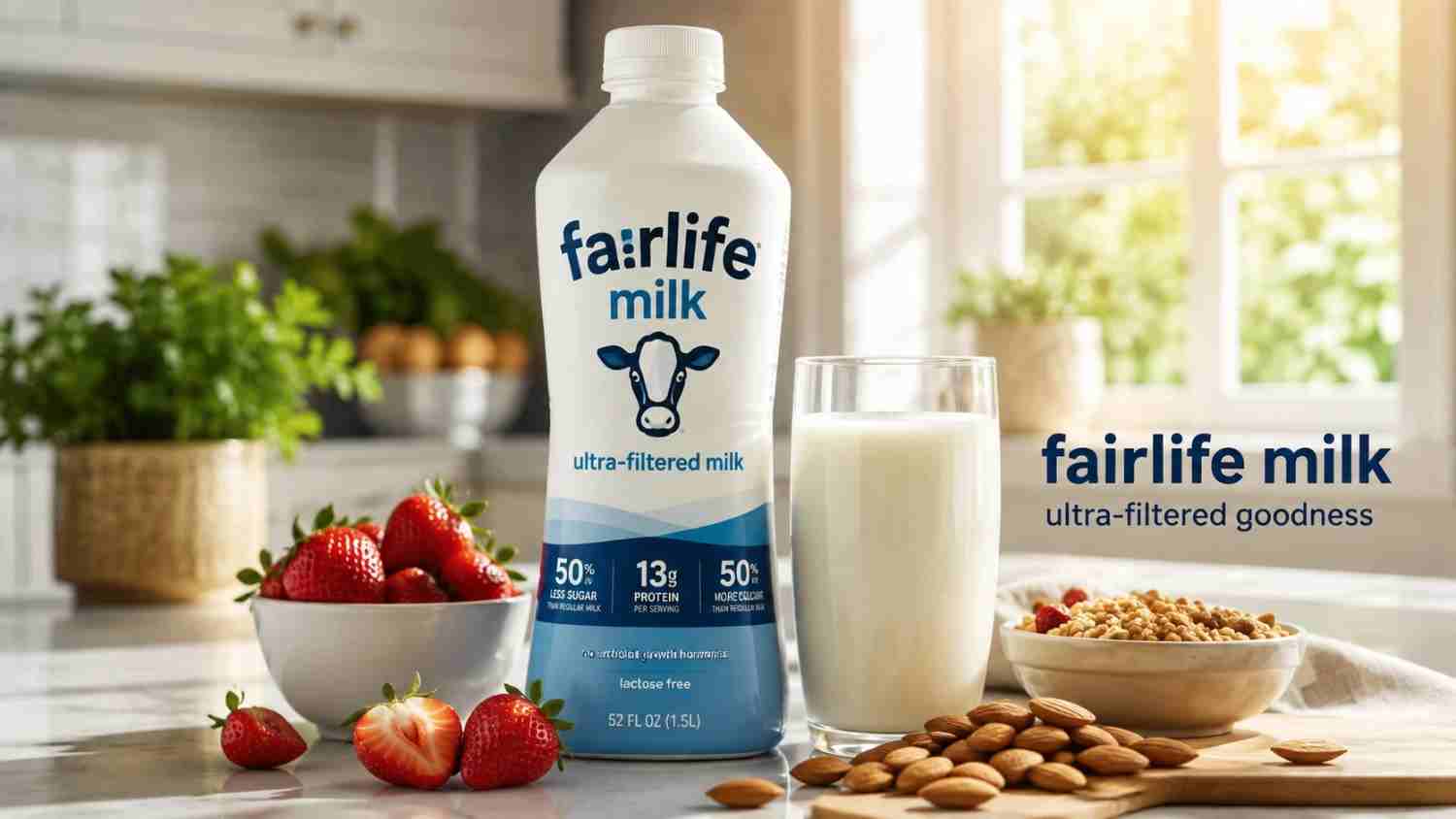
You’ve probably spotted those sleek bottles in the dairy aisle and wondered if the premium price tag is actually justified. Fairlife milk has taken the grocery world by storm, but the real question is whether it lives up to the bold claims printed on every label.
Most shoppers grab it because a fitness influencer recommended it or because the “50% more protein” sticker caught their eye. But there’s a lot more happening inside that bottle than most people realize, and some of it might genuinely surprise you.
This guide strips away the marketing fluff and gives you the raw, honest breakdown of what fairlife milk actually delivers. From nutrition numbers to the shortage that left shelves empty, you’ll walk away knowing exactly whether this milk deserves a permanent spot in your fridge.
What Is Fairlife Milk and Why Is Everyone Talking About It?
Fairlife milk is an ultra-filtered dairy product made by Fairlife LLC, a company co-founded by Mike and Sue McCloskey in 2012. The brand operates out of Indiana and partners with select family-owned dairy farms across the United States.
The magic behind fairlife milk comes from a proprietary cold-filtration process that separates milk into its five core components: water, butterfat, protein, vitamins and minerals, and lactose. These components are then recombined in different ratios to create a product higher in protein and lower in sugar than regular milk.
That filtration process also removes nearly all the lactose, making fairlife milk a go-to option for people with lactose sensitivity. It still comes from real cows, so it’s not a plant-based alternative — it’s real dairy, just restructured at a molecular level.
The brand exploded in popularity around 2019 when Coca-Cola acquired full ownership, pumping serious marketing dollars behind the product. Suddenly, fairlife milk was everywhere from Costco to corner bodegas, and the conversation around ultra-filtered dairy went mainstream almost overnight.
Fairlife Milk Nutrition Facts: The Numbers That Actually Matter
If you’ve ever flipped a carton of fairlife milk around to check the label, you probably noticed the numbers look almost too good to be true. Let’s break down exactly what you’re getting per single serving compared to standard 2% milk.
| Nutrient | Fairlife 2% (1 cup) | Regular 2% Milk (1 cup) |
| Calories | 120 | 122 |
| Protein | 13g | 8g |
| Sugar | 6g | 12g |
| Fat | 4.5g | 5g |
| Calcium | 380mg | 293mg |
| Lactose | 0g | ~12g |
| Vitamin D | 5mcg | 3mcg |
The protein jump is the headline grabber — you’re getting roughly 60% more protein per glass without adding extra calories. That’s a massive advantage for anyone tracking macros or trying to build lean muscle without chugging protein shakes all day.
The sugar reduction is equally impressive. Fairlife cuts the natural sugar content in half by filtering out the lactose, which is the primary sugar found in all cow’s milk. Your taste buds barely notice the difference, but your blood sugar response definitely does.
Calcium levels also get a meaningful boost through the filtration process, giving your bones more support per serving. For parents trying to sneak extra nutrition into their kids’ diets, that small bump adds up fast over the course of a week.
Is Fairlife Milk Healthy? Here’s the Honest Answer
So is fairlife milk healthy enough to justify switching from your regular carton? The short answer is yes — for most people, it offers a genuine nutritional upgrade over conventional milk without introducing artificial ingredients or weird additives.
The higher protein content supports muscle recovery, keeps you feeling full longer, and helps stabilize energy levels throughout the morning. If you’re someone who skips breakfast or struggles with mid-morning cravings, that extra protein can make a noticeable difference by noon.
The zero-lactose formulation is a game-changer for the estimated 36% of Americans who experience some degree of lactose malabsorption. Many of these people avoid dairy entirely, missing out on calcium and vitamin D, simply because regular milk wrecks their stomach.
Fairlife milk lets them enjoy real dairy without the bloating, gas, or digestive discomfort that usually follows a glass of conventional milk. That alone makes it a healthier choice for a huge segment of the population who would otherwise reach for heavily processed plant-based alternatives.
Is Fairlife Milk Good for You Long-Term?
Long-term, fairlife milk holds up well as a daily staple for active adults, growing kids, and older individuals who need extra protein and calcium. The clean ingredient list — just ultra-filtered milk, lactase enzyme, and added vitamins — means you’re not consuming anything your body can’t process naturally.
That said, it’s not a miracle drink. If your overall diet is poor, swapping your milk brand won’t fix underlying nutritional gaps. Think of fairlife milk as a smart upgrade within a broader healthy eating pattern, not a standalone solution.
One thing worth mentioning is the price. Fairlife typically costs 30% to 50% more than store-brand milk, which adds up quickly for larger families. The nutritional benefits are real, but you have to decide whether your budget supports the premium.
Fat Free Fairlife Milk: Who Should Actually Drink It?
Fat free fairlife milk is the leanest option in the lineup, packing 13 grams of protein and just 90 calories per serving with zero grams of fat. On paper, it looks like the perfect choice for anyone on a strict calorie deficit or following a low-fat eating plan.
In practice, the fat-free version tastes noticeably thinner than the 2% or whole milk options. The mouthfeel is closer to skim milk, which some people genuinely prefer but others find watery and unsatisfying, especially in coffee or cereal.
If you’re blending it into smoothies or using it in protein-heavy recipes where texture matters less, fat free fairlife milk works beautifully. The protein content stays identical across all varieties, so you’re not sacrificing any muscle-building benefits by dropping the fat.
For most people, though, the 2% version strikes the best balance between taste, satiety, and calorie control. The small amount of fat helps your body absorb the fat-soluble vitamins A and D more efficiently, which is a detail most shoppers completely overlook.
The Fairlife Milk Shortage: What Happened and Is It Over?
If you walked into your local grocery store in late 2022 or early 2023 and found an empty shelf where fairlife milk usually sits, you weren’t imagining things. The fairlife milk shortage was very real and frustrated millions of loyal customers across the country.
The root cause was a combination of supply chain disruptions, surging demand that outpaced production capacity, and temporary issues at key processing facilities. Fairlife’s ultra-filtration process requires specialized equipment that can’t be scaled up overnight, which made recovery painfully slow.
Social media amplified the panic, with TikTok videos of bare dairy aisles going viral and sparking a minor hoarding effect that made the shortage feel even worse than it actually was. Some fans reported driving to three or four different stores just to find a single bottle.
As of 2025, the supply situation has largely stabilized. Fairlife expanded its production partnerships and opened new processing lines to meet the demand that caught everyone off guard. You should be able to find it consistently at most major retailers now, though occasional regional gaps still pop up during peak demand periods.
Frequently Asked Questions About Fairlife Milk
Is fairlife milk real milk or a synthetic product?
Fairlife milk is 100% real cow’s milk that has been ultra-filtered to change its nutritional profile. No synthetic proteins or artificial bases are added during production. The filtration process simply rearranges the natural components already present in raw milk.
Can lactose-intolerant people safely drink fairlife milk?
Yes, fairlife milk is lactose-free and safe for the vast majority of people with lactose intolerance. The filtration process removes lactose, and a lactase enzyme is added as an extra safeguard. Those with a true dairy protein allergy should still avoid it.
Why does Fairlife milk have a longer shelf life than ordinary milk?
Fairlife uses ultra-pasteurization combined with its filtration process, which eliminates more bacteria than standard pasteurization. Unopened bottles can last up to 90 days in the refrigerator compared to roughly two weeks for conventional milk. Once opened, drink it within 14 days.
Does the flavor of Fairlife milk differ from that of ordinary milk?
Most people describe fairlife milk as slightly creamier and a touch sweeter than regular milk, despite having less sugar. The ultra-filtration concentrates the natural flavors, giving it a richer profile that works exceptionally well in coffee and smoothies.
Is fairlife milk safe for children?
Fairlife milk is safe for children over the age of one, just like regular cow’s milk. The higher protein and calcium content can actually benefit growing kids, though you may want to start with the whole milk version for toddlers who need the extra dietary fat for brain development.
Final Verdict: Should You Make the Switch?
Fairlife milk earns its spot in the dairy case by delivering more protein, less sugar, and zero lactose without resorting to artificial shortcuts. The taste is genuinely better than most competitors, and the nutritional numbers back up every claim on the label.
If you’re an athlete, a busy parent, or someone who simply wants more from their morning glass of milk, this is one of the smartest upgrades you can make at the grocery store. Just be prepared to pay a little extra for the convenience and quality.
The best move is to grab a single bottle of the 2% variety on your next shopping trip and run your own taste test. Your palate and your macros will tell you everything you need to know within the first week.