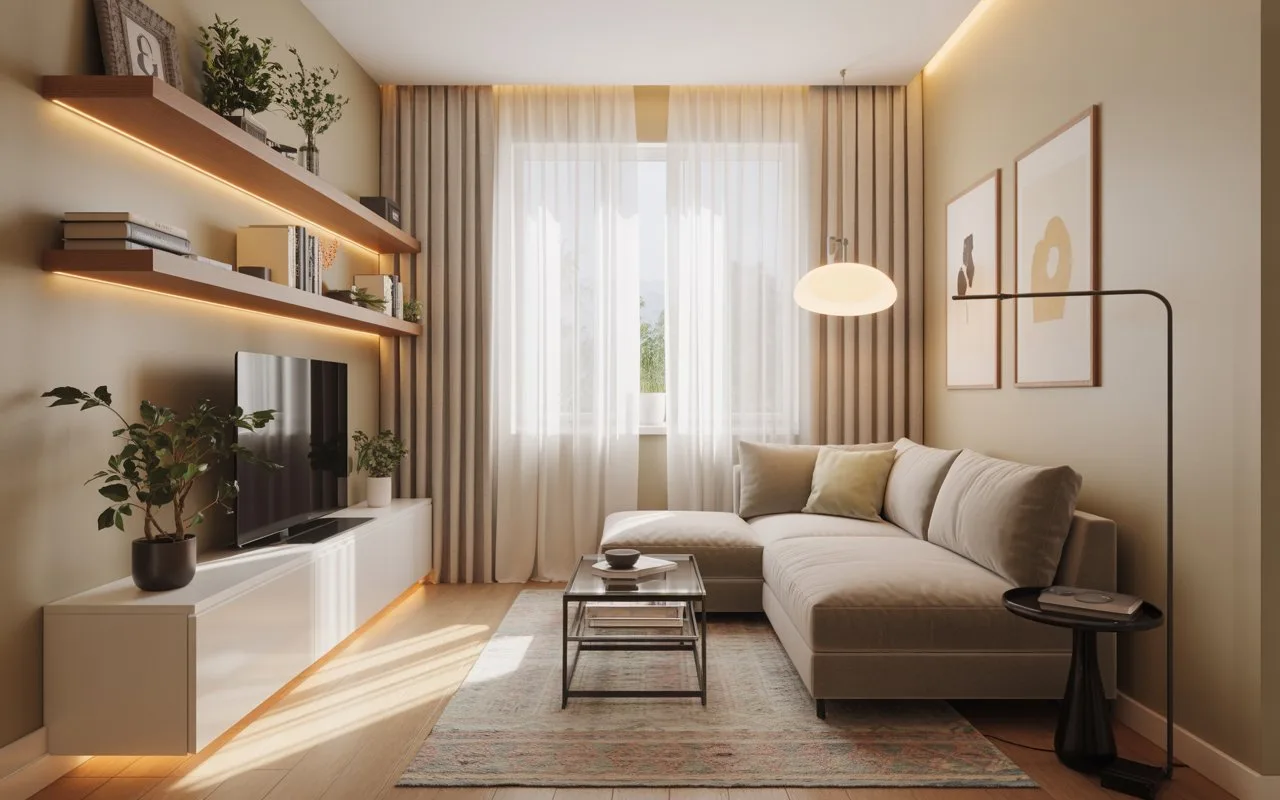
A small living room can sometimes feel like a puzzle with missing pieces. You want comfort, style, storage, and enough room to move around, but everything seems to compete for space. The good news is that a compact area does not have to feel cramped or limited. In fact, some of the most beautiful and cozy homes prove that smaller spaces often inspire the most creative designs.
Think of your living room as a suitcase before a trip. When you pack carefully, everything fits perfectly without feeling messy. The same idea applies to interior design. A few thoughtful choices can turn even a tiny room into a place that feels welcoming, organized, and visually larger than it really is.
Understanding Your Space Before Decorating
Before buying furniture or hanging artwork, spend some time looking at the room itself. Every inch matters in a compact area.
Ask yourself a few simple questions:
- Where does natural light enter?
- Which wall is the focal point?
- How do people move through the room?
- What activities happen there most often?
Some people use their living room for watching television, while others read books, entertain guests, or work from home. Understanding your priorities helps avoid unnecessary items that take up valuable room.
Layout
A thoughtful layout often matters more than the size of the room itself. Moving furniture a few inches can completely change how a space feels.
Choose Furniture That Fits the Room
One of the biggest mistakes people make is selecting oversized furniture.
A huge sofa in a tiny room can feel like placing an elephant in a small garden. Instead, choose pieces that fit comfortably without dominating the area.
Scale
Look for:
- Slim-arm sofas
- Apartment-sized seating
- Compact coffee tables
- Lightweight chairs
- Narrow consoles
Furniture with exposed legs often creates a more open appearance because you can see more floor beneath it.
Balance
Try not to fill every corner. Empty space also plays an important role in design.
Use Light Colors to Create an Open Feeling
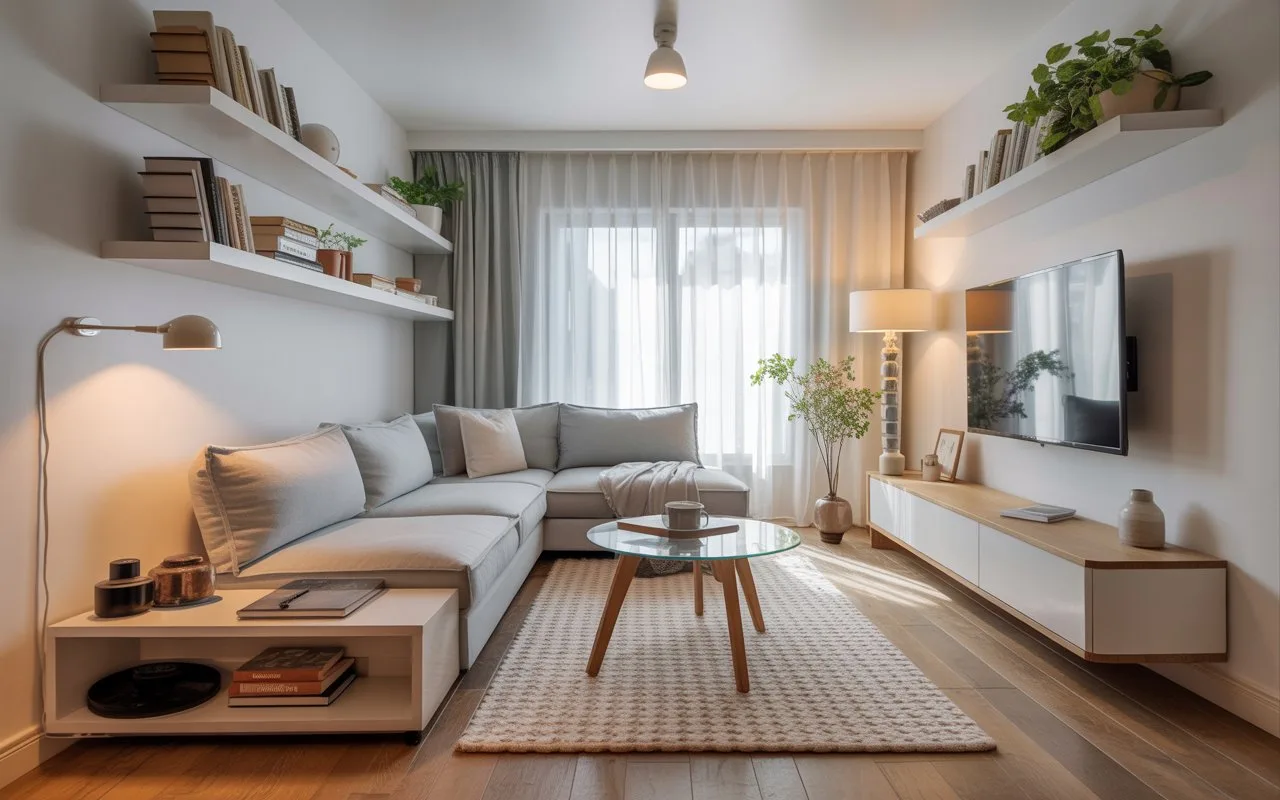
Color influences how a room feels more than many people realize.
Lighter shades reflect natural light and create an airy atmosphere. Dark colors can look beautiful too, but in very small rooms they sometimes create a heavier appearance.
Popular choices include:
- Soft white
- Beige
- Cream
- Light gray
- Pale blue
- Warm sand tones
Contrast
Adding subtle contrast through cushions, rugs, and décor prevents the room from feeling flat.
Make Natural Light Your Best Friend
Light can completely transform a compact room.
If possible, avoid blocking windows with heavy furniture or thick curtains.
Window Treatment
Consider:
- Sheer curtains
- Light-colored drapes
- Blinds that open fully
- Minimal window coverings
Natural sunlight creates depth and gives the impression of a larger room.
If your room receives limited sunlight, layered artificial lighting can help.
Use:
- Floor lamps
- Wall sconces
- Table lamps
- Soft ceiling lights
Add Mirrors for Depth and Brightness
Mirrors are one of the oldest design tricks for making small rooms appear bigger.
A mirror reflects both light and views, creating the illusion of added space.
Placement Ideas
Good locations include:
- Opposite a window
- Above a console table
- Behind seating
- Near decorative lighting
Large mirrors often work better than several tiny ones because they reduce visual clutter.
Select Multi-Purpose Furniture
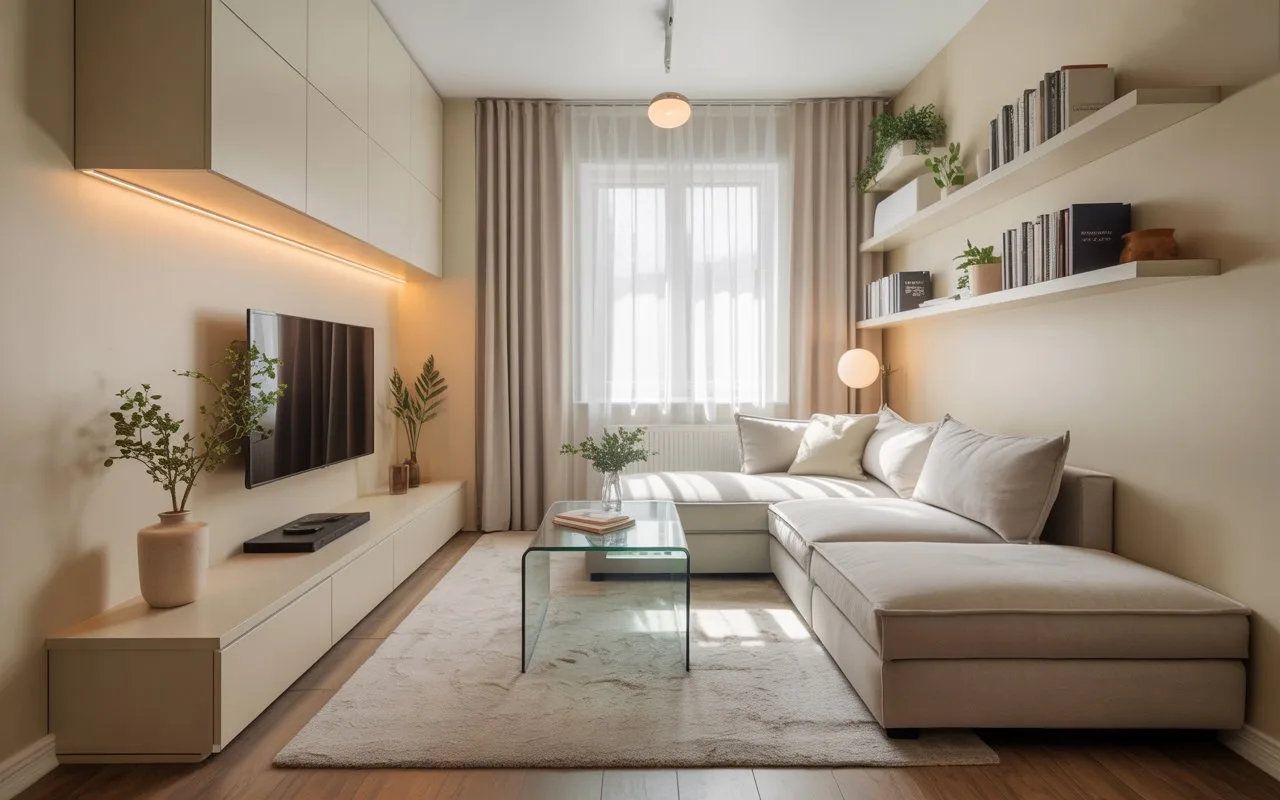
When space is limited, every piece should earn its place.
Furniture that serves multiple functions helps maximize the room without adding clutter.
Smart Pieces
Examples include:
- Storage ottomans
- Nesting tables
- Sofa beds
- Lift-top coffee tables
- Benches with hidden storage
These pieces quietly perform several jobs at once.
Imagine having a coffee table that stores blankets, magazines, and remote controls. Suddenly the room feels cleaner without adding extra cabinets.
Think Vertically Instead of Horizontally
People often focus on floor space and forget about walls.
When you build upward, you free up valuable room below.
Wall Space
Ideas include:
- Floating shelves
- Vertical storage units
- Hanging planters
- Tall bookcases
- Mounted television units
Tall shelves draw the eyes upward, making ceilings appear higher.
Organization
Keep frequently used items at easy reach while placing decorative pieces higher up.
Keep Décor Simple and Intentional
Decorating does not mean filling every surface.
Too many accessories can make a compact room feel crowded.
Instead, choose a few meaningful pieces.
Examples include:
- One large artwork instead of many small frames
- A statement vase
- Decorative cushions
- Indoor plants
- A textured rug
Minimalism
Minimal does not mean empty.
It simply means giving every object a purpose.
Create Storage Without Sacrificing Style
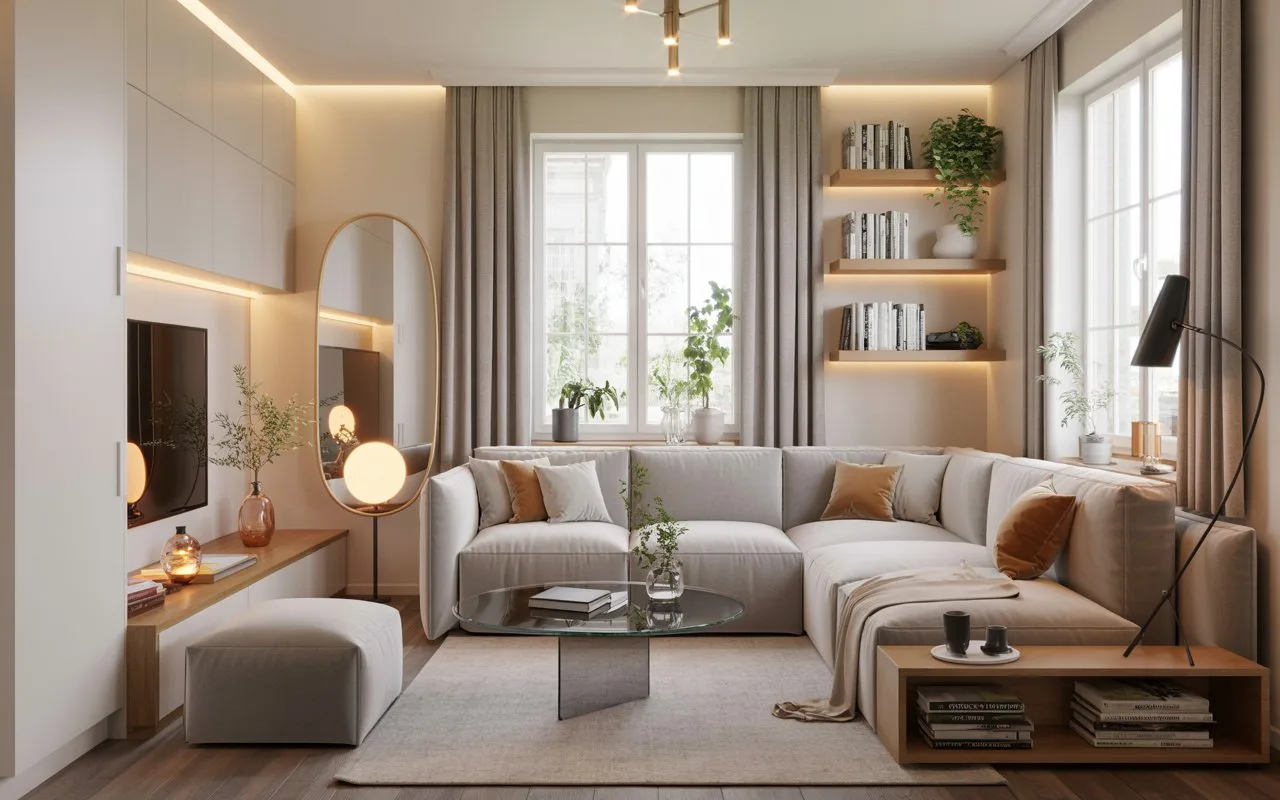
Storage challenges appear in nearly every small living room.
The goal is to hide clutter while maintaining a clean appearance.
Hidden Storage Ideas
Consider:
- Under-sofa bins
- Built-in shelves
- Side tables with drawers
- Wall cabinets
- Storage baskets
Decorative baskets can hold blankets, toys, magazines, or cables while still looking attractive.
A tidy room naturally feels larger than a messy one.
Add Texture for Warmth and Personality
When using lighter colors and fewer decorations, texture becomes important.
Texture adds depth and comfort without overwhelming the space.
Texture Ideas
Combine materials such as:
- Cotton
- Linen
- Wood
- Glass
- Metal
- Soft rugs
- Knit throws
Layering textures creates interest while maintaining a calm look.
Use Rugs to Define Areas
Rugs can visually organize a room and create structure.
Even in a small area, a properly sized rug can make the room feel more intentional.
Choosing the Right Rug
Keep these tips in mind:
- Avoid rugs that are too small
- Allow furniture legs to partially sit on the rug
- Use lighter tones for openness
- Consider simple patterns
Large rugs often make a room look bigger than several smaller ones.
Bring Life Into the Room With Plants
Plants introduce color, freshness, and energy.
Even one or two small plants can make a room feel more inviting.
Greenery
Good options include:
- Snake plants
- Pothos
- Peace lilies
- Small palms
- Succulents
If floor space is limited, use hanging pots or wall-mounted planters.
Plants make a room feel alive without requiring major changes.
Conclusion
Designing a compact living room is less about size and more about smart choices. A thoughtful layout, properly scaled furniture, good lighting, and creative storage solutions can completely transform the space. Instead of seeing limited square footage as a problem, view it as an opportunity to create something comfortable, stylish, and uniquely yours.
The most inviting rooms are not always the biggest ones. Sometimes the coziest spaces become the heart of a home because every detail has a purpose.
FAQs
1. What color makes a small living room look bigger?
Light shades such as white, cream, soft gray, and pale beige usually reflect more light and create a more open feeling.
2. How can I make my small living room look luxurious?
Use layered lighting, quality fabrics, statement décor pieces, mirrors, and coordinated colors to create an elegant appearance.
3. Should I use large furniture in a small living room?
Oversized furniture generally makes a compact area feel crowded. Smaller, properly scaled pieces usually work better.
4. What type of sofa is best for a compact living room?
Apartment-sized sofas, loveseats, and slim-profile sectionals often fit better while maintaining comfort.
5. How do I reduce clutter in a small living room?
Use hidden storage solutions, keep only necessary items, organize regularly, and choose furniture with built-in storage features.