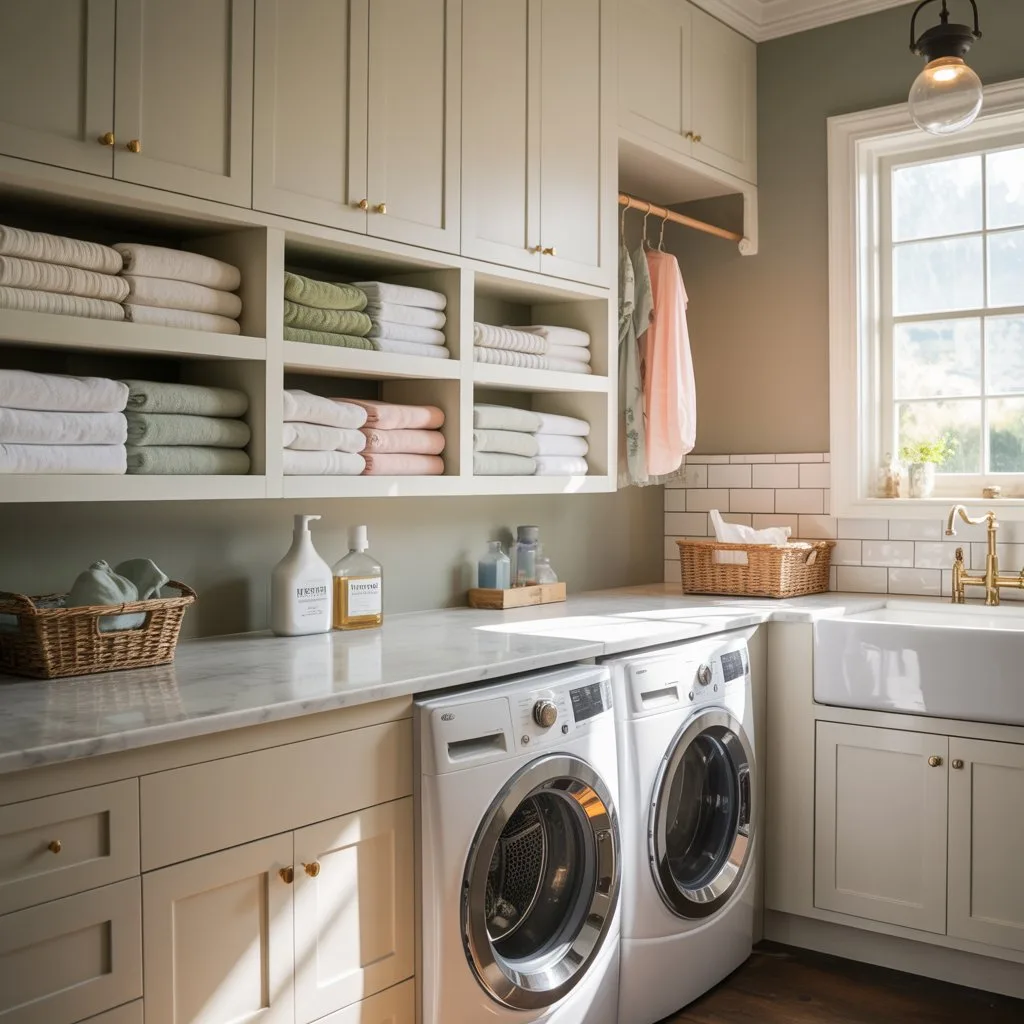
A laundry space is often one of the most overlooked areas in a home. It’s usually tucked away in a corner, basement, or small utility room, treated purely as a functional spot rather than a place worth enjoying. But what if it could feel different? What if doing laundry didn’t feel like a never-ending task, but something a little more organized, even calming?
In this article, we’ll explore practical, creative, and easy-to-apply ideas that can completely change the way a laundry space looks and feels. Whether you have a tiny nook or a full room, there’s always room for improvement.
## 1. Making the Most of Small Spaces
Not everyone has a large dedicated room for laundry, and that’s completely fine. Small spaces can still be highly efficient when designed wisely.
Think vertical. Walls are your best friend here. Installing shelves above the washer and dryer helps you store detergents, towels, and baskets without taking up floor space. Foldable drying racks are another smart addition—they can disappear when not in use.
A good analogy here is thinking of your laundry space like a suitcase. When packed properly, even a small suitcase can carry everything you need. The same idea applies here: smart organization beats size.
## 2. Smart Storage Solutions That Actually Work
Clutter is the biggest enemy of a clean laundry setup. The more organized your storage, the smoother your routine becomes.
You can use:
- Pull-out cabinets for cleaning supplies
- Clear jars for detergent and pods
- Hanging baskets for small items like socks or clothespins
Labeling everything also helps more than people realize. When every item has a home, you save time and avoid unnecessary searching. It’s like giving each item its own “parking spot.”
## 3. Folding and Sorting Made Easy
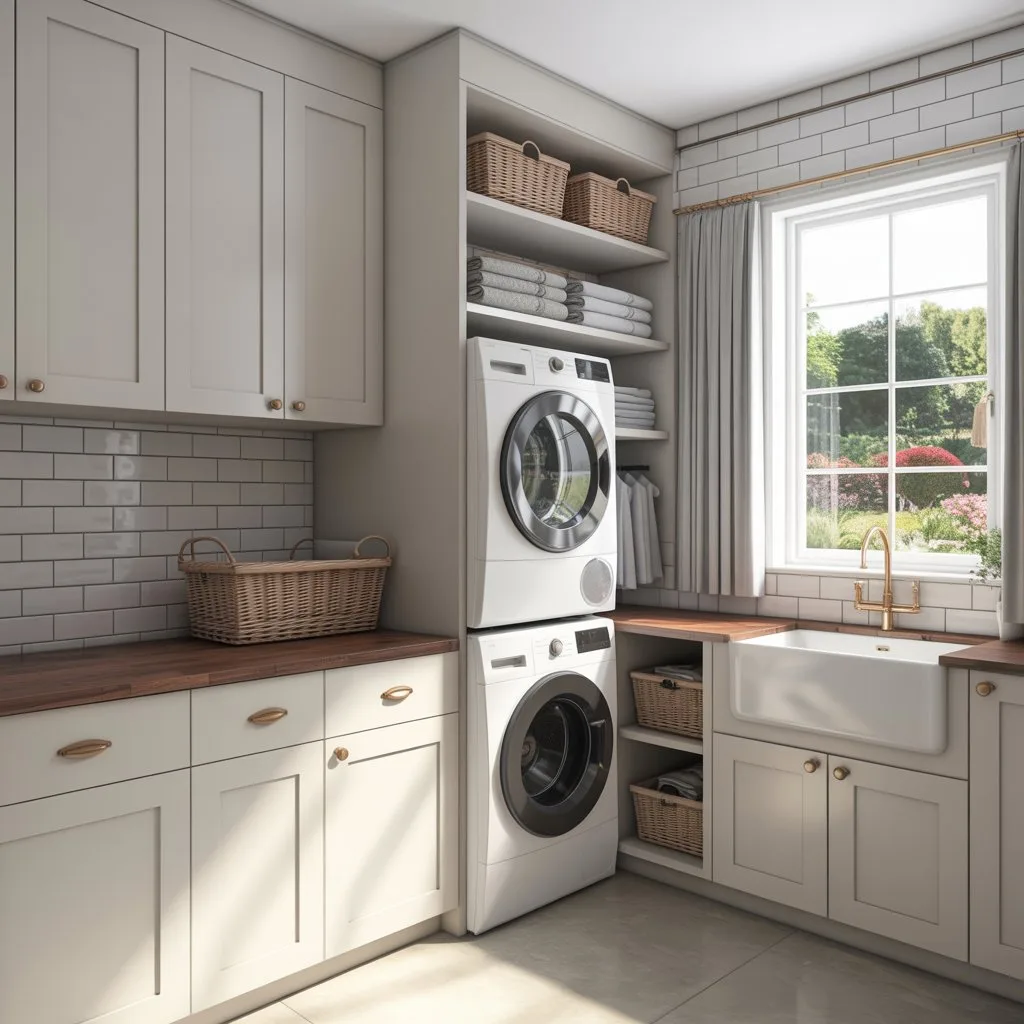
One of the most tiring parts of laundry is folding and sorting clothes. A well-planned surface can change everything.
A countertop above front-load machines creates a perfect folding station. If space allows, separate hampers for whites, colors, and delicates can simplify the entire process.
Ever noticed how chefs prepare ingredients before cooking? That’s called mise en place. The same principle applies here—preparation makes the whole process smoother and less stressful.
## 4. Lighting That Changes the Mood
Good lighting is often ignored in utility spaces, but it makes a huge difference.
Bright white lighting helps you see stains clearly, while warmer tones can make the room feel more welcoming. If possible, natural light is even better—it reduces the feeling of being in a closed-off area.
A dim laundry room feels like a chore zone. A well-lit one feels more like a functional workspace where things get done efficiently.
## 5. Adding Style Without Losing Functionality
Just because it’s a utility space doesn’t mean it has to look boring. Simple design choices can make a big difference.
You might consider:
- Soft-colored paint to brighten the room
- Patterned tiles for visual interest
- Matching storage containers for a clean look
Even a small plant can bring life into the space. It’s like adding a little personality to a room that usually feels purely practical.
## 6. Folding Stations and Countertop Design
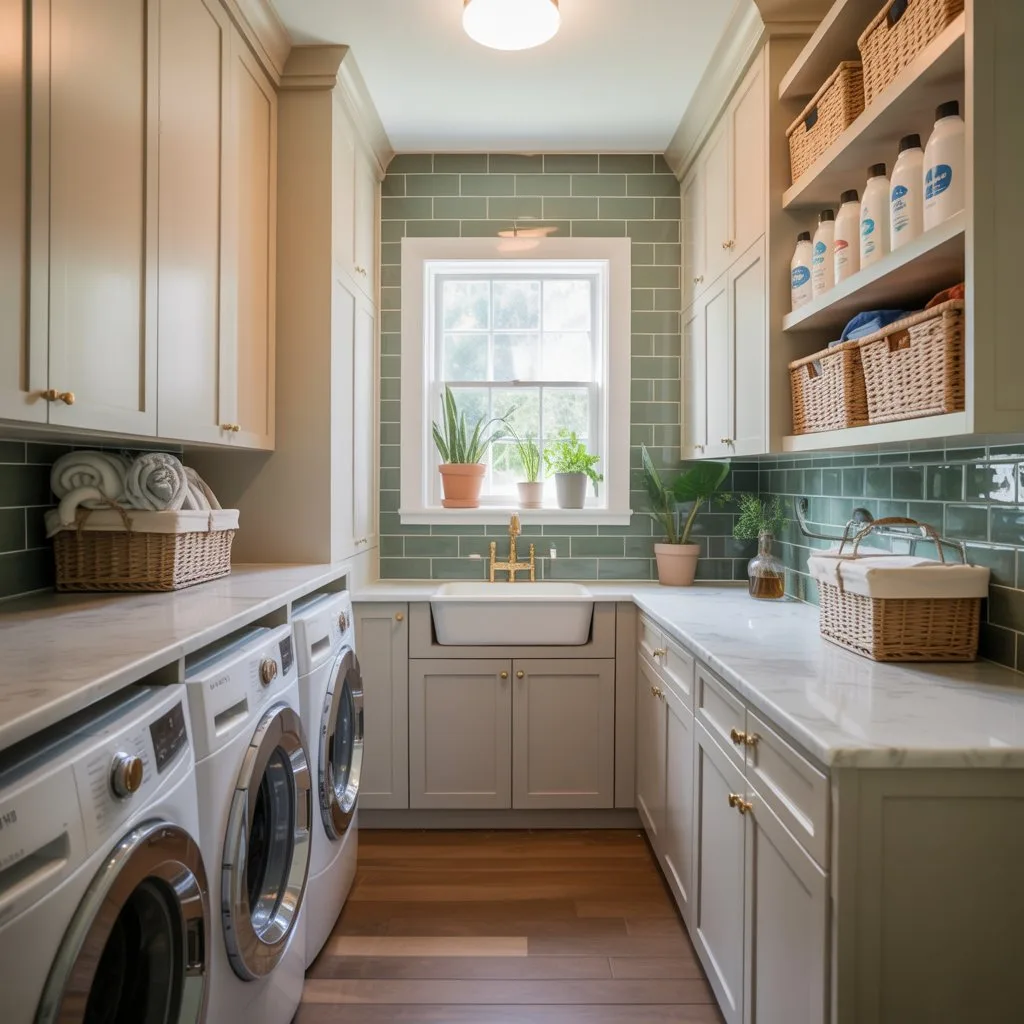
A dedicated folding area is a game-changer. Without it, clothes often end up piled on beds or sofas, creating extra work later.
Wooden or stone countertops above machines are popular choices because they provide durability and style. If you don’t have built-in space, even a sturdy table can serve the purpose.
Think of this area as the “command center” of your laundry routine—it’s where everything comes together before going back into wardrobes.
## 7. Space-Saving Appliances and Layout Planning
The layout of appliances affects how comfortable your laundry routine feels.
Stacked washer-dryer units are perfect for compact homes. Side-by-side machines work better when you want a folding surface on top. Front-load machines are generally preferred because they allow additional workspace above them.
Good planning is like designing a workflow in a factory—everything should move smoothly without unnecessary steps.
## 8. Drying Solutions for Every Home
Not every home has space for outdoor drying, so indoor solutions become essential.
Wall-mounted drying rods, ceiling-hanging racks, or retractable lines are practical choices. They save space while still allowing proper air drying.
This is especially helpful in humid or rainy climates where outdoor drying isn’t always possible. The goal is flexibility—having options that adapt to your daily needs.
## 9. Organization Hacks for Daily Efficiency
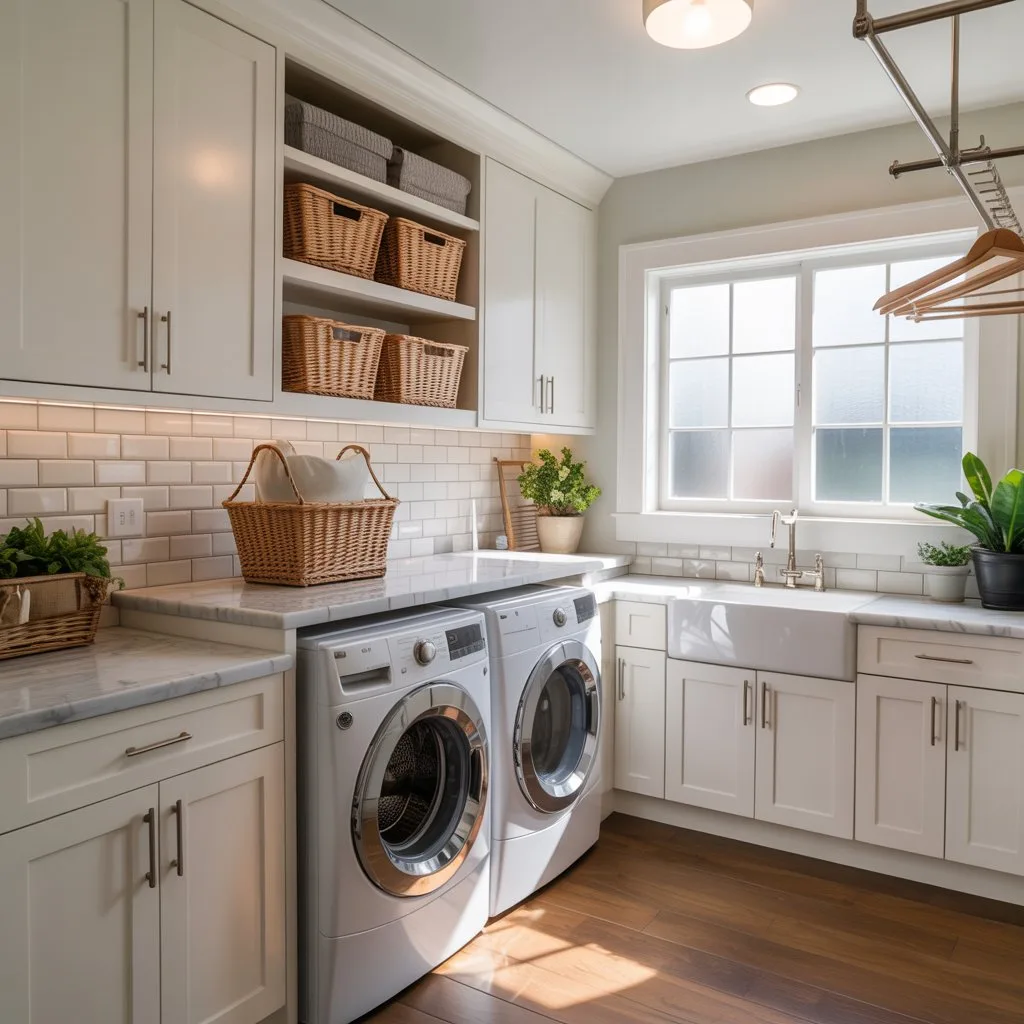
Small habits and tools can make a big difference in how efficiently you manage laundry.
Try these simple ideas:
- Keep a stain removal kit in one place
- Use mesh bags for delicate clothes
- Store frequently used items at eye level
- Keep a small laundry schedule or routine chart
When everything is easy to reach, you reduce unnecessary movement and save time. It’s all about making the process feel automatic instead of overwhelming.
## 10. Adding Personal Touches to the Space
Even a functional room deserves a bit of personality. A laundry space can feel warm and inviting with just a few thoughtful touches.
You can add framed prints, simple wall art, or even motivational quotes. A small rug can soften the floor and make standing more comfortable during folding.
It’s similar to how people decorate their desks at work. A personal touch makes the environment feel less mechanical and more enjoyable.
## 11. Maintenance and Long-Term Care
A well-designed laundry space also needs regular upkeep. Dust, detergent spills, and moisture can build up over time if ignored.
Simple maintenance habits include:
- Wiping surfaces weekly
- Checking machines for lint buildup
- Keeping ventilation clear
- Regularly organizing shelves
Think of it as routine care, like servicing a car. A little attention now prevents bigger problems later.
## Conclusion
A laundry space doesn’t have to feel like a forgotten corner of the home. With thoughtful design, smart storage, and a few creative touches, it can become an organized and even pleasant part of daily life.
The key is not perfection, but practicality—making the space work for your routine, not against it. Once everything has its place and the layout supports your workflow, even the most repetitive chores start to feel easier.
## FAQs
1. How can I improve a very small laundry area?
Focus on vertical storage, wall shelves, and compact appliances. Even small spaces can be highly functional with proper organization.
2. What is the best color for a laundry room?
Light colors like white, soft grey, or pastel tones help make the space feel clean, open, and bright.
3. Do I need a countertop in my laundry area?
It’s not necessary, but a countertop greatly improves convenience by providing a folding and sorting surface.
4. How can I reduce clutter in my laundry space?
Use labeled storage containers, separate hampers, and keep only essential items in the room.
5. What lighting works best for laundry rooms?
Bright LED lighting is ideal for visibility, while natural light is even better if available.