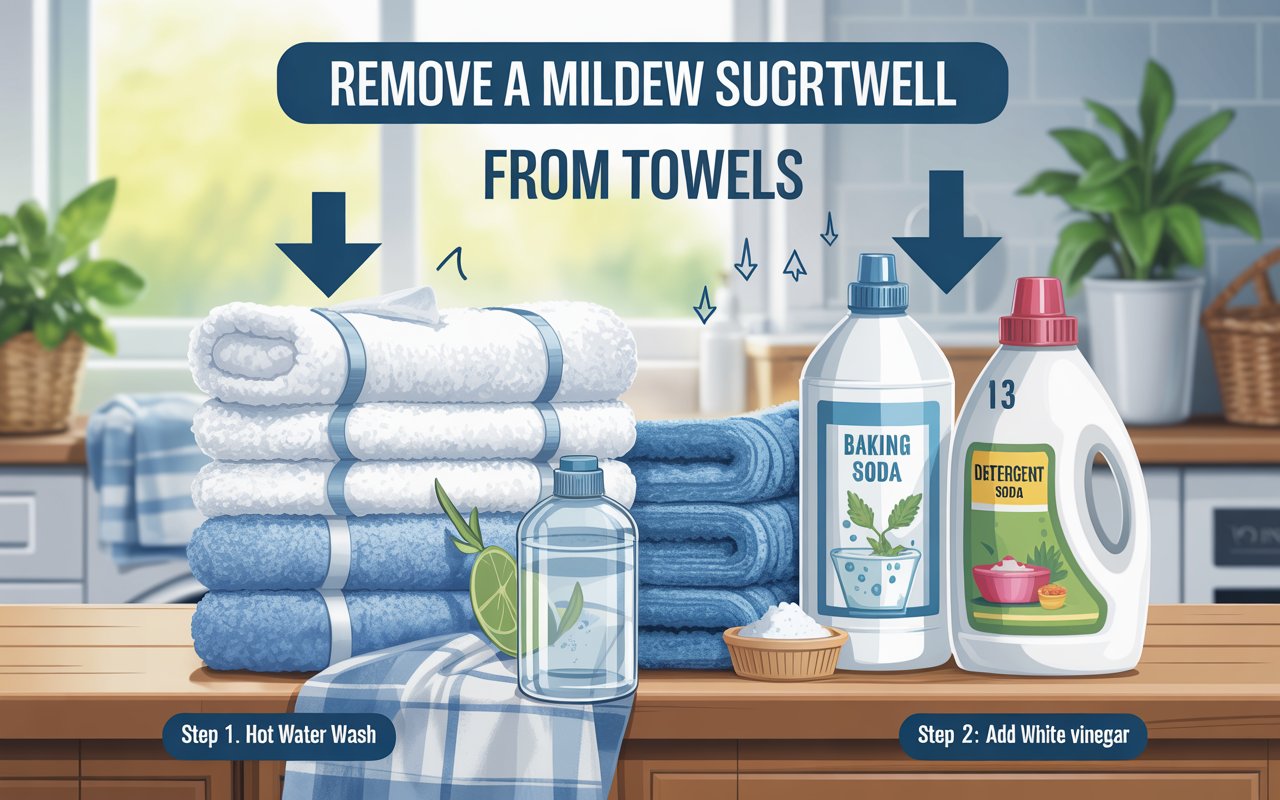
There’s nothing more frustrating than stepping out of a shower, reaching for a clean towel, and being greeted by a musty odor. Towels are meant to leave you feeling fresh and comfortable, but when they develop a mildew smell, they can do the exact opposite. The good news is that this common household problem is usually easy to fix.
Whether your towels have been left damp for too long, stored improperly, or simply need a deeper clean, there are effective ways to eliminate unpleasant odors and restore freshness. This guide covers everything you need to know, from understanding why towels develop that smell to preventing it from returning.
Why Towels Develop a Musty Odor
Before tackling the problem, it helps to understand what causes it.
Mildew thrives in damp, warm environments. Towels absorb moisture every time they are used, creating the perfect breeding ground for microorganisms. When towels remain wet for extended periods or are not dried properly, mildew can begin to grow.
Think of a damp towel as a small greenhouse. When moisture gets trapped within the fibers, microorganisms multiply and produce the unpleasant smell many people recognize instantly.
Common causes include:
- Hanging towels in poorly ventilated bathrooms
- Leaving damp towels in laundry baskets
- Overloading the washing machine
- Using too much detergent
- Not drying towels completely
- Storing towels while they are still slightly damp
Understanding the cause makes it easier to solve the issue permanently.
Signs That Your Towels Need More Than a Regular Wash
Sometimes a standard laundry cycle isn’t enough.
Persistent Odor
If the smell returns shortly after washing, mildew may still be trapped within the fibers.
Reduced Absorbency
Towels that no longer absorb water efficiently may have detergent residue buildup.
Stiff or Rough Texture
Residue from fabric softeners and detergents can make towels feel less soft and more rigid.
Visible Spots
Dark spots or discoloration may indicate mildew growth that requires immediate attention.
These signs suggest it’s time for a deep-cleaning approach rather than a quick wash.
The Vinegar Method: A Simple Household Solution
One of the most effective ways to remove mildew odor is using white vinegar.
Why Vinegar Works
White vinegar helps break down detergent residue, neutralize odors, and kill many odor-causing microorganisms.
How to Use It
- Place towels in the washing machine.
- Add one cup of white vinegar to the detergent compartment or directly into the drum.
- Wash using hot water if the care label allows.
- Do not add detergent during this cycle.
The vinegar works deep within the fibers to remove the buildup that often traps odors.
After the cycle finishes, assess whether the smell has improved before moving to the next step.
Baking Soda for Deep Odor Removal
Baking soda is another powerful natural deodorizer.
Benefits of Baking Soda
- Neutralizes odors
- Softens fabrics
- Helps remove residue
- Enhances cleaning performance
Washing Instructions
After running the vinegar cycle:
- Leave the towels in the machine.
- Add one-half to one cup of baking soda.
- Run another hot-water wash cycle.
- Avoid adding fabric softener.
The combination of vinegar and baking soda often restores even heavily affected towels.
Many people find this two-step process works better than expensive specialty products.
Using Hot Water Safely
Heat plays a major role in removing mildew smells.
Check Care Labels First
Not all fabrics tolerate high temperatures. Cotton towels generally handle hot water well, while delicate materials may require warm water instead.
Why Temperature Matters
Hot water helps:
- Dissolve oils and residue
- Kill odor-causing microorganisms
- Improve detergent performance
Always follow manufacturer instructions to prevent damage while maximizing cleaning effectiveness.
Avoiding Common Laundry Mistakes
Many towel odors return because of simple washing habits.
Using Too Much Detergent
More detergent doesn’t mean cleaner towels.
Excess soap often remains trapped in the fabric and creates a sticky environment that attracts dirt and moisture.
Overloading the Washer
Towels need space to move freely.
When the machine is packed too tightly, water and detergent cannot circulate effectively.
Skipping Extra Rinse Cycles
An additional rinse can help remove leftover detergent and contaminants that contribute to unpleasant odors.
Correcting these habits often prevents future mildew issues.
The Importance of Proper Drying
Drying is just as important as washing.
Dry Towels Immediately
Leaving damp towels in the washing machine can quickly lead to odor development.
Use High Heat When Appropriate
A thorough drying cycle helps eliminate remaining moisture.
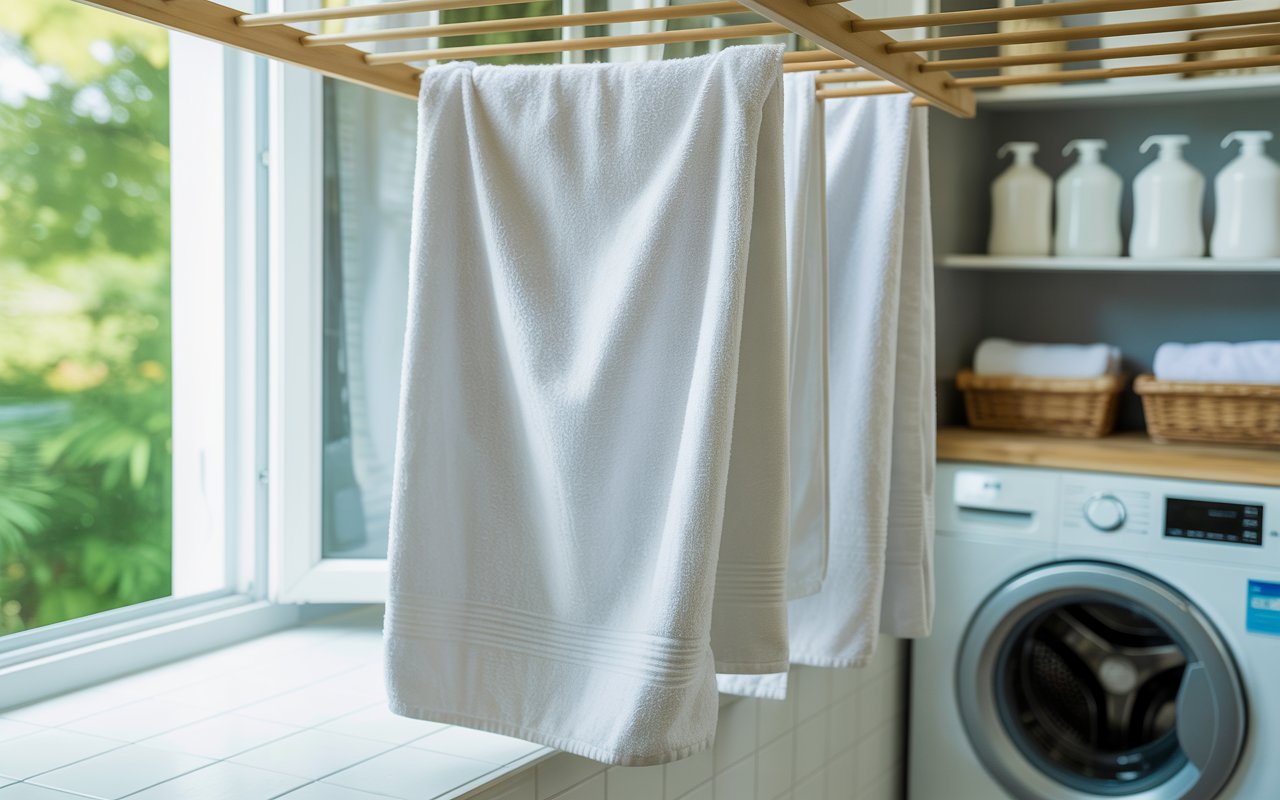
Air Dry Outdoors
Fresh air and sunlight provide natural deodorizing benefits.
Sunlight acts as a natural disinfectant and can help reduce odor-causing microorganisms.
Ensure Complete Dryness
Even slightly damp towels can develop mildew if stored prematurely.
Always verify that towels are fully dry before folding them away.
How Sunlight Helps Remove Odors
Nature provides one of the best cleaning tools available.
Natural Deodorizing Power
Ultraviolet rays help reduce bacteria and mildew spores.
Fresh Outdoor Scent
Outdoor drying introduces natural airflow that carries away lingering odors.
Cost-Effective Solution
Unlike specialized products, sunlight is completely free.
Whenever weather permits, hanging towels outside can significantly improve freshness.
Removing Stubborn Smells From Older Towels
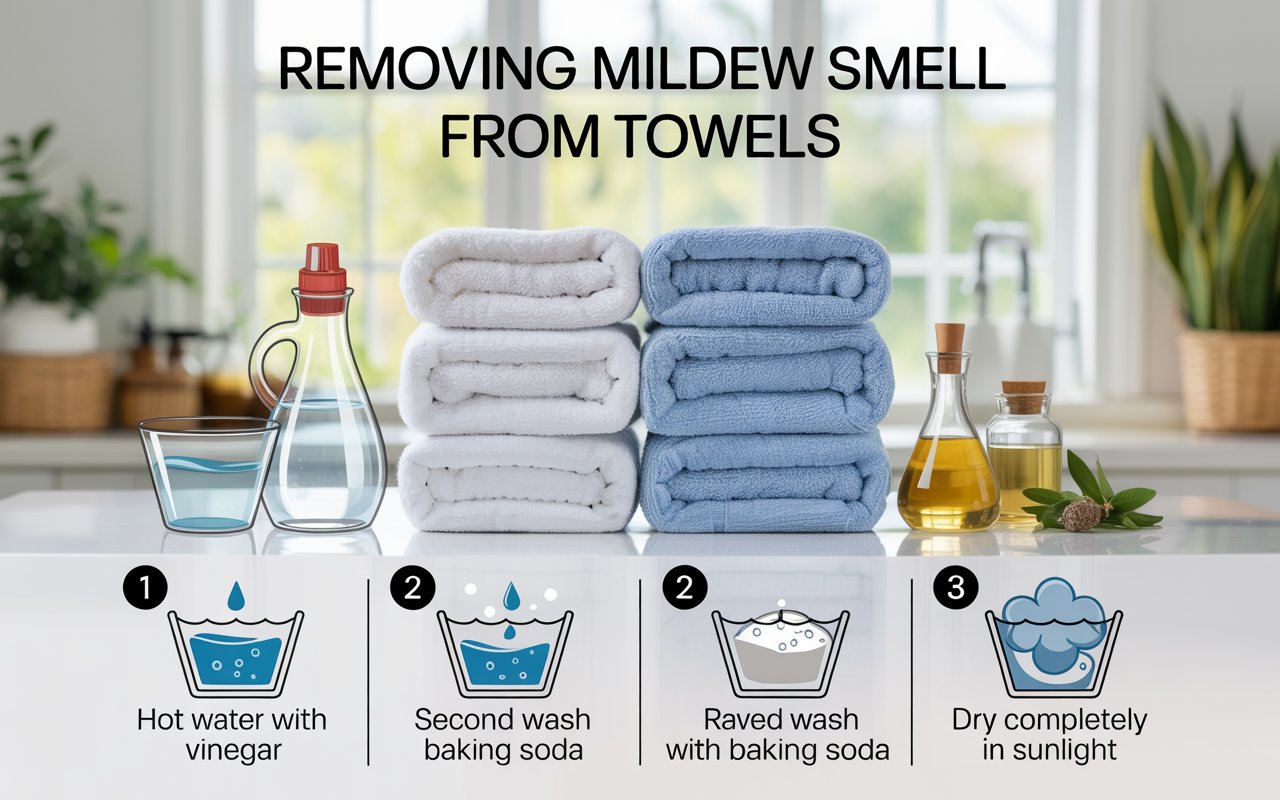
Some towels require extra attention.
Repeat the Deep-Clean Process
For severe odors, repeat the vinegar and baking soda treatment.
Soak Overnight
Fill a tub with warm water and one cup of vinegar.
Allow towels to soak overnight before washing normally.
Use Oxygen-Based Cleaners
Oxygen cleaners can help break down deep-set odor-causing particles without the harshness of chlorine bleach.
These methods are particularly useful for towels that have been stored improperly for long periods.
How to Prevent Mildew Smells in the Future
Prevention is easier than treatment.
Hang Towels Properly
Spread towels fully after each use rather than folding them over themselves.
Improve Bathroom Ventilation
Open windows or run exhaust fans after showers.
Wash Frequently
Bath towels should generally be washed every three to four uses.
Avoid Damp Laundry Piles
Wet towels should never sit in hampers for extended periods.
Store Correctly
Only place completely dry towels in closets or cabinets.
These habits create an environment where mildew struggles to develop.
Best Storage Practices for Fresh Towels
Storage plays a major role in maintaining freshness.
Choose a Dry Location
Avoid storing towels in humid areas.
Leave Room for Airflow
Overstuffed linen closets trap moisture.
Use Shelf Liners if Needed
Shelf liners can help keep stored towels dry and clean.
Rotate Inventory
Using older towels first prevents long-term storage issues.
Good storage habits keep towels smelling fresh between uses.
Natural Alternatives to Commercial Products
Many homeowners prefer natural solutions.
Lemon Juice
Its natural acidity can help combat odors and brighten fabrics.
Essential Oils
A few drops of lavender or tea tree oil may add freshness after cleaning.
Borax
This laundry booster can assist with deep cleaning and odor control.
Fresh Air
Never underestimate the effectiveness of proper airflow and drying.
Natural methods often provide excellent results without introducing strong artificial fragrances.
When It’s Time to Replace Towels
Even the best towels don’t last forever.
Consider replacement when:
- Odors persist despite repeated cleaning
- Fabric becomes excessively worn
- Absorbency decreases significantly
- Fibers begin breaking down
Quality towels can last for years with proper care, but eventually replacement becomes the most practical solution.
Conclusion
Removing mildew smell from towels doesn’t have to be difficult. In most cases, the problem comes from trapped moisture, detergent residue, or inadequate drying. Simple household items like white vinegar and baking soda can effectively eliminate odors and restore freshness. Combined with proper washing habits, thorough drying, and smart storage practices, these methods can keep your towels clean, soft, and pleasant-smelling for years.
The key is consistency. Just as a garden needs regular maintenance to stay healthy, towels require proper care to remain fresh. By following the techniques outlined in this guide, you can enjoy clean, comfortable towels every day without worrying about musty odors.
FAQs
1. Why do my towels smell bad even after washing?
This usually happens because detergent residue, trapped moisture, or mildew remains deep within the fabric fibers. A vinegar and baking soda treatment often solves the problem.
2. Can vinegar damage towels?
White vinegar is generally safe for most towels when used occasionally. It helps remove buildup and restore softness without harming the fabric.
3. Is bleach effective for removing mildew smells?
Bleach can kill mildew, but it may not always remove odor-causing residue. Vinegar and baking soda are often safer and equally effective alternatives.
4. How often should bath towels be washed?
Most experts recommend washing bath towels after three to four uses to prevent odor, bacteria buildup, and mildew growth.
5. What is the fastest way to remove mildew smell from towels?
Running a hot-water wash with one cup of white vinegar followed by another cycle with baking soda is often the quickest and most effective solution.