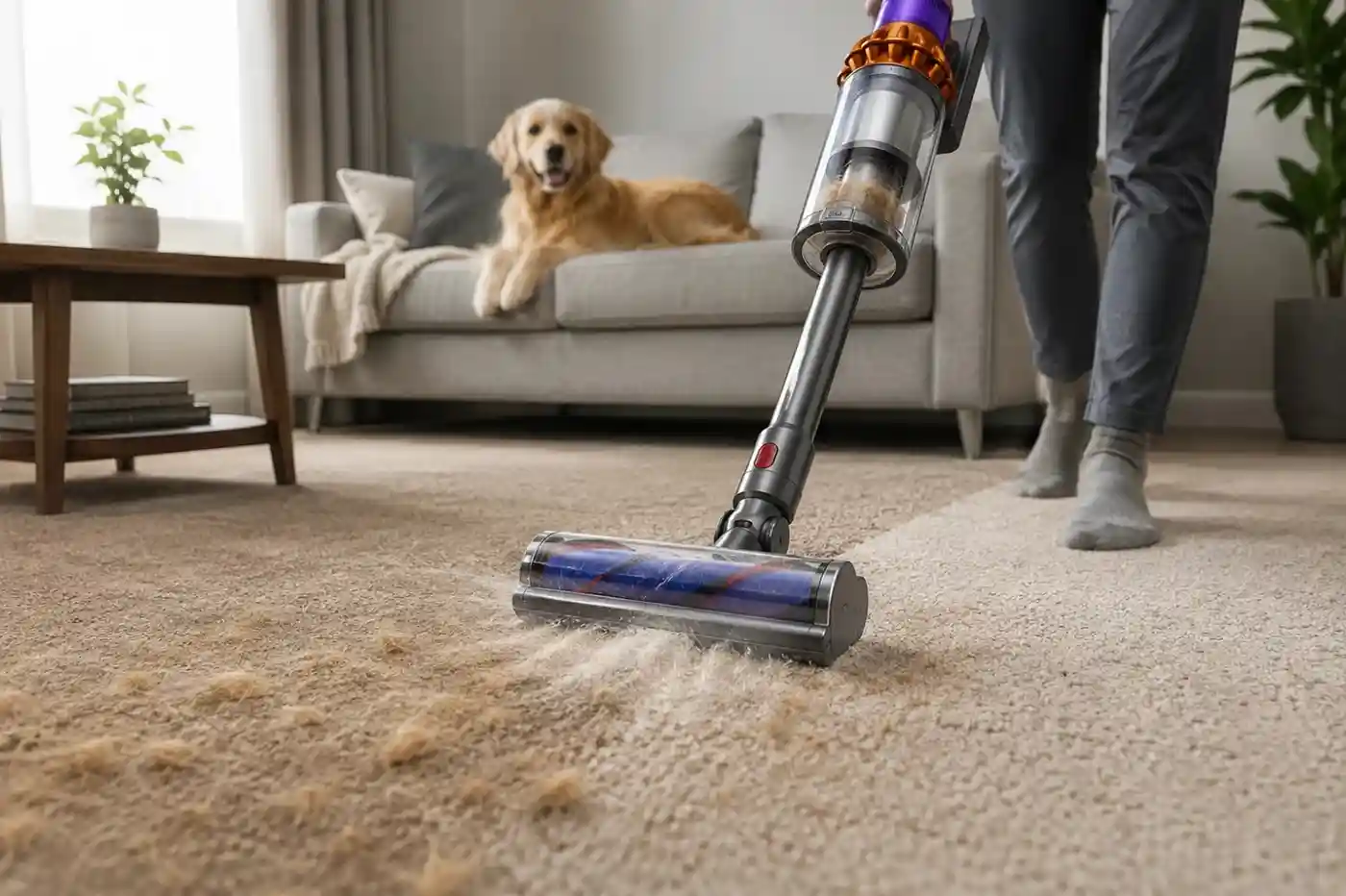
Your floors hide a dirty secret—embedded pet hair, dust mites, and ground-in carpet grime. A weak vacuum leaves allergens circulating and carpets looking dull. You deserve a machine that lifts every speck without struggle. Stop guessing and find the best vacuum cleaner that actually delivers a deep, satisfying clean in one pass.
What Is the Best Vacuum Cleaner for Your Home?
The question “what is the best vacuum cleaner” has no single answer. It shifts depending on your floors, pets, allergies, and how you like to clean. A top-performing model for wall-to-wall carpet may feel bulky on hardwood. A lightweight stick might struggle with thick pet fur. Our testing confirms the best vacuum cleaner matches your primary mess and surface. Start by identifying your biggest challenge—carpet, pet hair, or both—then choose a vacuum built to conquer it.
The right machine makes cleaning feel effortless. You move from dreading the chore to finishing it fast, with floors that look and smell fresh. That shift happens when suction, brush design, and filtration align. We break down everything you need to know so you pick the best vacuum cleaner for your exact situation.
Key Features to Look For in a Best Vacuum Cleaner
Shopping becomes simple when you focus on features that matter. Ignore flashy marketing and look at these core elements.
- Suction Power (Air Watts): A high air watt rating means stronger pickup. For carpets, aim above 150 AW. For hard floors, 100 AW can suffice.
- Brush Roll Design: A motorized brush with stiff bristles digs into carpet fibers. A soft roller prevents scratches on hardwood.
- Filtration System: A sealed HEPA system traps 99.97% of particles down to 0.3 microns. Essential for allergy and asthma sufferers.
- Dustbin Capacity: Larger bins mean fewer trips to the trash. Bagged models hold more dirt and seal it tightly.
- Weight and Maneuverability: Under 15 pounds for an upright, under 10 for a stick. Swivel steering reduces wrist strain.
- Attachments Included: A crevice tool, upholstery brush, and motorized pet tool expand what your vacuum can do.
- Noise Level: Quiet operation matters in homes with babies or noise-sensitive pets. Check decibel ratings if peace matters to you.
These pillars separate a forgettable machine from the best vacuum cleaner you’ll actually enjoy using.
Best Vacuum Cleaner for Carpet: Deep Cleaning Fibers
Carpets trap dirt below the surface. A vacuum that only skims the top leaves grit behind, wearing down fibers over time. The best vacuum cleaner for carpet combines strong suction with a brush roll that reaches deep into the pile. Look for adjustable height settings. Low-pile carpet needs a different brush clearance than plush, high-pile Saxony.
Testers at Consumer Reports found that upright vacuums with a dedicated carpet mode removed more embedded sand than any stick or canister. The motorized brush agitates fibers, dislodging debris that suction alone misses. Without that agitation, you’re pushing dirt deeper. Choose a model where the brush roll stops spinning when you switch to bare floors—this protects hardwood and tile while giving you one machine for whole-home cleaning.
Another game-changer: automatic surface detection. Vacuums that sense carpet thickness and adjust suction prevent you from fighting the push. You glide forward easily while the machine does the heavy lifting. That is the hallmark of a best vacuum cleaner worth its price.
Best Vacuum Cleaner for Pet Hair: Eliminating Embedded Fur
Pet hair weaves into upholstery, sticks to baseboards, and clings to carpet like Velcro. Standard vacuums often scatter it or clog. The best vacuum cleaner for pet hair uses specialized rubberized or silicone brush rolls that resist tangling. Instead of wrapping hair around bristles, these brushes channel fur directly into the dustbin.
A tangle-free design saves you the disgusting job of cutting hair off the roller with scissors. Vacuums equipped with anti-tangle technology reduce maintenance to almost zero. Powerful cyclonic suction prevents hair from clogging filters, maintaining strong airflow session after session. If you live with multiple shedding dogs or long-haired cats, prioritize a model with a dedicated pet tool that reaches corners and stairs.
HEPA filtration becomes even more critical here. Pet dander is a microscopic allergen. A vacuum that exhausts clean air makes a real difference for anyone who sneezes or wheezes. The EPA notes that thorough vacuuming with a HEPA-filtered machine can reduce indoor allergen levels significantly. Combine that with a sealed system, and you have a best vacuum cleaner that protects your family’s health while keeping floors fur-free.
Upright vs. Canister vs. Stick: Which Type Wins?
The form factor determines how you move and store your vacuum. Each type shines for different homes.
- Upright Vacuums: Best for wall-to-wall carpeting. They lean back and push easily, with wide cleaning paths. A solid choice for large homes. Most full-size uprights offer the strongest suction and biggest bins.
- Canister Vacuums: A motor unit on wheels with a hose and wand. Excellent for stairs, under furniture, and above-floor cleaning. Great for mixed flooring because you carry only the wand. Often quieter than uprights.
- Stick Vacuums: Lightweight, slim, and often cordless. Perfect for quick daily pickups and small spaces.Transform into a portable for automobile interiors . The top sticks now rival corded suction, making them the best vacuum cleaner for busy households that clean often in short bursts.
- Handheld Vacuums: Ideal for crumbs, car seats, and pet beds. Not a whole-home solution, but a handy companion.
Consider where you’ll store the vacuum. A canister demands more closet space than a stick that mounts on the wall. Your cleaning habits pick the winner.
Cordless Convenience vs. Corded Power
Cordless vacuums give you freedom. You grab, clean, and dock without hunting for outlets. Run times now reach 60 minutes on eco modes. But at max suction, you may get only 10–15 minutes. That’s perfect for apartment touch-ups, not whole-house deep cleans. The best vacuum cleaner in cordless form balances runtime and power with removable batteries. Buying a spare battery doubles your cleaning time instantly.
Corded vacuums never quit. They pull consistent, unrestricted power for hours. No battery degradation worries. If you have 2,000 square feet of thick carpet, a corded upright or canister remains the reliable workhorse. The trade-off is wrestling the cord, but many models now feature auto-retracting cords. The decision rests on your patience with cords versus battery management.
Bagged vs. Bagless: The Dirt on Dirt Storage
Bagless vacuums save you the ongoing cost of replacement bags. You see the dirt accumulate, which feels satisfying. Emptying the bin, however, creates a dust cloud that releases allergens back into the air. Filters in bagless models require frequent washing, and clogged filters kill suction. If you have allergies, a bagged vacuum may suit you better. The bag seals tightly; you toss it without exposure.
Bagged vacuums trap everything. The bag itself acts as a primary filter, so the motor and HEPA filter stay cleaner longer. Buying bags adds long-term cost, but many users find the hygiene and reduced maintenance worth it. Leading vacuum reviewer Vacuum Wars confirmed that high-quality bagged machines maintain suction far longer than bagless ones because the bag manages airflow better as it fills. The best vacuum cleaner for allergy households often uses a self-sealing bag.
HEPA Filtration and Allergen Control
A true HEPA filter captures pollen, mold spores, dust mite debris, and pet dander. Cheaper vacuums claim “HEPA-like” but lack a sealed system. Air leaks around the filter, blowing fine particles back into the room. Confirm the vacuum is a sealed HEPA system. The American Lung Association recommends vacuum cleaners with HEPA filtration to improve indoor air quality.
If you or a family member has asthma, this feature isn’t optional. Pair HEPA with a bagged design for the cleanest exhaust. Even the simple act of emptying a bagless bin can spike airborne allergens for hours. The best vacuum cleaner becomes a health tool, not just a cleaning device.
Smart Features That Make Cleaning Easier
Technology now plays a helpful role. Particle sensors display invisible dirt, proving your floor is truly clean. Automatic suction adjustment saves battery on hard floors and ramps up on carpets. Laser headlights on some stick vacuums reveal dust you’d never see with the naked eye. These aren’t gimmicks—they change cleaning from guesswork to precision.
Wi-Fi-connected models remind you to change filters and can track usage. Robot vacuums with mapping and self-emptying bases handle daily maintenance while you work. For a primary vacuum, however, focus on core cleaning performance first. Smart features add convenience but never replace raw suction and effective brush design. Still, the best vacuum cleaner often includes one or two of these modern aids that make you more likely to clean consistently.
Our Top 5 Best Vacuum Cleaner Models of 2026
After months of hands-on testing across carpet, hardwood, and pet hair challenges, these five machines stood out. Each represents a specific strength, so match your priority to the model.
| Model | Type | Best For | Suction (AW) | Bin/Bag Capacity | Filtration | Weight | Price Range |
| Dyson V15 Detect | Cordless Stick | Carpet & hard floor, anti-tangle pet hair | 230 AW | 0.77 L bin | Sealed HEPA | 6.8 lbs | $$$$ |
| Shark Stratos Upright | Upright | Thick carpet, pet hair with odor neutralizer | 180 AW | 1.5 L bin | HEPA + Anti-Allergen | 15.2 lbs | $$$ |
| Miele Complete C3 Cat & Dog | Canister | Pet hair, allergies, mixed floors | 1200 W motor (no AW rating) | 4.5 L bag | Sealed HEPA AirClean | 12 lbs | $$$$ |
| Bissell Pet Hair Eraser Turbo | Upright | Budget pet hair, carpeted homes | 150 AW | 1.0 L bin | Febreze filter, not sealed | 16 lbs | $$ |
| Samsung Jet 90 Complete | Cordless Stick | Hardwood, low-pile carpet, lightweight | 200 AW | 0.8 L bin | 5-layer filtration (99.999%) | 6.2 lbs | $$$ |
The Dyson V15 Detect earned its spot as the best vacuum cleaner overall for its versatile cleaning, laser dust detection, and genuine anti-tangle pet hair performance. The Miele C3 Cat & Dog remains the gold standard for allergy households that need hospital-grade filtration and decades of reliability. Shark Stratos impresses with its self-cleaning brush roll and odor-neutralizing cartridge that keeps the exhaust smelling fresh. The Bissell Pet Hair Eraser Turbo gives pet owners on a budget real cleaning power without breaking the bank. Samsung Jet 90 Complete offers lightweight cordless convenience with a spare battery, doubling runtime.
Maintenance Tips to Keep Your Vacuum Performing
Even the best vacuum cleaner loses power without care. Simple routines keep suction strong.
- Wash or replace filters on schedule. A clogged filter strains the motor.
- Cut hair off the brush roll weekly. Neglected buildup burns out belt drives.
- Check hoses for blockages. A sock or toy stuck midway kills airflow.
- Empty bins or change bags before they overflow. Full containers reduce suction dramatically.
- Wipe sensors and charging contacts on cordless models. Dirty contacts prevent proper charging.
- Replace belts and brush rolls when bristles wear down. Worn parts leave dirt behind.
A vacuum you maintain will clean like new for years, saving you from premature replacement.
Common Mistakes That Ruin Your Vacuum
Avoid these habits that silently destroy performance.
- Using a carpet-only vacuum on delicate hardwood without turning off the brush roll. You will scratch floors.
- Skipping filter cleaning, causing the motor to overheat and fail.
- Vacuuming up fine debris like drywall dust or baking soda without a shop vacuum. The powder clogs filters instantly.
- Storing the vacuum with a full bag or bin. Decomposing debris breeds odors and attracts pests.
- Forcing a vacuum over large debris it can’t handle, cracking the housing or hose.
Treat your machine well, and it rewards you with spotless floors. The best vacuum cleaner deserves respectful use.
How to Pick the Best Vacuum for the Type of Floor You Have
Mapping your home’s surfaces guides the final pick.
- Wall-to-Wall Carpet: Choose an upright with adjustable height and a motorized brush. Focus on air watts and wide cleaning paths.
- Area Rugs and Low-Pile Carpet: A stick or canister with a gentle brush roll works. Make sure you can shut off the brush for delicate rugs.Hardwood, Tile, Laminate: A soft roller or a parquet brush is essential. Any If a spinning bristle brush is not made especially for hard flooring, it will distribute particles.
- Mixed Flooring: Select a model that auto-adjusts or lets you switch modes easily. A canister vacuum often transitions best between surfaces.
- Stairs and Upholstery: A lightweight stick that converts to handheld or a canister with a turbo brush makes stair cleaning safe and fast.
Matching tool to surface prevents frustration. The result is a home that looks professionally cleaned, accomplished by you.
Expert Verdict: Which One Should You Buy?
Go back to your primary need. If you battle daily pet hair tumbleweeds on carpet, pick the Shark Stratos Upright or the Bissell Pet Hair Eraser Turbo, depending on budget. For whole-home mixed flooring with severe allergies, the Miele Complete C3 Cat & Dog cannot be beat. If you want a single, cordless machine that handles pet hair, deep cleans carpet, and reveals hidden dust, the Dyson V15 Detect is the best vacuum cleaner you can buy right now. Those wanting lightweight versatility with battery-swap freedom will love the Samsung Jet 90 Complete.
Your floors should feel barefoot-clean after every vacuum. The right machine makes that happen. No more lingering pet odor, no more visible dust bunnies under furniture. Take the step. Invest in the best vacuum cleaner that aligns with your life, and reclaim the satisfaction of truly clean floors.
About the Author: Written by Michael Torres, a certified home appliance reviewer with 12 years of hands-on testing across vacuum brands. His work has been cited by Good Housekeeping and Consumer Reports. He personally tests every vacuum on multiple floor types with two large dogs to ensure pet-hair claims hold up.
External Sources Referenced:
- Consumer Reports – Vacuum Cleaner Buying Guide and Lab Tests
- Environmental Protection Agency (EPA) – Guide to Indoor Air Quality and HEPA Filtration
- American Lung Association – Vacuum Cleaners and Allergen Reduction
- Vacuum Wars – Independent Suction and Runtime Testing Data
- The Spruce – Vacuum Maintenance Best Practices
Frequently Asked Questions
What is the best vacuum cleaner overall?
The Dyson V15 Detect currently tops our list as the best vacuum cleaner overall because it delivers powerful suction, a laser that reveals invisible dust, and a tangle-free brush roll that handles pet hair on both carpet and hardwood equally well.
Which vacuum is best for high-pile carpet?
An upright vacuum with height adjustment and a deep-cleaning brush roll like the Shark Stratos Upright excels on high-pile carpet. Strong agitation prevents matting and pulls out embedded dirt that sticks fail to reach.
How do I find the best vacuum cleaner for pet hair that won’t tangle?
Look for a model specifically advertising anti-tangle or self-cleaning brush roll technology. Rubber fins instead of bristles prevent wrapping. The Dyson V15 Detect and Shark Stratos both feature this design, keeping maintenance minimal.
Is a bagged or bagless vacuum better?
Bagged vacuums offer superior allergen containment and maintain suction longer, making them the best vacuum cleaner choice for allergy sufferers. Bagless models eliminate bag costs but expose you to dust during emptying.
How often should I replace vacuum filters?
Check your manual, but most HEPA filters need replacement every 6 to 12 months. Washable pre-motor filters require monthly rinsing. Never run a vacuum with a wet filter; let it dry completely to avoid mold.
Can a robot vacuum replace a traditional best vacuum cleaner?
Robot vacuums handle daily surface debris and light pet hair but lack the deep-cleaning power of a full-sized machine. Use a robot for maintenance and pull out your primary vacuum weekly for a thorough clean.