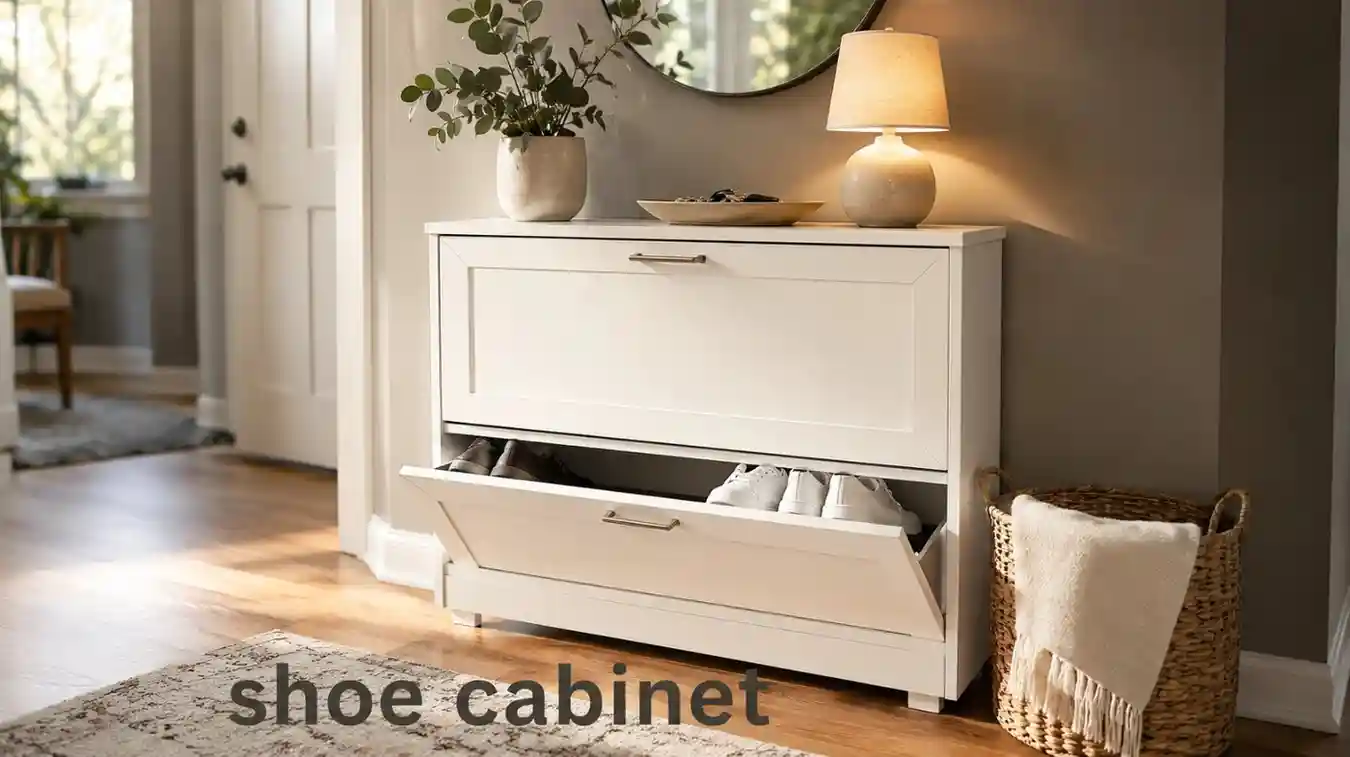
Nothing kills a welcoming entryway faster than a heap of shoes by the door. That daily scramble to find a clean pair adds unnecessary stress. A dedicated shoe cabinet erases the mess, protects your footwear, and creates a serene first impression every time you open the door.
What Is a Shoe Cabinet and Why Does Your Home Need One?
A shoe cabinet is a closed storage unit designed specifically for footwear. Unlike open shoe racks, it hides your collection behind doors or tilt-out drawers, keeping dust, pet hair, and visual clutter completely out of sight. You gain a tidy hallway, protected shoes, and a surface for keys and décor. Every high-traffic entryway deserves this simple transformation.
Which Type of Shoe Cabinet Suits Your Lifestyle?
Pick the model that solves your biggest pain point. Compare these popular formats before you decide.
- Freestanding shoe cabinet – Moves easily and fits hallways, mudrooms, or bedrooms. Available in countless heights, from compact two‑tier units to tallboy designs.
- Wall-mounted shoe cabinet – Saves valuable floor space. Great for ultramodern interiors or cleaning beneath the unit.
- Shoe cabinet with doors – Conceals everything. Choose swing-open or sliding doors that match your existing furniture.
- Narrow shoe cabinet – Built for tight corridors and studio apartments. Depth often stays under 10 inches while holding 8–12 pairs.
- Bench shoe cabinet: Combines storage with seats. You sit comfortably while pulling on boots, and hidden compartments keep footwear at hand.
How to Pick the Perfect Shoe Cabinet for Your Entryway
Start with three non-negotiables: measurement, capacity, and material.
Measure your available wall width, depth, and height, leaving at least 3 feet of walking clearance. Count the pairs you need to store, then add 20% for guests and seasonal rotation. Solid wood and high-quality MDF resist warping in humid entryways; metal or engineered wood works well in dry climates. Look for soft‑close hinges, adjustable shelves, and ventilation slots that prevent stale odors. Your shoe cabinet should feel like a built‑in feature, not an afterthought.
Narrow Shoe Cabinet: The Space‑Saving Hero for Tight Hallways
When every inch counts, a narrow shoe cabinet reclaims your floor without sacrificing capacity. Most slim models use flip‑down or tilt‑out doors that require only a few inches of clearance.
Top features to look for:
- Depth under 10.5 inches
- Tiered internal compartments that fit sneakers up to men’s size 12
- Wall‑anchoring hardware for stability
- Clean, vertical lines that visually expand the corridor
The IKEA Hemnes shoe cabinet, for example, measures just 8.6 inches deep yet stores eight pairs neatly. Pair it with a wall-mounted slim console for a seamless entryway shoe cabinet setup that guests will admire.
Entryway Shoe Cabinet: Design Ideas to Impress Guests
Your entryway shoe cabinet sets the tone for the entire home. Treat it as a piece of furniture, not just a storage bin. Place a round mirror above it to bounce light, add a tray for keys, and top it with a small lamp or a potted plant. Painting the cabinet the same color as your trim creates a custom built‑in look. For farmhouse charm, swap the standard knobs on a white shoe cabinet for matte black pulls. These quick touches turn a simple storage unit into a focal point.
Shoe Cabinet with Doors vs. Open Storage: Which Wins for Your Home?
Both have their place, but a shoe cabinet with doors delivers everyday peace that open cubbies cannot match.
Cabinet with doors
- Hides scuffs, mismatched colors, and well-worn soles
- Blocks light that fades leather and suede
- Contains odors, especially if you add a charcoal deodorizer inside
- Creates a clean backdrop for hallway art
Open shelving
- Gives instant access—great for kids who struggle with knobs
- Displays a curated collection like a boutique if you keep it ruthlessly edited
- Requires frequent dusting and straightening
For most families, a closed shoe cabinet wins the battle against visual chaos. Reserve open units for a single decorative shelf showcasing your favorite three pairs.
IKEA Shoe Cabinet Showdown: HEMNES, BISSA, and Smart Hacks
IKEA remains the go‑to source for affordable, stylish storage. Three heavy‑hitters dominate the IKEA shoe cabinet lineup.
- IKEA Hemnes shoe cabinet – Solid wood, timeless design, two tilt‑out compartments that each hold four pairs. The shallow depth makes it a standout narrow shoe cabinet for tight entryways.
- BISSA – A slim, three‑compartment unit with a clean white finish. Built‑in ventilation grids promote airflow.
- STÄLL – Four compartments in a compact footprint. Perfect for budget-conscious large families.
IKEA shoe cabinet hack that doubles its charm
Transform a basic Hemnes shoe cabinet into a custom entryway centerpiece. Attach tapered legs to lift it off the floor, add a foam cushion on top for seating, and swap the white knobs for leather pulls. Some DIYers even apply peel‑and‑stick wallpaper to the side panels for a trendy accent. Always pre‑drill and anchor the cabinet securely after modification.
Wayfair Shoe Cabinet: Top‑Rated Styles for Every Budget
A Wayfair shoe cabinet gives you endless variety without leaving your couch. Filter by size, color, and customer rating to find the perfect match. Look for solid pine and engineered wood options with a high number of verified reviews. Popular picks include the Gracie Oaks farmhouse two‑door cabinet and the Latitude Run 10‑pair flip‑down model. Wayfair frequently runs sales that drop a quality entryway shoe cabinet well under $150, and detailed assembly instructions make setup painless.
7 Brilliant Shoe Cabinet Organization Hacks You Need to Try
Maximize every cubic inch with these field‑tested tricks.
- Use stackable clear shoe bins inside deep cabinets to double vertical space.
- Label each slot with a photo for children; they will actually put shoes away.
- Rotate seasonal footwear to upper compartments, keeping daily pairs at waist height.
- Drop in a cedar block or moisture‑absorbing packet to maintain freshness.
- Mount a slim hook on the side of the cabinet for your shoehorn.
- If the cabinet lacks ventilation, drill a few discreet holes in the back panel.
- Stick a motion‑sensor light inside so you never search in the dark again.
How to Assemble and Care for Your Shoe Cabinet So It Lasts
Set aside two hours, clear the floor, and unpack all parts before you begin. Follow the manual step‑by‑step, tightening cam locks only after the frame is square. Recruit a second pair of hands to hold doors during hinge attachment. Once assembled, wipe surfaces weekly with a damp microfiber cloth and immediately dry any spills. Every three months, check and retighten screws and hinges. This simple routine keeps your shoe cabinet stable and beautiful for years.
Frequently Asked Questions
How many pairs of shoes can a standard shoe cabinet hold?
Most standard models hold 8–12 pairs of adult shoes, while tall cabinets or double‑wide units can store 20 pairs or more. Always check the interior shelf spacing—bulky boots and high‑tops will reduce the count.
Can I use a shoe cabinet for boots?
Yes, if the compartments are tall enough. Look for cabinets with adjustable or removable shelves. Some slim tilt‑out designs only accommodate low‑profile footwear, so measure your tallest boots before purchasing.
What is the best depth for a narrow shoe cabinet?
Aim for a depth between 7 and 10.5 inches. That range fits most men’s and women’s shoes without jutting too far into the walkway. The IKEA Hemnes shoe cabinet at 8.6 inches is a popular sweet spot.
How do I ventilate a closed shoe cabinet?
Choose a cabinet with built‑in ventilation grilles. If yours lacks them, drill small holes in the back panel or use moisture‑absorbing charcoal bags inside. Keep doors slightly ajar once a week to let fresh air circulate.
Are IKEA shoe cabinets easy to assemble?
Yes. Most IKEA models come with clear pictorial instructions and labeled hardware. Plan on 45–90 minutes for a one‑person assembly. Using an electric screwdriver on low torque will speed things up without stripping the particleboard.
Can I paint my wooden shoe cabinet?
Absolutely. Lightly sand the surface, apply a bonding primer, then paint with two coats of durable satin or semi‑gloss finish. This hack works beautifully on unfinished pine units and gives old cabinets a fresh, modern look.
A carefully chosen shoe cabinet clears the chaos and makes every entrance a pleasure. Measure your space, pick a style that lifts the room, and treat those shoes to the tidy home they deserve. Found your perfect match? Snap a picture of your transformed entryway and tag us—we cannot wait to see what you create.
About the Author: Jane Miller is a certified professional organizer and home storage specialist with over a decade of experience turning cluttered entryways into calm, functional spaces. Her advice has been featured in The Spruce, Apartment Therapy, and Better Homes & Gardens.