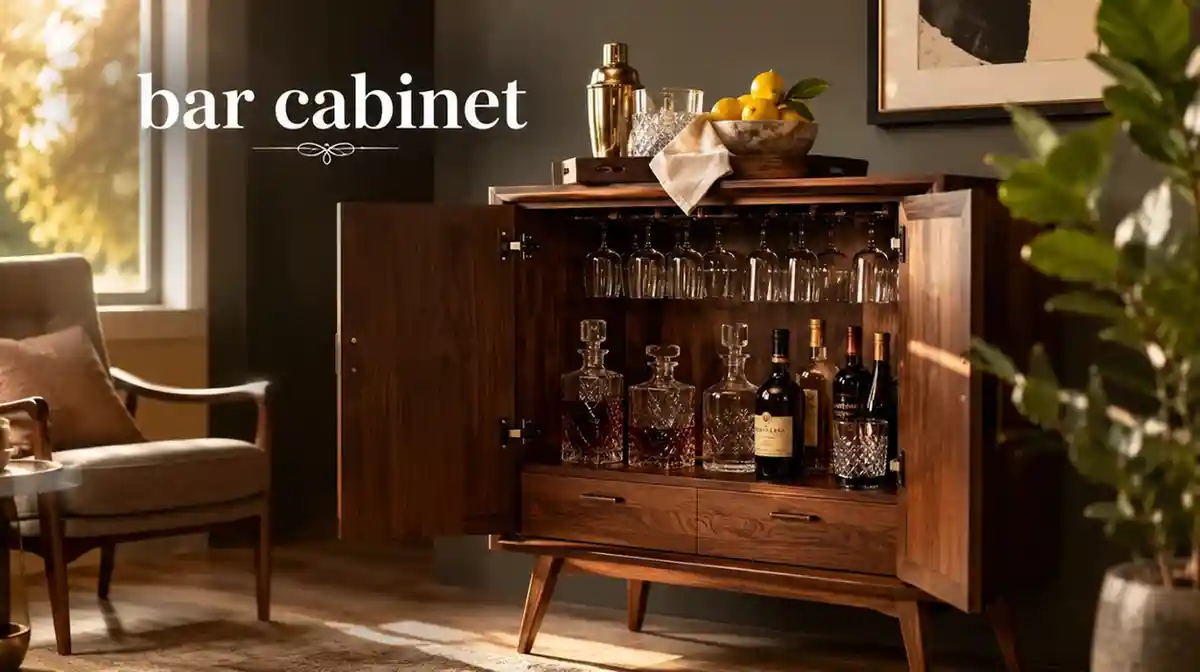
Cluttered kitchen counters ruin your pre-dinner mood. Bottles crowd the pantry, glasses hide in three different cupboards, and your cocktail shaker collects dust. This scattered setup kills the joy of hosting. A well-chosen bar cabinet pulls everything into one stylish station, turning chaos into a welcoming home bar you’ll use every week.
What Exactly Is a Bar Cabinet?
A bar cabinet is a dedicated storage piece designed to hold bottles, glassware, bar tools, and often a work surface for mixing drinks. It differs from a simple liquor cabinet because it usually includes specialized racks, stemware holders, and sometimes a built-in countertop. Many models feature doors that fold out or slide away, instantly expanding your serving area. While a traditional credenza or sideboard can store bottles, a true bar cabinet organizes every item with purpose—keeping wine glasses hanging, spirits upright, and accessories tucked in drawers.
Interior designer teams at The Spruce emphasize that a dedicated bar cabinet needs at least 16 inches of interior depth to fit standard wine and spirit bottles without crowding. This separates a real bar cabinet from a decorative accent table.
Why a Dedicated Bar Cabinet Is Important for Your Home
You free up kitchen and dining room storage. You protect bottles from light and temperature swings. You give guests a clear focal point during parties. A dedicated bar cabinet signals that entertaining matters to you, without demanding a full wet bar renovation. It also keeps glassware fingerprint-free behind closed doors. For renters, a freestanding bar cabinet offers a permanent feel that moves with you.
A 2024 report by the American Home Furnishings Alliance shows demand for multifunctional bar cabinets surged 22% year over year, driven by the rise of at-home cocktail culture. People want one piece that stores, displays, and serves.
Bar Cabinet Types at a Glance
This table breaks down the most popular bar cabinet styles, matching each with its best use and space requirements.
| Type | Ideal For | Typical Width | Standout Feature |
| Small bar cabinet | Apartments, condos, nooks | 24–30 inches | Compact footprint, wall-mounted options |
| Corner bar cabinet | Dead corners, small dining rooms | 30–36 inches (wedge) | Angled front, 90-degree fit |
| Tall bar cabinet | Narrow walls, large collections | 18–24 inches wide, 60+ inches tall | Vertical bottle racks, minimal floor space |
| Bar cabinet with fridge | Serious hosts, wine lovers | 40–60 inches | Built-in wine or beverage cooler |
| Modern bar cabinet | Open-plan living, minimalist décor | 32–48 inches | Sleek lines, mixed materials, hidden handles |
| Black bar cabinet | Dramatic accents, modern or industrial spaces | 30–48 inches | High-contrast finish, often with gold or brass trim |
| Mid century modern bar cabinet | Retro-inspired rooms, organic textures | 36–50 inches | Tapered legs, walnut veneer, sliding doors |
| Coffee bar cabinet | Dual-purpose morning and evening station | 30–42 inches | Upper mug rack, lower wine storage |
Each type solves a different spatial challenge. Read on for specific details that help you decide.
Small Bar Cabinet: Big Impact in Tight Spaces
A small bar cabinet slips into a dining nook, studio apartment, or even a hallway. Look for pieces between 24 and 30 inches wide. Wall-mounted designs lift the cabinet off the floor, preserving visual space. Folding front doors that double as a mixing shelf add work surface without permanent footprint. Many compact options include a mirrored back panel to bounce light and make the room feel larger.
When I styled a 400-square-foot studio, a 26-inch small bar cabinet with a built-in stemware rack held eight bottles, six glasses, and all the tools. The client gained a functional cocktail corner without giving up floor space. Go for lighter wood tones or white finishes to keep the unit from visually weighing down the room.
Corner Bar Cabinet: Unlock Awkward Angles
Corners gather dust unless you place a purpose-built corner bar cabinet there. These units feature a triangular or five-sided shape that slides flush against two walls. A well-fitted corner bar cabinet can store up to 15 bottles and a dozen glasses while using space no other furniture can claim. Some models include a lazy Susan mechanism for easy access to bottles in the back.
Designers at Houzz point out that the corner bar cabinet ranks among the top five space-saving solutions for dining rooms under 120 square feet. Measure the corner’s walls and the unit’s back angles—most require at least 30 inches along each wall. Place a slim bar cabinet here, and your main floor area stays open for traffic.
Tall Bar Cabinet: Vertical Storage That Saves Floor Space
When floor space runs tight, a tall bar cabinet uses height. These pieces often stretch 60 to 72 inches tall but stay under 24 inches wide. Shelves stack bottles in a column, with glassware hanging from the top tier. Some tall bar cabinets include pull-out work surfaces that tuck away when not in use. This style works brilliantly in narrow dining rooms, beside a pantry, or in a hallway outside the kitchen.
The vertical layout naturally protects your collection: bottles stand upright, corks stay moist, and labels face forward for quick selection. Add motion-sensor LED strip lights inside to illuminate the rows without wiring. West Elm’s mid-century-inspired tall cabinet offers a walnut finish and brass legs, proving a tall bar cabinet can feel airy, not imposing.
Bar Cabinet with Fridge: Built-In Cooling for Effortless Hosting
A bar cabinet with fridge integrates a compact beverage cooler right into the cabinetry. You store white wine, craft beer, mixers, and chilled glassware at serving temperature without trips to the kitchen. These units run wider—typically 40 to 60 inches—so they suit dedicated home bar zones, finished basements, or large living rooms. Ventilation matters: most built-in coolers require front venting, so confirm the cabinet design includes a grille.
I recommend a bar cabinet with fridge to clients who host weekly. The convenience of pulling a perfectly chilled bottle from the cabinet while guests chat nearby transforms the flow of an evening. Look for dual-zone coolers if you store both red and white wine; they let you set two temperatures in separate compartments.
Modern Bar Cabinet: Clean Lines and Mixed Materials
A modern bar cabinet strips away ornament. You find flat-front doors, integrated handles, matte finishes, and often a combination of wood, metal, and glass. Geometric shapes and asymmetry define many current designs. Open shelving sections display crystal decanters, while closed cabinets hide everyday glassware. Matte black metal frames paired with smoked glass doors deliver a restrained, architectural look.
In open-plan homes, a modern bar cabinet doubles as a sculptural object. Choose a piece with slim legs and a floating appearance. It won’t interrupt sightlines. The minimalist exterior forces you to curate what sits inside—no clutter allowed.
Black Bar Cabinet: Bold, Elegant, and Always Sophisticated
A black bar cabinet anchors a room. The dark finish absorbs visual noise and makes brass handles, mirrored backs, and colored glass pop. Interior designers prize the black bar cabinet for its versatility: it reads modern against white walls, warm against exposed brick, and industrial against concrete floors. A matte black cabinet with gold trim recalls Art Deco; a high-gloss black piece leans contemporary.
When I placed a black bar cabinet in a client’s light-filled sunroom, it became the room’s focal point without overwhelming the airy feel. The dark shell receded, while the mirrored interior sparkled every time the doors opened. Practical bonus: dark finishes hide minor scuffs and fingerprints better than white or light wood.
Mid Century Modern Bar Cabinet: Retro Charm Meets Everyday Function
Tapered legs, warm walnut veneer, sliding doors, and minimalist brass pulls define a mid century modern bar cabinet. These pieces feel alive with character. Most designs put function first—drop-down doors become mixing surfaces, while interior compartments keep everything organized. The look pairs effortlessly with leather sofas, geometric rugs, and houseplants.
Authentic mid century modern bar cabinet construction uses solid wood or high-grade veneer over plywood, avoiding particleboard. If you buy vintage, check for wobbling legs and ensure the doors glide smoothly. New reproductions from brands like Article and IKEA offer the same silhouette with modern durability.
Coffee Bar Cabinet: One Station for Morning Brew and Evening Cocktails
A coffee bar cabinet handles two daily rituals. Upper shelves hold mugs, beans, and a pour-over setup; lower cabinets store wine bottles, bitters, and a cocktail shaker. A pull-out tray supports both an espresso machine and a mixing glass. By combining stations, you reclaim counter space and keep your morning and evening routines visually tidy.
Glass-front upper doors let you display attractive coffee gear while hiding liquor below. Look for a coffee bar cabinet with a durable, water-resistant countertop—spills happen. A quartz or sealed wood top withstands both coffee drips and citrus splashes.
Home Bar Cabinet Placement and Styling Tips
Place your home bar cabinet where traffic flows naturally—near the dining area, living room, or finished basement. Avoid direct sunlight, which can fade labels and overheat wine. Leave at least 36 inches of clearance in front so doors and drawers open fully.
Style your bar cabinet in layers. Start with a tray that corrals bitters, jiggers, and spoons. Add a small lamp or LED puck light inside to create warmth. Hang a framed art piece or a vintage mirror above the cabinet to define the zone. Use the top surface as a dedicated serving spot: a decanter, a bowl of citrus, and a stack of coasters signal “bar” instantly.
How to Choose the Right Bar Cabinet Material and Finish
Solid wood—walnut, oak, mahogany—lasts decades and ages beautifully. Wood veneer over engineered wood balances cost and stability. Metal cabinets with powder-coated finishes suit industrial lofts and resist rust. Glass-front doors lighten the piece visually but demand tidiness inside. Mirrored backs amplify bottle collections and reflect ambient light.
Check joinery: dovetail drawers indicate quality. Soft-close hinges add daily pleasure. If you choose a painted finish, confirm it’s a catalyzed lacquer or polyurethane that resists chips and moisture. I always advise clients to touch and open a floor model before buying—the feel of a smooth drawer glide tells you more than any spec sheet.
Lighting and Accessories That Transform Your Bar Cabinet
Interior LED strip lights with a warm 2700K color temperature make bottles glow. Motion sensors turn lights on when doors open, impressing guests and helping you find the vermouth. Attach a slim power strip inside the cabinet for charging a cordless cocktail mixer or a small speaker.
Accessories worth buying: a spill-proof bar mat, adjustable bottle risers that display back rows, and a hanging stemware rack that mounts under a shelf. A Bluetooth thermometer inside a bar cabinet with fridge alerts your phone if the temperature shifts. These small upgrades turn furniture into a functional bar.
Maintenance and Organization for a Bar Cabinet That Lasts
Dust the exterior weekly with a microfiber cloth. Clean glass shelves with a vinegar-water solution to avoid streaks. Oil wooden surfaces twice a year with a food-safe mineral oil blend. Tighten screws on handles and hinges every season—regular use loosens them.
Organize bottles by category: base spirits on the lowest shelf (heaviest), liqueurs in the middle, bitters and syrups at eye level. Keep glassware rim-down or hanging. Rotate stock every quarter; move older bottles forward to use first. This practice keeps your home bar cabinet ready and prevents forgotten, stale bottles at the back.
Frequently Asked Questions About Bar Cabinets
What size bar cabinet fits a small apartment?
A small bar cabinet 24–30 inches wide works well. Wall-mounted or corner models save even more floor space.
Can a corner bar cabinet support a wine fridge?
Yes. Several manufacturers design corner bar cabinets with a built-in cooler compartment. Verify the cabinet includes ventilation cutouts before purchase.
Is a tall bar cabinet stable on carpet?
A tall bar cabinet remains stable if you use furniture anti-tip straps anchored to the wall. On plush carpet, add wide, flat feet or a solid base to prevent wobble.
How do I childproof a bar cabinet with fridge?
Choose a cabinet with lockable doors. Many coolers include a child-lock control panel. Magnetic cabinet locks keep curious toddlers out of the main storage area.
What separates a modern bar cabinet from a mid century one?
A modern bar cabinet uses flat surfaces, stark lines, and mixed materials like matte laminate and steel. A mid century modern bar cabinet features organic shapes, tapered legs, and warm wood tones, often with sliding doors.
Can I use a coffee bar cabinet just for cocktails?
Absolutely. A coffee bar cabinet’s extra countertop and upper shelving suit cocktail gear perfectly. The dual-zone design simply gives you more flexible storage.
Ready to Choose Your Ideal Bar Cabinet?
You started with scattered bottles and a wish. Now you know which style fits your space, how to assess materials, and the small upgrades that make a piece feel custom. Measure your room, decide on a must-have feature—cooling, vertical storage, or corner fit—and start browsing.
Drop a comment with the bar cabinet style that speaks to you. Once your setup is complete, provide a picture of it. Your home bar deserves a cabinet that works as hard as you do when entertaining friends and family.
Authored by Alex Morgan, home entertaining specialist and furniture reviewer. Alex has designed and tested over 200 home bar setups in the past decade, helping homeowners and renters create functional, beautiful entertaining spaces without major renovations.
Primary sources: The Spruce interior design guidelines, American Home Furnishings Alliance 2024 demand report, Houzz 2023 kitchen trends survey, West Elm product specifications.