Most people grab the cheapest extension cord on the shelf and hope nothing catches fire. That casual gamble costs American homeowners over $1,000 in electrical damage every single year — and it takes about thirty seconds to fix.
This guide breaks down every gauge, length, and safety rule you actually need to know before plugging anything in. No fluff, no filler, just the exact details that licensed electricians wish you would read tonight.
Why Gauge Size Matters More Than You Think
The gauge number stamped on your extension cord tells you exactly how much electrical current it can safely carry. Here is the counterintuitive part that trips up most shoppers: a lower number means a thicker wire and more power capacity.
A 10 gauge extension cord handles serious loads like air compressors, table saws, and portable space heaters without breaking a sweat. These thick cables resist dangerous heat buildup even when stretched across long distances.
A 12 gauge extension cord sits right in the sweet spot for most homeowners. It powers lawn mowers, shop vacs, and elaborate holiday light displays with plenty of headroom to spare.
Anything thinner than 14 gauge should stay indoors and only power lightweight electronics. Pushing heavy appliances through thin wires creates intense heat that melts insulation fast and sparks fires silently.
When to Use a 20 Amp Extension Cord
Standard household outlets deliver 15 amps, but many workshops and garages have dedicated 20 amp circuits. If your breaker panel shows a 20 amp line, you need a 20 amp extension cord with a T-shaped neutral blade to match.
Using a 15 amp cord on a 20 amp circuit creates a bottleneck that overheats the plug end within minutes. Always match your cord rating to your circuit rating — never the other way around.
Outdoor Extension Cord vs. Indoor: The Differences That Save Lives
An outdoor extension cord looks similar to its indoor cousin on the surface, but the jacket material tells a completely different story. Outdoor-rated cables use thick, weather-resistant insulation that shrugs off rain, UV exposure, and freezing temperatures.
Indoor cords have thin vinyl jackets that crack and split the moment moisture seeps inside. Running an indoor cord through a cracked window to power your leaf blower is a shock hazard waiting to happen.
Look for the letter “W” printed directly on the cord jacket. That single letter confirms the cable meets outdoor safety standards and can handle wet conditions without shorting out on you.
Heavy Duty Extension Cord for Job Sites
A heavy duty extension cord goes well beyond standard outdoor ratings. These cables feature reinforced plugs, thicker copper cores, and bright yellow or orange jackets for high visibility on busy construction sites.
Contractors rely on heavy duty models because they survive being run over by trucks, dragged across rough concrete, and left soaking in puddles overnight. The extra durability costs a few dollars more but lasts years longer than bargain-bin alternatives.
Picking the Right Length and Storage Method
Longer cords create more electrical resistance, which drops voltage before it ever reaches your tool. A 100 ft extension cord works perfectly for reaching the far corner of your yard, but only if you choose the right gauge.
Pair a 100 ft length with at least a 12 gauge wire to maintain steady voltage. Going thinner at that distance will starve your equipment and trip your breaker repeatedly throughout the afternoon.
Extension Cord Reel and Retractable Options
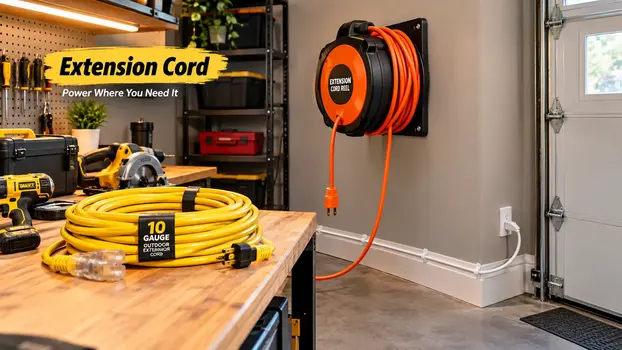
An extension cord reel keeps long cables organized and completely tangle-free in your garage or workshop. Wall-mounted reels bolt directly to a stud and let you pull out exactly the length you need for each task.
A retractable extension cord works on the same principle but snaps back automatically with a spring-loaded mechanism inside the housing. These are perfect for kitchen counters and home offices where you need quick, temporary power access.
Flat Extension Cord for Tight Spaces
A flat extension cord slides under rugs, behind baseboards, and through door frames without creating a tripping hazard. The low-profile design hugs the floor and stays nearly invisible in living rooms and hallways.
Just remember that flat cords typically max out at lighter amperage ratings. Reserve them for lamps, phone chargers, and small electronics rather than power-hungry appliances like heaters or microwaves.
How to Roll Up an Extension Cord Without Kinks
Learning how to roll up an extension cord properly prevents internal wire damage that drastically shortens the cable’s lifespan. The over-under coiling method is the gold standard used by stage crews and professional electricians worldwide.
Start by holding the plug end in your left hand. Loop the cord over your right hand, then twist your wrist to create an alternating under-loop on the next pass. This technique lays the wire flat without twisting the copper strands inside.
Never wrap a cord tightly around your elbow like a garden hose. That common habit bends the internal wires at sharp angles and creates weak spots that eventually spark and fail under load.
Dangerous Connections You Must Avoid
Can You Plug an Extension Cord Into a Power Strip?
The short answer to “can you plug an extension cord into a power strip” is technically yes, but most fire marshals will tell you to stop immediately. The National Fire Protection Association flags this exact setup as a leading cause of residential electrical fires.
The real problem is overload. A power strip already splits one outlet across multiple devices. Adding an extension cord multiplies the total draw beyond what the wall circuit can safely deliver.
Is It Possible to Connect a Surge Protector to an Extension Cord?
Asking “can you plug a surge protector into an extension cord” reveals a common misunderstanding about how surge protection actually works. A surge protector needs a direct, low-resistance path to the grounding wire in your wall outlet to function correctly.
Plugging it into an extension cord adds resistance to that ground path and weakens the protector’s ability to absorb voltage spikes. Your expensive electronics end up far less protected than you assume.
Can You Plug a Power Strip Into an Extension Cord?
The question “can you plug a power strip into an extension cord” gets asked constantly during the holiday season when people run out of outlets near the Christmas tree. The answer mirrors the earlier warning: it creates a daisy chain that overloads circuits fast.
Is it possible to connect one extension cord to another?
Wondering “can you plug an extension cord into another extension cord” is natural when your 50-foot cord falls ten feet short of the work area. Daisy-chaining two cords doubles the resistance, drops the voltage, and generates dangerous heat at every connection point.
Buy one longer cord instead. A single 100 ft extension cord rated at the correct gauge delivers safer, more reliable power than two shorter cords linked together in a chain.
Quick Comparison: Gauge, Length, and Max Wattage
| Gauge | Max Length | Max Amps | Best Use Case |
| 10 AWG | 100 ft | 20 A | Air compressors, welders, heaters |
| 12 AWG | 100 ft | 15 A | Lawn mowers, shop vacs, holiday lights |
| 14 AWG | 50 ft | 13 A | Power tools, small appliances |
| 16 AWG | 25 ft | 10 A | Lamps, chargers, indoor electronics |
The numbers above assume standard 120V household circuits found in most American homes. Always check the printed rating on your specific cord, because manufacturer specs can vary slightly between brands and models.
Frequently Asked Questions
How do I know if my extension cord is outdoor rated?
Check the jacket for the letters “W,” “S,” “E,” or “O.” The “W” designation specifically confirms weather resistance. You will also notice outdoor cords feel noticeably thicker and stiffer than indoor versions when you bend them.
For a refrigerator, what gage extension cord is required?
A refrigerator draws roughly 6 to 8 amps during normal operation but spikes higher when the compressor kicks on. Use a 12 gauge extension cord no longer than 25 feet, and treat it as a temporary solution only until you install a proper outlet.
Is a retractable extension cord safe for outdoor use?
Most retractable models are designed for indoor garages and workshops. If you need outdoor retractable storage, look for a wall-mounted extension cord reel with a UL-listed outdoor rating and a weather-sealed housing to keep moisture out.
Can I leave an extension cord plugged in all the time?
Extension cords are rated for temporary use, not permanent installation. Leaving one plugged in for months increases the risk of overheating, insulation breakdown, and accidental physical damage. Install a proper outlet if you need constant power in a specific location.
Why does my extension cord get warm?
Slight warmth is normal under heavy loads, but a cord that feels hot to the touch is overloaded or internally damaged. Unplug it immediately and switch to a thicker gauge. A 10 gauge extension cord handles high-draw appliances without heating up noticeably.
How often should I replace my extension cords?
Inspect your cords every six months for cracked jackets, bent prongs, and loose connections at the plug ends. Replace any cord showing visible damage right away. Even undamaged cords should be retired after five to seven years of regular use.
Final Word on Staying Safe and Powered Up
Your extension cord is the most overlooked piece of equipment in your garage, and it is also the single most likely item to start a fire if you pick the wrong one. Match the gauge to your appliance, never daisy-chain multiple cords, and invest in a quality heavy duty extension cord for anything outdoors.
Spend the extra fifteen dollars now on the right cable. It is the cheapest insurance policy you will ever buy for your home, your tools, and your family’s safety.