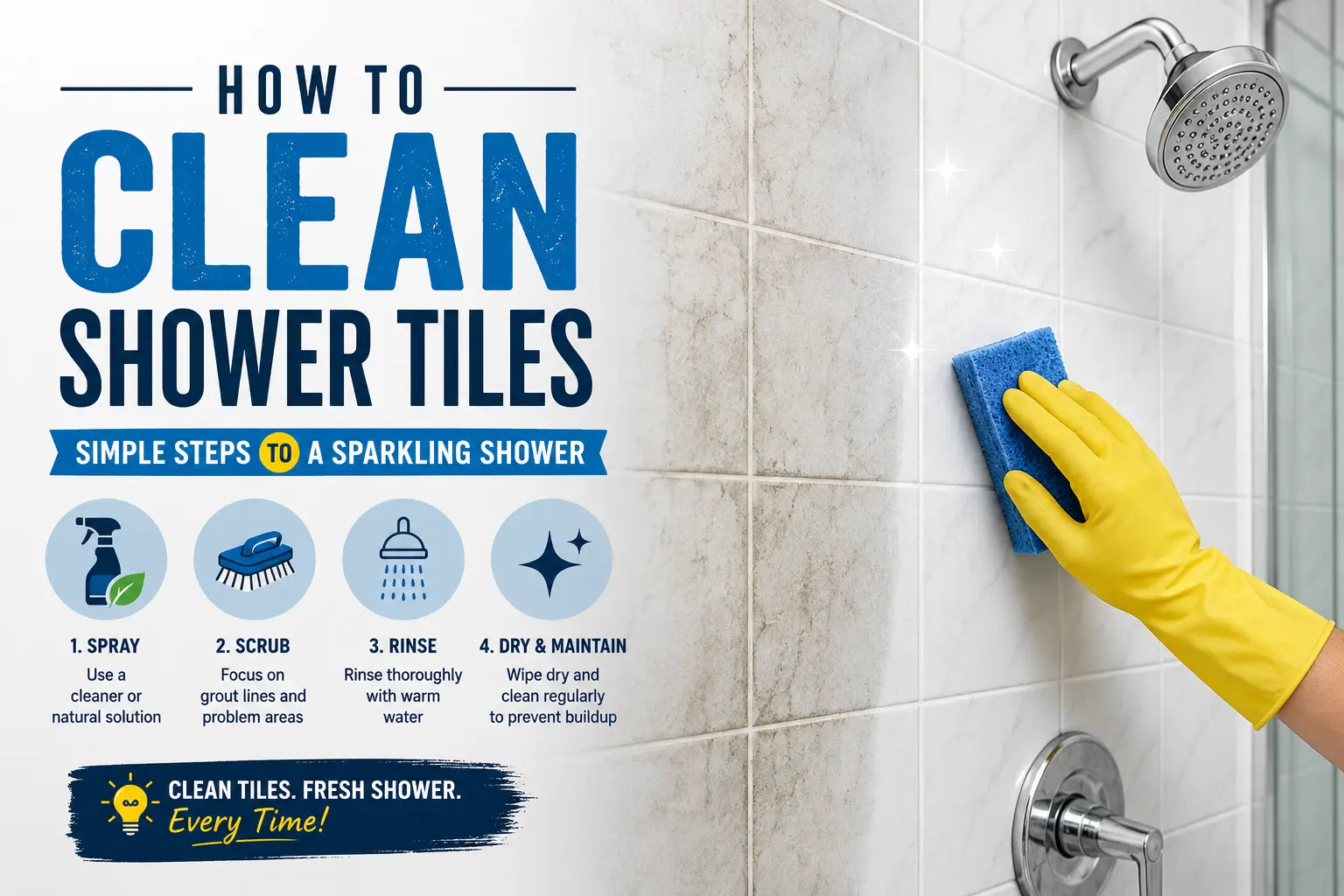
Soap scum hardens. Mold creeps into grout. Your shower looks dull even after you wipe it down. You’re not missing effort—you’re missing a system. This guide hands you that exact system. You’ll discover how to clean shower tiles completely, from the walls to the grout and up to the ceiling. Each step protects delicate surfaces like magna tiles while destroying the grime that triggers allergies and damages your investment. Grab your spray bottle. You’re about to see your shower sparkle.
Why Cleaning Shower Tiles Properly Protects Your Health and Home
Dirty tiles create more than an eyesore. The American Lung Association warns that mold growing in damp bathrooms releases spores that irritate lungs and worsen asthma. Every time you step into a moldy shower, you breathe those particles in. Beyond health, soap scum etches into porous grout like microscopic sandpaper. Once grout crumbles, water slips behind your walls. Repairing that damage often costs thousands of dollars. The National Association of Home Builders reports that water damage behind shower walls is one of the top five most expensive bathroom repairs. Mastering how to clean shower tiles the correct way stops this damage before it starts. You preserve clean air and a solid, leak-free structure.
Know Your Tile Type Before You Start Scrubbing
Every tile reacts differently to cleaners. Applying the wrong product ruins a flawless finish in minutes.
Glazed Ceramic Tiles
A liquid glass coating seals the surface. Most cleaners work safely here, but abrasive powders leave fine scratches that trap future dirt. Stick to soft sponges and liquid solutions.
Porcelain Tiles
Denser and tougher than ceramic. These withstand stronger acids and gentle scrubbing with a soft brush. They rarely absorb stains, making deep cleaning faster.
Magna Tiles
A premium brand of interlocking glossy wall panels. Their seamless surface resists water penetration but scratches instantly with scouring pads. The Magna Tiles care team states clearly that only pH-neutral, non-abrasive cleaners touch their panels. Acid burns the high-gloss coat. Always test a hidden corner first.
Natural Stone (Marble, Travertine, Slate)
Sealed or unsealed, these are calcium-based. Vinegar, lemon, and commercial descalers eat into the stone, leaving permanent dull spots called etching. Use only a dedicated stone soap.
Tools and Supplies That Make the Job Effortless
Having the right gear turns a two-hour struggle into a 30-minute task. Gather these items in a caddy before you begin.
- Stiff nylon grout brush: Narrow enough to dig into grout lines without scratching tile.
- Microfiber flat mop with a long handle: Reaches ceiling tiles safely.
- Spray bottles (2): One for your daily cleaner, one for your deep-cleaning solution.
- White distilled vinegar: Removes water stains and light soap scum. .
- Baking soda: A gentle abrasive that lifts film without scratching glazed surfaces.
- Hydrogen peroxide (3%): Brightens grout and lifts organic stains.
- Oxygen bleach powder: The gold standard for deep grout restoration.
- Plastic scraper: Lifts stubborn, dried gunk without metal marks.
- Rubber gloves and splash goggles: Vinegar stings eyes. Protect your hands from prolonged moisture.
Prepping Your Shower for a Deep Clean
Empty every bottle, razor, and hanging loofah. Turn the water on as hot as it goes and let the steam fill the enclosure for three minutes. Heat loosens the molecular bond between soap scum and tile. Rinse the walls quickly with a handheld showerhead to wash away loose dust and hair. Tape a small sheet of plastic over your shower valve and any exposed metal trim; acidic cleaners can dull the finish. For extra protection, open a window and switch on the exhaust fan. Good airflow cuts down condensation while you work.
How to Clean Shower Tiles: The Step-by-Step System
Follow this sequence top to bottom. Gravity pulls dirty water downward, so starting high prevents re-soiling cleaned areas.
- Apply vinegar to walls.Pour pure white distilled vinegar into a spray bottle. Mist every tile from the top edge down to the floor. Allow ten minutes of dwell time. Acetic acid dissolves the fatty bonds in soap scum and breaks apart hard water spots.
- Scrub with a baking soda paste. Mix four parts baking soda with one part water in a small bowl. Dip a damp sponge into the paste and scrub tile faces using circular motions. Work in small sections. Rinse the sponge often in a bucket of clean water to avoid spreading grease.
- Rinse thoroughly.Use a big cup or a portable showerhead. . Flood each wall with water until all baking soda residue washes away. Leftover powder leaves a white film.
- Spot-treat stains with peroxide.Apply a direct 3% hydrogen peroxide spray to any residual orange stain or shadow. Wait five minutes. The peroxide oxidizes the stain, lifting it from pores.
- Dry the tiles completely. Wipe every surface with a dry microfiber cloth. Within hours, standing water collects dust and creates new mineral stains. Drying is the step most people skip—and the reason their tiles look cloudy the next day.
Restoring Grout That Looks Black or Stained
Grout absorbs soap dyes, body oils, and moisture because it’s essentially porous cement. Surface scrubbing won’t reach the mold roots. You need oxygen bleach.
Create a thick paste using oxygen bleach powder and warm water. Spread the paste generously along every grout line. Let it sit for fifteen to twenty minutes—this dwell time is critical. The powder releases thousands of oxygen bubbles that lift stains from deep inside the grout’s pores.
Now, scrub with that stiff nylon brush. Work in short, back-and-forth strokes along each line. Do not use a wire brush; it gouges the grout and leaves grooves where water pools. Rinse with warm water and inspect. Grout should look lighter, almost like new. If darkness returns after drying, repeat the process. The Tile Council of North America advises sealing grout after every deep clean. A quality penetrating sealer prevents moisture from sinking in for another twelve to eighteen months.
How to Clean Magna Tiles Without Scratching
Magna tiles and similar high-gloss wall systems demand a zero-abrasive approach. Their seamless, shiny surface shows every scratch under bright bathroom lights.
- Choose your cleaner. Grab a pH-neutral stone and tile cleaner, or mix a single drop of mild liquid dish soap into a quart of warm water. Avoid vinegar, baking soda paste, and commercial descalers. Acid etches the coating.
- Spray the cloth, never the wall. Mist your cleaner onto a clean microfiber cloth until damp. Direct spraying lets solution pool behind panels or drip into unsealed seams.
- Wipe in S-patterns. Glide the cloth over the panels in overlapping, continuous motions. Do not press hard. Let the solution dissolve the light film.
- Buff dry immediately. Take a second dry microfiber cloth and buff the surface to a streak-free shine. This immediate drying defines a professional-level magnatile finish.
Repeating this gentle routine weekly keeps your magna tiles looking factory-new for years.
How to Clean Shower Ceiling Tiles Safely
Ceiling tiles collect steam, dust, and pink mildew—a bacteria that thrives on moisture. Because ceilings sit out of easy reach, they often go untouched until spots drip down.
Set up a stable step ladder. Fill a bucket with one gallon of warm water and stir in one cup of oxygen bleach. Submerge a microfiber flat mop head and wring it out firmly; a dripping mop sends solution into your eyes. Raise the mop and press it against the ceiling tiles with light, even pressure. Cover every tile in a grid pattern. Let the oxygen bleach solution dwell for five minutes.
Refill your bucket with fresh warm water. Rinse the mop, wring it out, and wipe the ceiling again to remove all cleaning residue. Turn on the exhaust fan and leave the bathroom door open. Rapid drying starves any remaining mildew spores and prevents water spots from forming overhead. Your walls stay clean because no dirty solution drips down onto them.
Natural vs. Commercial Cleaners: A Detailed Comparison
| Cleaner | Best For | Avoid On | Key Ingredient | Dwell Time |
| White Vinegar (5%) | Light soap scum, hard water spots | Natural stone, magna tiles, unsealed grout | Acetic acid | 10–15 minutes |
| Baking Soda Paste | General tile scrubbing, film removal | High-gloss magna tiles (scratches) | Sodium bicarbonate | Scrub and rinse immediately |
| Oxygen Bleach Powder | Grout whitening, deep mold stain removal | Wool rugs, colored fabrics | Sodium percarbonate | 15–30 minutes |
| pH-Neutral Daily Cleaner | Magna tiles, porcelain, quick wipe-downs | Nothing (universal safe) | Plant-based surfactants | Wipe on, wipe off |
| Commercial Descaler | Thick hard water build-up | Marble, magna tiles, old grout | Lactic acid or gluconic acid | 2–5 minutes |
Daily Habits That Stop Build-Up Before It Starts
Prevention remakes your entire cleaning routine. The American Cleaning Institute discovered that using a squeegee after each shower removes up to 60% of the moisture that forms soap scum. Pump a few spritzes of a homemade daily spray over your tiles after the final rinse. Mix one cup of water, one-quarter cup of white vinegar, and ten drops of tea tree oil in a spray bottle. Tea tree oil adds natural antifungal power. Run your bathroom fan for at least twenty minutes after a shower. These small actions mean you deep clean less often and your tiles stay bright between sessions.
Six Common Mistakes That Ruin Shower Tiles
- Scraping grout with metal wire brushes. Metal tears out the smooth grout surface. Wet mold dives into those new crevices and grows deeper than before.
- Mixing vinegar with chlorine bleach. This combination creates chlorine gas.Immediate coughing, burning in the throat, and eye damage result from inhalation. . Never mix any cleaners.
- Leaving puddled water on the floor. Standing water slowly degrades grout and subfloor adhesive. Squeegee the floor after every shower.
- Skipping grout sealer. Unsealed grout acts like a sponge. Sealer creates an invisible barrier that beads water up on the surface.
- Using abrasives on magna tiles. A single scrub with a green pad scores the glossy finish with permanent micro-scratches.
- Wiping tiles without rinsing first. Soap residue smears and dries hazy. Always rinse, then wipe.
When to Call a Professional Tile and Grout Cleaner
Sometimes home solutions can’t cut through. Black mold spreading across large areas of the wall or a persistent musty smell that returns within days signals a colony inside the wall cavity. Licensed remediation teams use HEPA vacuums and industrial dry steam cleaners at temperatures exceeding 200°F. These temperatures sanitize without chemicals and won’t void your tile manufacturer’s warranty. Crumbling, missing, or spongy grout also falls into professional territory. A tile setter removes the old grout, packs new cement into the joints, and applies a commercial-grade penetrating sealer. Schedule an inspection the moment you spot a cracked tile or feel a soft spot in the floor; delaying turns a minor fix into a subfloor replacement.
Frequently Asked Questions
Can I use bleach to clean shower tiles?
Chlorine bleach kills surface mold instantly. However, it corrodes grout cement and fades colored tiles over multiple uses. Switch to oxygen bleach. It removes stains just as effectively while preserving your grout’s structure and color.
How frequently should shower tiles be thoroughly cleaned?
Give your shower a full deep clean every two weeks. A weekly top-to-bottom cleaning helps prevent soap scum from solidifying into a tenacious film in busy family bathrooms with numerous daily users. Will vinegar damage my magna tiles?
Yes. Acetic acid in vinegar etches the glossy, seamless surface of magna tiles. The high-shine polish becomes dull over time. Use only a pH-neutral cleaner approved by the manufacturer.
What removes pink mold from ceiling tiles?
Pink mold, which is actually a bacteria, responds immediately to oxygen bleach. Apply the solution to the ceiling with a damp mop, let it dwell for five minutes, and wipe clean. Increase bathroom ventilation afterwards to keep humidity below 50%.
Do I need to seal my shower grout every year?
The Tile Council of North America recommends sealing grout every 12 to 18 months. Test your seal by sprinkling a few drops of water onto the grout line. If the water beads, your seal holds.You must reseal if it seeps in.
Why did my grout turn dark right after cleaning?
Wet grout always looks darker. If it stays dark after drying completely, leftover soap scum or mold still clogs the pores. Repeat an oxygen bleach treatment and scrub again. The grout should lighten to its natural color once truly clean.
Your Spotless Shower Starts Right Now
You now hold the complete system for how to clean shower tiles without guesswork. No more mold creeping into grout. No more fear of scratching a glossy magna tile finish. No more looking up at a neglected ceiling.
Start with just one wall. Spray the vinegar, wait ten minutes, and scrub with your baking soda paste. Rinse and dry. See the bright, streak-free result for yourself. Then seal your grout, set a daily squirt bottle in the shower, and squeeze the walls after every use. A spotlessly clean, healthy bathroom is no longer a weekend project—it’s a simple habit. Take the first step today and enjoy a shower that feels completely new.