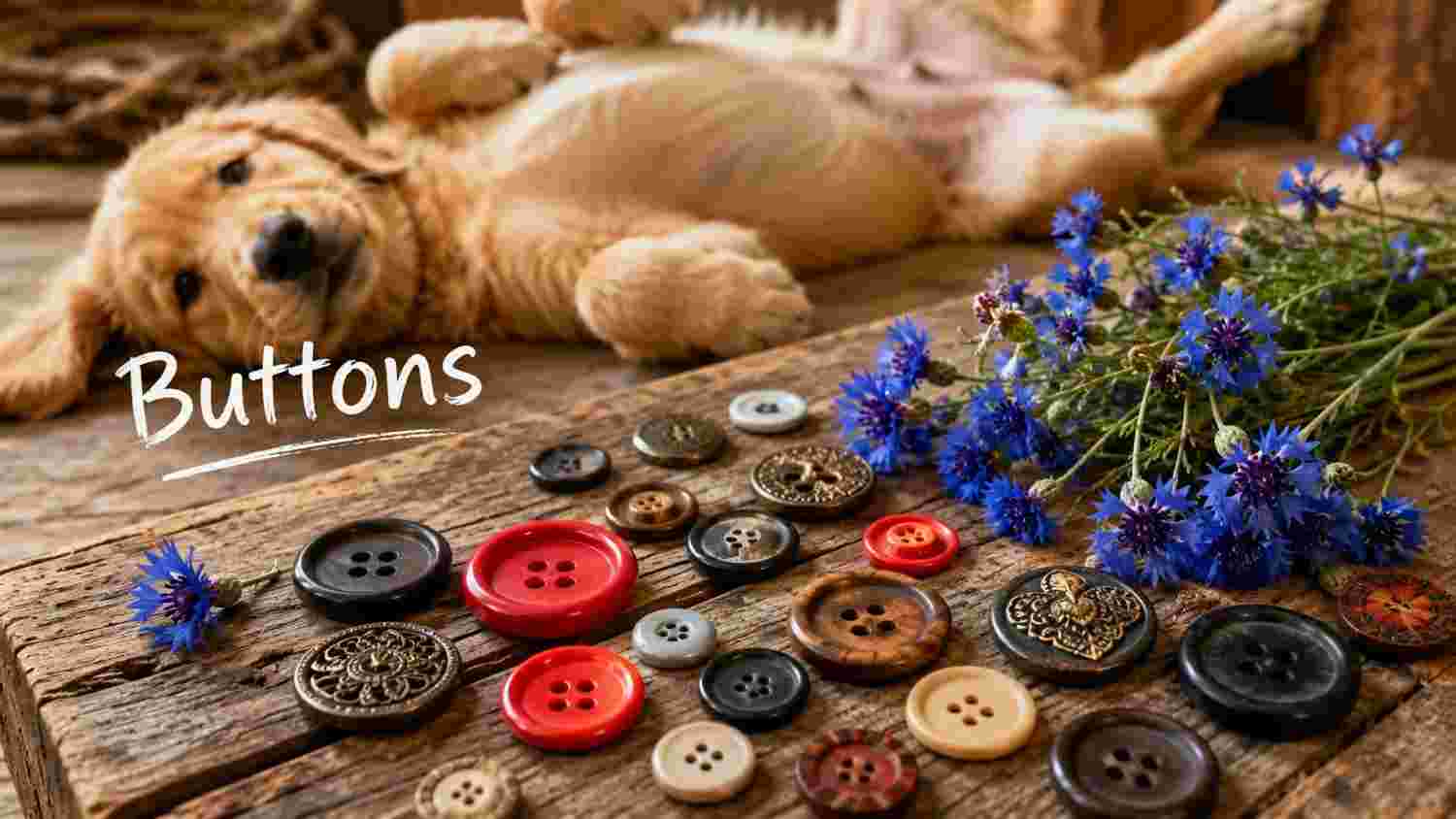
You press them, sew them, and stare at them every single day without a second thought. But what if I told you that buttons hide some of the strangest secrets in nature, fashion, and even your dog’s belly?
Most people treat buttons as boring little fasteners that keep their shirts from flying open in public. That assumption is dead wrong, and by the end of this read, you will never look at a simple button the same way again.
We are about to unpack everything from the psychology behind red buttons on websites to the surprising truth about whether your golden retriever actually has a belly button. Stick around because the answers are far stranger than you think.
The Surprising History Behind Everyday Buttons
Buttons have been around for over 5,000 years, and their original purpose had absolutely nothing to do with holding clothes together. Ancient civilizations in the Indus Valley carved ornamental buttons from seashells and used them purely as decoration.
It was not until the 13th century in Germany that someone finally figured out how to pair a button with a functional buttonhole. That single invention revolutionized fashion and changed how humans dressed for centuries to come.
Before that breakthrough, people relied on pins, brooches, belts, and elaborate lacing to keep their garments in place. Imagine trying to get dressed for a job interview every morning with a bag full of safety pins and leather straps.
Today, the global button market is worth over $5 billion, and manufacturers produce billions of individual buttons every single year. From tiny pearl snaps on baby onesies to oversized wooden toggle buttons on winter coats, the variety is genuinely staggering.
Collectors around the world treat rare antique buttons like fine art, with some military buttons from the Napoleonic era selling for thousands of dollars at auction. The hobby is called “buttonology,” and it has a surprisingly passionate global following.
Why Red Buttons Dominate the Digital World
If you have ever wondered why almost every “Buy Now” or “Subscribe” button on the internet glows red, you are definitely not alone. The answer comes down to hardwired human psychology and decades of ruthless A/B testing by major tech companies.
Red triggers an immediate sense of urgency deep inside the human brain. It signals danger, excitement, passion, and action all at once, which is exactly what marketers want when they are trying to get your finger to click.
Studies from HubSpot and Performable have shown that red buttons outperform green buttons by as much as 21 percent in conversion rate tests. That single color swap on a landing page can mean millions of dollars in additional revenue for large e-commerce brands.
The Science Behind Red Button Clicks
The human eye detects red wavelengths faster than almost any other color in the visible light spectrum. This biological shortcut means your brain processes a red button before you even consciously register the text printed on it.
Netflix, YouTube, CNN, and Target all use red buttons as their primary call-to-action elements across every platform. They did not pick that color by accident — they spent years and millions of dollars proving it works in real-world scenarios.
That said, context matters enormously in button design. A red button placed on a red background will completely vanish and absolutely tank your click-through rate. Contrast is the real secret weapon behind high-performing button placement.
Smart designers also test button size, shape, shadow depth, and micro-animations to squeeze out every possible conversion. The red color is just the starting point in a much larger optimization strategy.
Do Dogs Have Belly Buttons? The Truth Will Surprise You
This is one of the most searched pet questions on the entire internet, and the short answer is a definitive yes — your dog absolutely has a belly button. Every placental mammal on the planet does, and dogs are no exception to that rule.
When a puppy develops inside its mother, it receives oxygen and nutrients through an umbilical cord just like a human baby does. After birth, the mother dog chews through that cord, leaving a small, flat scar on the puppy’s abdomen.
Why You Have Probably Never Noticed Your Dog’s Belly Button
Unlike human belly buttons, a dog’s belly button is flat, tiny, and usually hidden completely under a thick patch of fur. It sits right at the base of the rib cage and fades into the surrounding skin within just a few weeks of birth.
You will have the best luck finding it on short-haired breeds like Boxers, Greyhounds, Dalmatians, or Weimaraners. Gently part the fur on your dog’s stomach and look for a small, oval-shaped scar near the center of the belly.
If you notice a bulge or a soft protruding bump near that area, contact your veterinarian right away. That could be a sign of an umbilical hernia, which is relatively common in young puppies and usually requires a quick surgical fix.
Many pet owners go their dog’s entire lives without ever spotting the belly button, so do not feel bad if you cannot find yours. It is there — it is just playing an extremely effective game of hide and seek under all that fur.
Bachelor Buttons — The Stunning Flower Hiding Behind a Familiar Name
Not every button belongs on a dress shirt or a checkout page. Bachelor buttons, also known as cornflowers or Centaurea cyanus, are vibrant wildflowers that have been growing across European grain fields for thousands of years.
The name “bachelor button” comes from an old Victorian-era tradition where young, unmarried men would tuck the flower into their jacket buttonholes. If the flower stayed fresh and vivid, it supposedly meant their love interest returned their feelings.
If the flower wilted quickly, the poor bachelor had no romantic chance whatsoever. It is a charming piece of folklore that gave this gorgeous blue wildflower a quirky name that still sticks around in gardening circles today.
Growing Bachelor Buttons in Your Own Garden
Bachelor buttons are incredibly easy to grow and thrive in full sun with average, well-drained soil. You can sow the seeds directly into your garden beds in early spring, and they will bloom beautifully by mid-summer with minimal effort.
These flowers are pollinator magnets that attract bees, butterflies, and beneficial insects to your yard. They make a smart, low-maintenance addition to any eco-friendly garden or wildflower meadow project.
The petals are also completely edible and are frequently used to garnish salads, desserts, cheese boards, and craft cocktails. Their mild, slightly spicy flavor pairs surprisingly well with citrus, honey, and lavender-based dishes.
Buttons by the Numbers — A Quick Data Breakdown
| Button Fact | Statistic |
| Oldest known button | ~5,000 years old (Indus Valley) |
| Global button market value | $5.2 billion (2024 estimate) |
| Red vs. green button CTR lift | Up to 21% higher conversions |
| Dog belly button visibility | Nearly invisible after 4 weeks |
| Bachelor button bloom season | June through August |
| Buttons on a standard dress shirt | 7 to 9 buttons total |
These numbers paint a clear picture of just how massive and varied the world of buttons really is. From ancient archaeological artifacts to modern marketing conversion metrics, buttons quietly influence billions of daily human decisions without anyone noticing.
Frequently Asked Questions About Buttons
Which kinds of buttons are most frequently used in apparel?
The most popular types include flat buttons, shank buttons, toggle buttons, snap buttons, and fabric-covered buttons. Flat buttons with two or four holes are the standard choice for dress shirts and everyday casual wear. Shank buttons have a raised loop on the back and appear frequently on blazers and heavy winter coats.
Why are red buttons so effective in marketing and web design?
Red buttons grab human attention faster than any other color because the eye processes red wavelengths almost instantly. Combined with high contrast against a white or dark background, red buttons create a psychological sense of urgency that drives more clicks and purchases.
Do dogs have belly buttons like humans do?
Yes, all dogs have belly buttons because they are placental mammals. However, a dog’s belly button is a small, flat scar that is usually hidden completely under fur. It is located near the base of the rib cage and is much harder to spot than a human navel.
What are bachelor buttons and where do they grow naturally?
Bachelor buttons are annual wildflowers also known as cornflowers. They are native to Europe but now grow widely across North America in home gardens, open meadows, and along rural roadsides. They bloom in vivid shades of blue, pink, purple, and white from early summer through fall.
Can you safely eat bachelor button flowers?
Absolutely. Bachelor button petals are completely edible and carry a mild, clove-like flavor. Professional chefs use them as colorful garnishes on salads, cakes, and cocktails. Just make sure the flowers have not been treated with chemical pesticides before eating them.
How many buttons does a standard men’s dress shirt have?
A typical men’s dress shirt features between seven and nine buttons running down the front placket, plus one or two buttons on each wrist cuff. Higher-end designer shirts sometimes include an extra button on the collar and a small reinforcement button at the bottom hem.
What is the most expensive button ever sold at auction?
The most expensive button on record was a diamond-encrusted gold button that sold at auction for over $4,000. Antique military buttons from the American Civil War and the Napoleonic era also fetch surprisingly high prices among serious collectors and history enthusiasts.
Final Thoughts — Buttons Deserve Way More Respect Than They Get
The next time you fasten your shirt in the morning, click a glowing checkout button, or scratch your dog’s belly during a lazy afternoon, take a brief second to appreciate the tiny object connecting all those moments. Buttons are not just functional — they are historical artifacts, psychological triggers, botanical wonders, and anatomical curiosities all rolled into one deceptively simple package.
Whether you are a web designer trying to boost conversions with the perfect red button, a home gardener planting bachelor buttons along your backyard fence, or a curious pet parent hunting for your dog’s hidden navel, the world of buttons is far deeper and more fascinating than most people ever realize.
Start paying closer attention to the small, ordinary things around you. They almost always turn out to be the most interesting stories you will ever find.