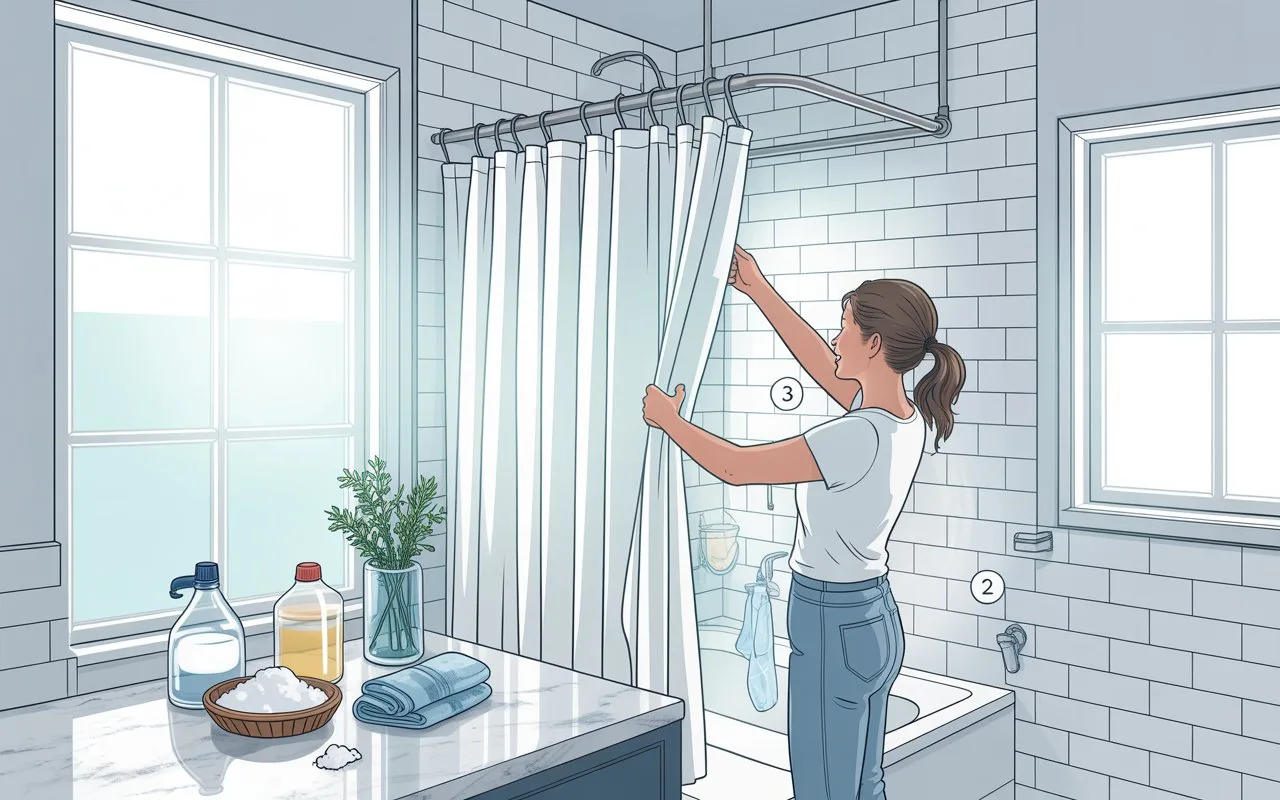
You probably don’t think much about your shower curtain—until you notice those stubborn stains, soap scum, or that faint musty smell. It hangs there quietly, doing its job every day, yet it collects grime faster than you expect. So, how do you bring it back to life without turning cleaning into a full-day chore?
Good news: it’s easier than you think. Whether your curtain is plastic, fabric, or something in between, this guide walks you through simple, practical methods to get it fresh again—no complicated steps, no fancy tools. Just real solutions that work.
Why Shower Curtains Get Dirty So Quickly
Let’s start with the obvious question: why does this thing get so gross so fast?
Your shower curtain lives in a humid environment. Every time you take a shower, water splashes onto it, soap residue sticks, and moisture lingers. That’s the perfect recipe for:
- Mold growth
- Mildew buildup
- Soap scum
- Hard water stains
Think of it like a damp towel that never fully dries—it becomes a magnet for bacteria. That’s exactly what happens here.
Types of Shower Curtains (And Why It Matters)
Before you start scrubbing, it helps to know what you’re dealing with.
Plastic or Vinyl Curtains
These are waterproof and common. They’re durable but prone to mildew.
Fabric Curtains
Usually made from cotton or polyester. These feel softer and often go in the washing machine.
Liners
These sit behind fabric curtains and take most of the water hit. They get dirtier faster.
Each type needs a slightly different cleaning approach—but don’t worry, we’ll cover them all.
Signs Your Shower Curtain Needs Cleaning
Not sure if it’s time yet? Look for these clues:
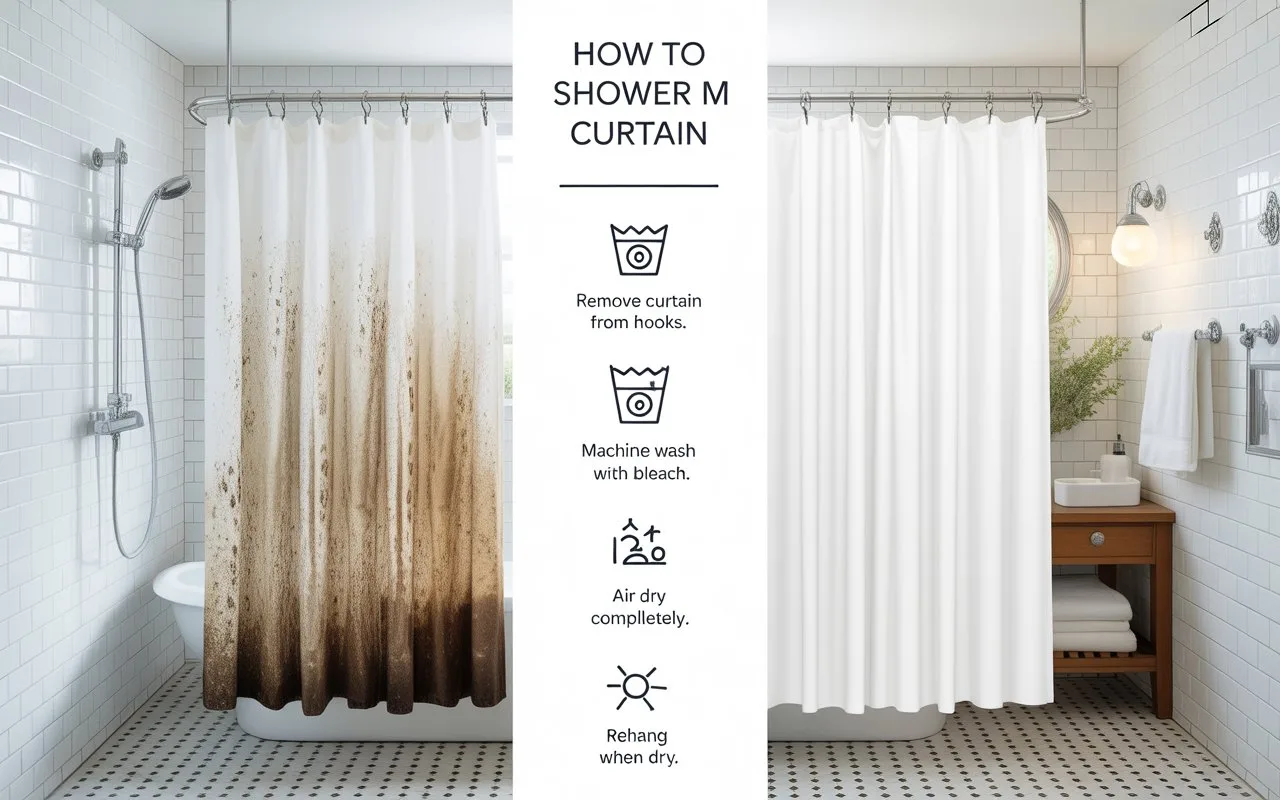
- Black or green spots (mold or mildew)
- Slimy texture near the bottom
- Faded or yellow patches
- A damp, unpleasant smell
If you notice even one of these, it’s time to act.
How Often Should You Clean It?
Here’s a simple rule:
- Light use: Once a month
- Regular use: Every 2–3 weeks
- Heavy use or humid climate: Weekly
- rinse, monthly deep clean
It sounds like a lot, but regular cleaning actually saves time. The dirt doesn’t get a chance to build up.
Cleaning a Plastic Shower Curtain (Easy Method)
Let’s start with the most common type.
Machine Wash Method
Yes, you can toss it in the washing machine.
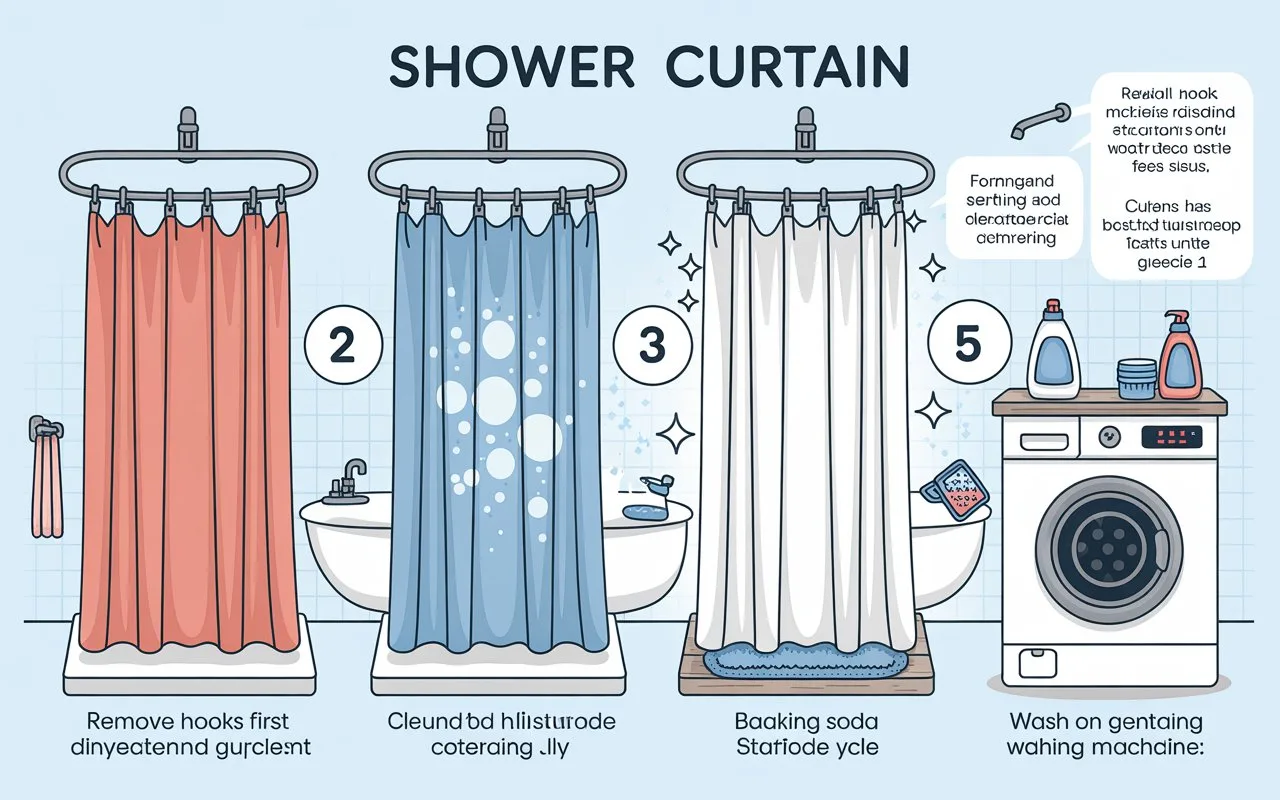
Steps:
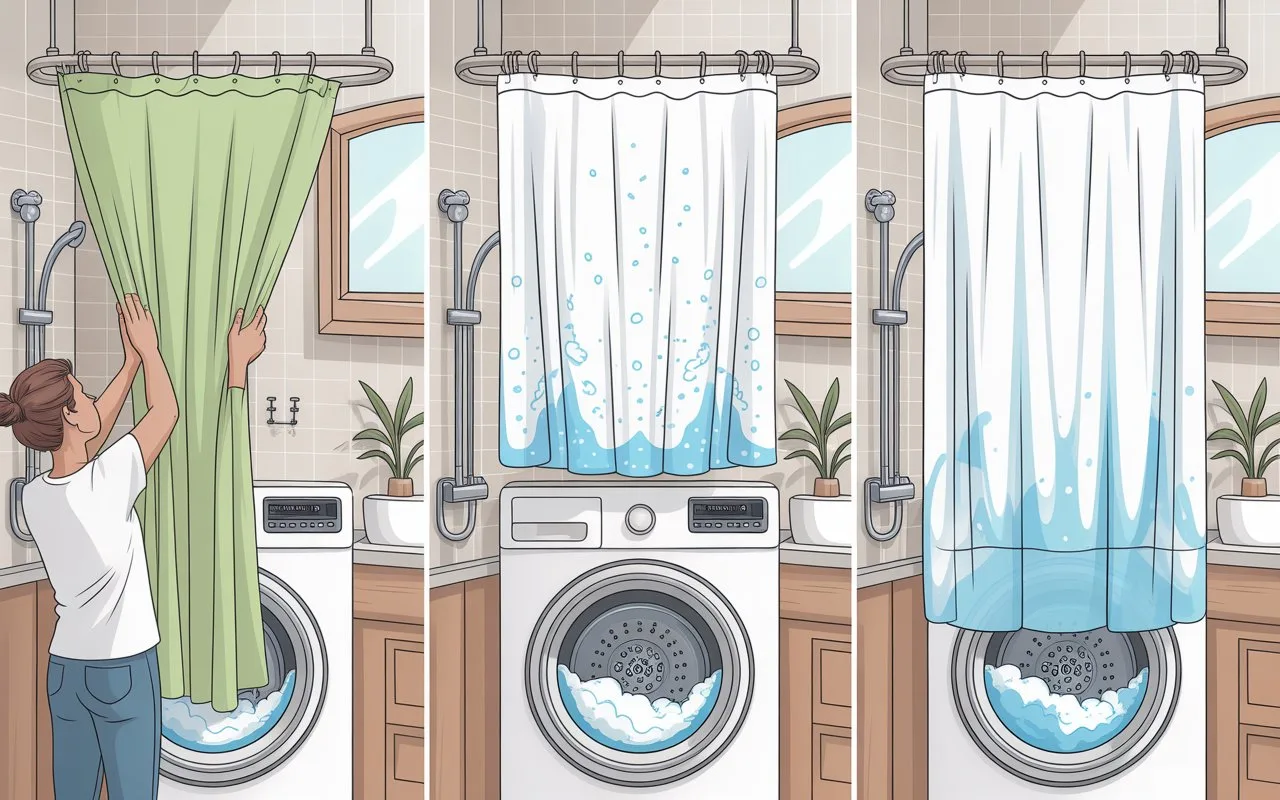
- Remove the curtain from hooks
- Place it in the washer with a couple of old towels
- Add mild detergent
- Toss in half a cup of baking soda
- Run a gentle cycle with warm water
Why towels? They act like soft scrubbers, helping remove grime.
After the wash, hang it back immediately. Skip the dryer—heat can damage plastic.
Cleaning a Fabric Shower Curtain
Fabric curtains are even easier.
Machine Wash Instructions
- Check the care label first
- Use regular detergent
- Add vinegar to remove odors
- Wash on a gentle cycle
If stains remain, pre-treat with a paste of baking soda and water before washing.
Drying Tips
- Air dry is best
- Or use a low heat setting
Fabric holds up better than plastic, but it still needs care.
Removing Stubborn Mold and Mildew
Sometimes a basic wash isn’t enough. That’s when you bring in stronger solutions.
Vinegar Solution
Mix equal parts vinegar and water. Spray directly on affected areas.
Let it sit for 10–15 minutes, then scrub lightly.
Baking Soda Paste
Make a thick paste and apply to stains. Scrub gently with a sponge.
Hydrogen Peroxide (For Tough Spots)
Apply directly, wait a few minutes, and rinse.
This works especially well on dark mildew stains.
Hand Washing for Quick Cleaning
Don’t want to use the washing machine? No problem.
Bathtub Method
- Fill your tub with warm water
- Add detergent and baking soda
- Submerge the curtain
- Scrub lightly with a sponge
- Rinse thoroughly
It’s simple, effective, and gives you more control over problem areas.
How to Keep Your Shower Curtain Clean Longer
Here’s where things get smart. Cleaning is one thing—keeping it clean is another.
Simple Habits That Work
- Spread the curtain fully after each shower
- Keep the bathroom ventilated
- Use a fan or open a window
- Shake off excess water
These small steps make a big difference.
Think of it like brushing your teeth—you don’t wait for problems to show up.
Natural Cleaning Alternatives
Prefer to avoid chemicals? You’re not alone.
Lemon Juice
Great for cutting through soap scum and adding a fresh scent.
Salt Scrub
Works well for scrubbing mildew patches.
Essential Oils
Add a few drops (like tea tree oil) to your cleaning mix for antibacterial benefits.
Natural doesn’t mean less effective—it just means gentler.
Common Mistakes to Avoid
Even with good intentions, mistakes happen.
Using Hot Water on Plastic
This can warp or damage it.
Skipping Regular Cleaning
Waiting too long makes stains harder to remove.
Drying in High Heat
Especially risky for plastic and vinyl.
Ignoring the Bottom Edge
That’s where most buildup happens.
Avoid these, and your curtain will last longer.
When to Replace Your Shower Curtain
Sometimes cleaning isn’t enough.
Consider replacing if:
- Mold keeps returning quickly
- Material feels brittle or cracked
- Stains won’t come out
A new curtain isn’t expensive—and sometimes it’s the best solution.
A Simple Cleaning Routine You Can Follow
If you like structure, here’s a quick routine:
- Weekly: Rinse and shake dry
- Monthly: Machine wash or deep clean
- As needed: Spot treat stains
Stick to this, and you’ll rarely deal with heavy buildup.
Conclusion
Cleaning your shower curtain might not be the most exciting task, but it’s one of those small things that makes a big difference. A fresh, clean curtain changes the feel of your entire bathroom—it looks better, smells better, and feels more hygienic.
The best part? You don’t need special tools or hours of effort. Just a little consistency and the right approach.
So next time you step into the shower, take a quick look around. If your curtain needs attention, now you know exactly what to do.
FAQs
1. Can I wash my shower curtain with clothes?
Yes, but it’s better to wash it with towels. Towels help scrub away dirt without damaging the curtain.
2. What is the best way to remove mold from a shower curtain?
Using a mix of vinegar and water or baking soda paste works well for most mold and mildew stains.
3. How do I prevent mildew from forming again?
Keep the curtain spread out after showers and ensure proper ventilation in the bathroom.
4. Can I put a plastic shower curtain in the dryer?
No, heat can damage or melt plastic. Always air dry it.
5. Is it better to replace or clean a heavily stained curtain?
If stains don’t come out after deep cleaning or the material is damaged, replacing it is the better option.