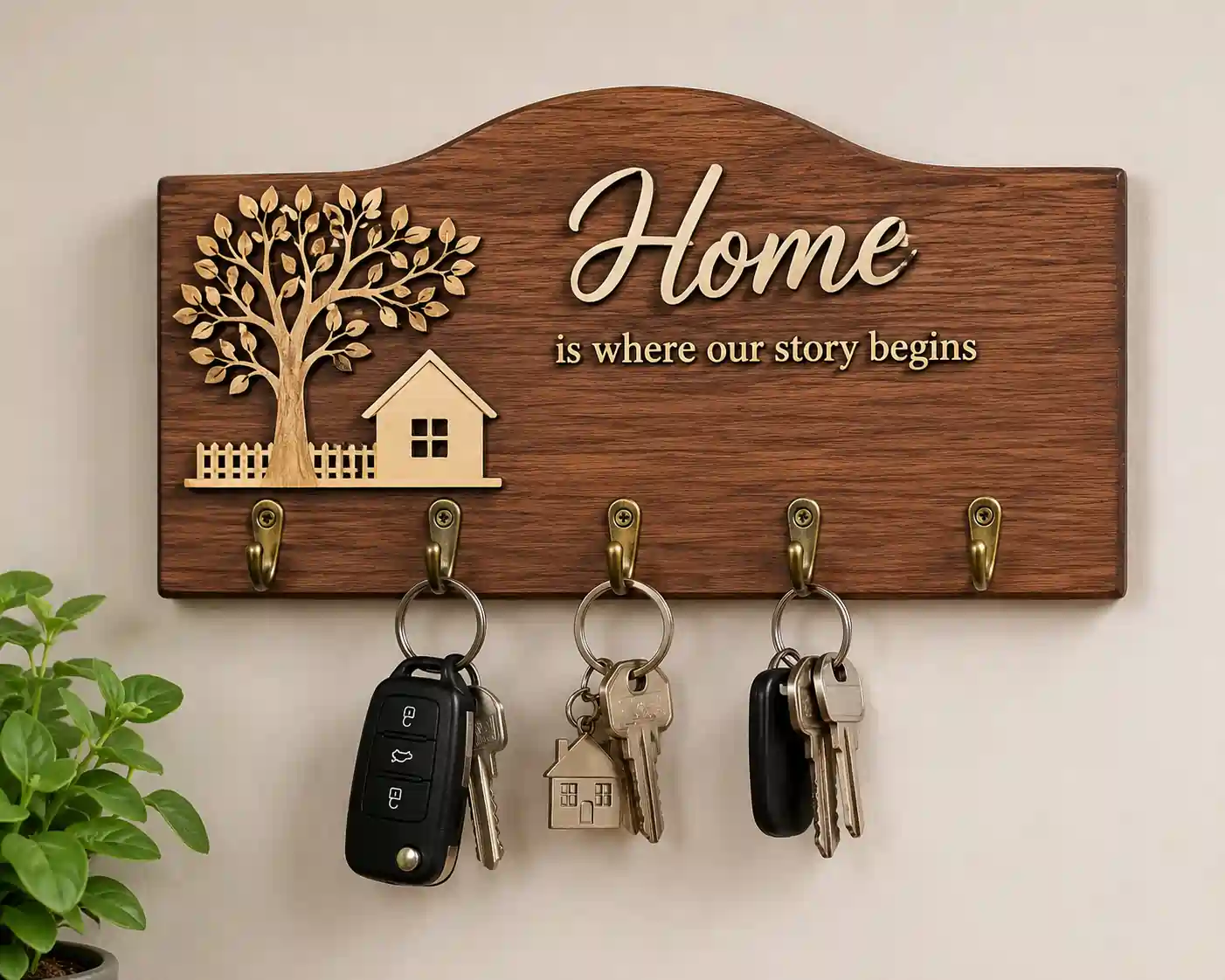
Lost your keys again? Most people spend an average of 10 minutes a day searching for misplaced keys — that adds up to more than 60 hours a year. A quality key holder fixes this instantly. Whether you want a sleek wall-mounted rack for your entryway, a compact magnetic strip for your desk, or a lockable key cabinet for your office, this guide walks you through every option, every material, and every detail you need to make the right choice.
What Is a Key Holder and Why Does Every Home Need One?
A key holder is any storage device designed specifically to keep keys organized, protected, and easy to find. It removes the daily scramble of patting pockets or rifling through bags. At its most basic, it is a hook on a wall. At its most advanced, it is a smart key cabinet with RFID tracking.
The core purpose has always been simple: put your key in the same spot every time you walk through the door. That single habit, supported by the right key holder, eliminates the most common frustration in household management.
Beyond convenience, a key holder also improves security. Anyone entering the building can see keys that have been left on couches, countertops, or window ledges. A mounted key rack — especially one inside a cupboard or behind a door — keeps keys out of sight and reduces the risk of opportunistic theft.
| Type | Best For | Capacity | Price Range | Installation |
| Wall-Mounted Key Rack | Entryways, hallways | 3–20 keys | $8–$60 | Screws or adhesive |
| Magnetic Key Holder | Fridges, metal surfaces | 1–6 keys | $5–$35 | No tools needed |
| Key Cabinet / Box | Offices, multiple users | 10–100 keys | $25–$200+ | Wall screws |
| Decorative Key Holder | Living rooms, accent walls | 2–8 keys | $15–$90 | Screws or adhesive |
| Key Organizer Wallet | On-the-go use | 2–10 keys | $10–$60 | Pocket-sized, no install |
| Smart Key Holder | Tech-focused homes | 6–30 keys | $50–$300 | App-enabled mounting |
Quick Comparison: Key Holder Types at a Glance
What Are the Main Types of Key Holders Available Today?
The market offers far more variety than most people expect. Here is a breakdown of each major category, with honest notes on where each one shines and where it falls short.
1. Wall-Mounted Key Rack
The wall-mounted key rack is the most common type. It attaches directly to a wall, usually near the front door, and holds keys on hooks or pegs. Most models hold between 4 and 10 keys, though larger racks handle up to 20.
These key holders work best in high-traffic zones like entryways and mudrooms. They keep keys visible, accessible, and consistent. The main downside: if installed in a visible spot without a cover, they display your keys to guests or anyone near an open door.
2. Magnetic Key Holder
A magnetic key holder uses strong neodymium magnets to grip metal key rings or fobs. Many attach to the side of a refrigerator, a filing cabinet, or any flat metal surface. They are incredibly easy to use — no hooks, no fiddling, just drop the key ring against the magnet.
The limitation is that magnetic models do not work with plastic-headed keys or non-metal accessories. They are ideal for vehicle keys, which tend to have metal rings, but less suitable for mixed key sets with large electronic fobs.
3. Key Cabinet and Key Box
A wall-mounted, lockable box is called a key cabinet. Inside, numbered hooks hold individual keys. These are standard in offices, rental properties, hotels, and anywhere multiple people share keys. A good key cabinet creates an audit trail — you always know who has which key.
For home use, a key box adds a layer of security that open racks cannot match. Even a simple locked cabinet means keys are never visible or accessible to casual visitors.
4. Decorative Key Holder
Decorative key holders prioritize appearance without sacrificing function.They frequently double as both wall art and storage, and they can be shaped like trees, towns, animals, frames, or quote boards. . Many homeowners choose these for living rooms or kitchen walls where aesthetics matter.
Quality varies widely in this category. The best decorative key holders use solid wood or cast iron with secure screw-mounted hooks. The weakest use thin MDF with adhesive hooks that fail after a few months of use. Always check hook material and mounting method before buying.
5. Key Organizer Wallet (EDC Key Tool)
A key organizer wallet, sometimes called an EDC (everyday carry) key tool, keeps keys folded together in a compact, pocket-friendly stack. Think of it like a Swiss army knife design for your keychain. It eliminates key noise and bulk. Popular brands include Orbitkey, KeySmart, and Bellroy.
This type is a personal key holder rather than a home fixture. It pairs well with a wall rack — the rack holds spare keys at home, the organizer wallet carries your daily keys cleanly in your pocket.
6. Smart Key Holder
Smart key holders include Bluetooth trackers, RFID-tagged hook systems, and app-connected cabinets. Some track which key was removed and when. Others pair with Amazon Alexa or Google Home to alert you when a key is not returned by a set time.
These are genuinely useful for shared properties, vacation rentals, and offices with rotating staff. For most households, the added tech is optional — but for anyone managing 10 or more keys across multiple users, it becomes a practical tool rather than a gadget.
Which Materials Last Longest in a Key Holder?
Material quality determines how long your key holder lasts and how well it holds up to daily use. Every key holder takes repeated pulling and re-hanging, which adds up fast.
| Material | Durability | Weight Capacity | Rust Risk | Best Environment |
| Solid Wood | Excellent | High | None | Indoor, dry areas |
| Stainless Steel | Excellent | Very High | Very Low | Indoor & light moisture |
| Cast Iron | Excellent | Very High | Medium (surface rust) | Indoor, rustic/farmhouse |
| Aluminium | Good | Medium | Very Low | Indoor, minimalist homes |
| MDF / Chipboard | Poor | Low | None (swells in moisture) | Dry indoor only |
| Plastic / ABS | Fair | Low–Medium | None | Temporary, light use |
| Bamboo | Good | Medium | None | Eco-friendly, indoor |
For a key holder that stays fixed and functional for years, solid wood with stainless steel hooks is the most dependable combination. The wood resists warping in normal indoor humidity, and the steel hooks resist corrosion even in a humid entryway.
How Do You Mount a Key Holder Correctly?
The mounting method matters as much as the key holder itself. A poorly mounted rack falls off the wall and takes your door frame with it.For a safe, durable installation, adhere to these guidelines.
Screw Mounting (Recommended for Permanent Fixtures)
- Mark your spots on the wall with a pencil — use a spirit level to keep them even.
- Drill into a wall stud where possible. Studs add 10× the holding strength compared to drywall alone.
- Use wall anchors (Fischer plugs or similar) if you cannot hit a stud. These expand inside drywall and grip firmly.
- Pre-drill pilot holes slightly smaller than the screw diameter to prevent wood splitting or plaster cracking.
- Drive screws to snug — do not overtighten, as this strips the threads or cracks plaster.
Adhesive Mounting (For Renters or Temporary Use)
Heavy-duty adhesive strips like 3M Command hooks can hold key holders weighing up to 2 kg on a smooth, painted surface. They work well in rental properties where drilling is not permitted.
The catch: adhesive strength drops in humidity. A key holder near a steamy bathroom or an exterior door exposed to temperature swings may fail sooner than expected. Always press the adhesive firmly for 30 seconds and wait 24 hours before loading it with keys.
Height and Position Tips
- Mount at eye level or slightly below — between 150 cm and 160 cm from the floor is comfortable for most adults.
- Place the key holder within arm’s reach of the door you use most often.
- Avoid mounting directly behind the door if it swings and hits the rack.
- If mounting near a coat rack or shoe shelf, allow 15–20 cm of clearance so keys do not get tangled in jackets.
What Size Key Holder Do You Actually Need?
Buying a rack with fewer hooks than you own keys is one of the most common mistakes. Before you buy, count every key set in your household — house keys, car keys, garage remotes, mailbox keys, padlock keys, and spare sets.
| Household Type | Estimated Keys | Recommended Hook Count | Notes |
| Single person, apartment | 4–8 | 6–10 | Add 2–3 for future spares |
| Couple, shared home | 8–14 | 12–16 | Include vehicle fobs |
| Family of 4 | 14–24 | 20–30 | Add bike locks, garage, pool |
| Home + Office use | 20–40 | 30–50 | Consider a key cabinet |
| Landlord / Property manager | 40+ | Cabinet with 50–100+ hooks | Numbered system essential |
A good rule: buy a key holder with at least 30% more hooks than your current count. Households grow. Spare keys accumulate. You will need the extra space sooner than you think.
How to Choose the Best Key Holder for Your Space
The right key holder depends on where you plan to put it, who uses it, and what aesthetic fits your home. These factors narrow the field quickly.
- Entryway or mudroom: Choose a wall-mounted key rack with 6–12 hooks. Add a small shelf below it for mail or sunglasses if space allows.
- Kitchen: A magnetic key holder on the fridge side works well, or a small decorative rack near the back door.
- Home office: A compact key cabinet keeps work keys separate from home keys and adds a professional look.
- Garage or workshop: A heavy-duty metal key rack with labelled hooks handles the high volume of garage, vehicle, and tool keys.
- Living room accent wall: A decorative key holder that doubles as wall art fits here — wood or wrought iron in a style that matches your furniture.
- Rental property: Adhesive key racks or removable magnetic holders let you organize without drilling. Command strip models from brands like 3M hold up to 2.2 kg.
Are Decorative Key Holders Strong Enough for Daily Use?
This is one of the most searched questions about key holders — and the honest answer is: it depends entirely on the build quality. Many decorative key holders sold at low price points use MDF board with adhesive plastic hooks. These fail within weeks under normal daily use.
A genuinely strong decorative key holder shares the same construction as a functional one: solid wood or metal base, screw-mounted or welded metal hooks, and wall anchors or stud screws for installation. The design can be as ornate as you like — the structure underneath needs to be solid.
Check three things before buying any decorative key holder: hook material (metal, not plastic), base thickness (at least 15 mm for wood), and whether the mounting hardware is included. If the listing photo shows hanging wire on the back instead of screw holes, that is a sign of lightweight construction.
Key Holder vs Key Organizer: What Is the Difference?
People use these terms interchangeably, but they describe two different products with different purposes.
| Feature | Key Holder (Home Fixture) | Key Organizer (EDC / Wallet) |
| Location | Fixed to a wall or surface | Carried in pocket or bag |
| Purpose | Store keys at a fixed location | Carry daily keys compactly |
| Capacity | 4–100+ keys | 2–10 keys |
| Access | Anyone in the home | Personal use only |
| Popular Use | Home, office, rental property | Everyday carry (EDC) |
| Price Range | $8–$300+ | $10–$80 |
| Top Brands | IKEA, Rev-A-Shelf, Lorell | Orbitkey, KeySmart, Bellroy |
Most organized households use both: a wall key holder at home to store all sets, and a key organizer wallet for the keys they carry daily. Together, they cover every scenario from “I am heading out” to “I need the spare car key right now.”
How to Label and Organize Your Key Holder System
Having a key holder is step one. Having an organized key holder is step two — and that second step saves even more time when you actually need a specific key fast.
Simple Labelling Methods
- Colour-coded key caps: Silicone or plastic caps in different colours sit over the key head. Assign one colour per door or vehicle. These cost almost nothing and work instantly.
- Key tags: Small rectangular tags with a write-on surface attach to the key ring. Great for spare sets stored on hooks where many keys look identical.
- Numbered hooks + master list: For larger key cabinets, number each hook. Keep a small card inside the cabinet door that matches hook numbers to key destinations.
- Label maker strips: Stick tiny printed labels to the wall right above each hook using label maker strips.
- DYMO label makers are the most popular tool for this.
Hook Assignment Logic
Assign hooks by priority of use. The hook you reach for most — your front door key — goes at the most accessible position, usually directly at eye level on the left side if you are right-handed. Less-used keys (padlocks, storage unit, spare car) go further right or higher up.
Keep spare sets in a different section of the rack, clearly marked. Reaching for a spare in a rush and accidentally taking it instead of the primary key is a common problem. Physical separation prevents it.
Where to Buy a Quality Key Holder and What to Pay
| Budget | What You Get | Best Sources |
| Under $15 | Basic 4–6 hook rack, plastic or thin metal, adhesive mount | Amazon, IKEA, dollar stores |
| $15–$40 | Solid wood or powder-coated metal, 6–12 hooks, screw mount included | Amazon, Wayfair, Target, HomeGoods |
| $40–$80 | Premium wood or wrought iron, decorative design, 8–20 hooks, hardware included | Etsy (handmade), Wayfair, specialty home stores |
| $80–$150 | Lockable key cabinet, 20–50 hooks, numbered, wall-mounted | Staples, Amazon, office supply stores |
| $150+ | Smart key cabinet, RFID or app-enabled, 30–100+ hooks | Contractor suppliers, Amazon Business |
Etsy sellers offer handmade wooden key holders that compete with retail quality at mid-range prices, with the added advantage of custom sizing and finishes. For office or property management use, brands like Barska, MMF Industries, and Master Lock make reliable commercial key cabinets with proven track records.
Top Features to Look for in Any Key Holder
- Hook material: Stainless steel or zinc alloy hooks resist rust and hold weight reliably. Avoid hooks made from thin bent wire or painted plastic.
- Weight rating: Each hook should support at least 1 kg. A full car key fob with a heavy keyring easily weighs 200–300 g, so rated capacity matters.
- Mounting hardware included: Quality key holders come with screws, anchors, and a spirit level indicator. Those sold without hardware leave you guessing about what fits your wall type.
- Wall protection: Look for felt pads or rubber backing on the rear face. Without them, the key holder scratches or marks painted walls over time.
- Spacing between hooks: Hooks placed less than 3 cm apart cause keys to tangle. 4–6 cm between centres is the practical minimum for comfortable daily use.
- Surface finish: Matte finishes hide fingerprints and scratches better than gloss. This matters most for stainless steel models near high-traffic areas.
Frequently Asked Questions About Key Holders
Q1: What is the best key holder for a small apartment?
Short answer: A compact wall-mounted key rack with 4–6 hooks and an adhesive or minimal-drill mount works best in a small apartment.
For apartments, space and wall restrictions are the two main constraints. A narrow key rack mounted beside the front door keeps the entryway clear while giving you a defined spot for every key. If drilling is not allowed, 3M Command hooks or an adhesive-back rack handles the job without damage. Look for a rack that is no wider than 25 cm so it fits without crowding the door frame.
Q2: How do I stop a key holder from scratching my wall?
Short answer: Apply self-adhesive felt pads to the back corners of the key holder before mounting it.
Most key holders ship without rear protection. A sheet of self-adhesive furniture felt, cut into four small squares and pressed onto the back corners, creates a buffer between the holder and the wall. For painted walls, this prevents the gradual paint scuffing that appears after months of the key holder shifting slightly during use. An alternative: silicone bumpers, which are thicker and absorb more vibration.
Q3: Can a key holder hold car key fobs and electronic keys?
Short answer: Yes, but check hook size and weight rating, as modern key fobs are heavier than traditional metal keys.
A modern car key fob with a keyring and a garage remote can weigh 300–400 g in total. Most standard key hooks hold this without issue, but thin wire hooks may bend over time. Look for hooks with a rated capacity of at least 0.5–1 kg each. Magnetic key holders work well for car key rings but may interfere with the electronic signal in rare cases — mounting the key holder 30 cm away from the signal pairing zone avoids any potential issue
Q4: What is the difference between a key rack and a key cabinet?
Short answer: A key rack is open and accessible to anyone; a key cabinet is lockable and tracks access — making it the better choice for offices or shared properties.
A key rack hangs keys visibly on open hooks. It is fast and convenient for a home where all users are trusted family members. A key cabinet puts those same hooks inside a locked box mounted to the wall. Anyone who needs a key must open the cabinet first, which creates accountability. For landlords, property managers, and office administrators, that accountability is not optional — a key cabinet is the professional standard.
Q5: How many hooks should a home key holder have?
Short answer: Count every key set in your home, add 30% for spares and future keys, and buy a rack that reaches that number.
A typical household of two adults and two children holds 15–25 individual keys or key sets when you account for both cars, the front and back door, the mailbox, a storage unit, a bicycle lock, and spare sets for each. A 20-hook key rack covers most of this with room to grow. Buying too small means you will need to replace the rack within a year — a small investment in the right size now saves the inconvenience later.
Q6: Are smart key holders worth the cost?
Short answer: For households with 3 or more members, rental properties, or offices with rotating staff, yes — for a single-person household, a standard rack is more practical.
Smart key holders that include Bluetooth tags, RFID tracking, or app notifications add meaningful value when multiple people share a key pool and accountability matters. For example, a vacation rental manager who needs to know exactly which cleaner took the master key and when is a clear candidate for a smart key system. For a solo apartment dweller who owns 4 keys, the same feature adds cost without adding daily benefit.
Sources and References
- Bureau of Labor Statistics — American Time Use Survey: data on time spent on household tasks. bls.gov
- Consumer Reports — Independent testing standards for home organization and storage products. consumerreports.org
- OSHA — Key and access control guidelines for commercial and multi-unit residential properties. osha.gov
- 3M Command Products — Technical load ratings and surface compatibility for adhesive mounting systems. command.com
- ALOA (Associated Locksmiths of America) — Best practices for key control and security management. aloa.org
Your Next Step: Pick the Right Key Holder Today
The right key holder is one of the simplest upgrades you can make to your daily routine — and one of the most underrated. Whether you choose a handcrafted wooden wall rack, a sleek magnetic strip, or a numbered key cabinet for your office, the goal is the same: one reliable spot for every key you own.
Start by counting your keys. Match the hook count to your real number, not your optimistic estimate. Choose a material that fits your home’s style and the humidity level of your mounting location. Install it properly — into a stud or with quality wall anchors — and it will hold every key reliably for years.
If you manage multiple properties or a shared workplace, step up to a lockable key cabinet with numbered hooks and a master list. That small investment in organization pays for itself the first time you prevent a missing key from turning into an emergency locksmith call.
Browse the key holder options that match your needs, set it up today, and enjoy the quiet satisfaction of always knowing exactly where your keys are.