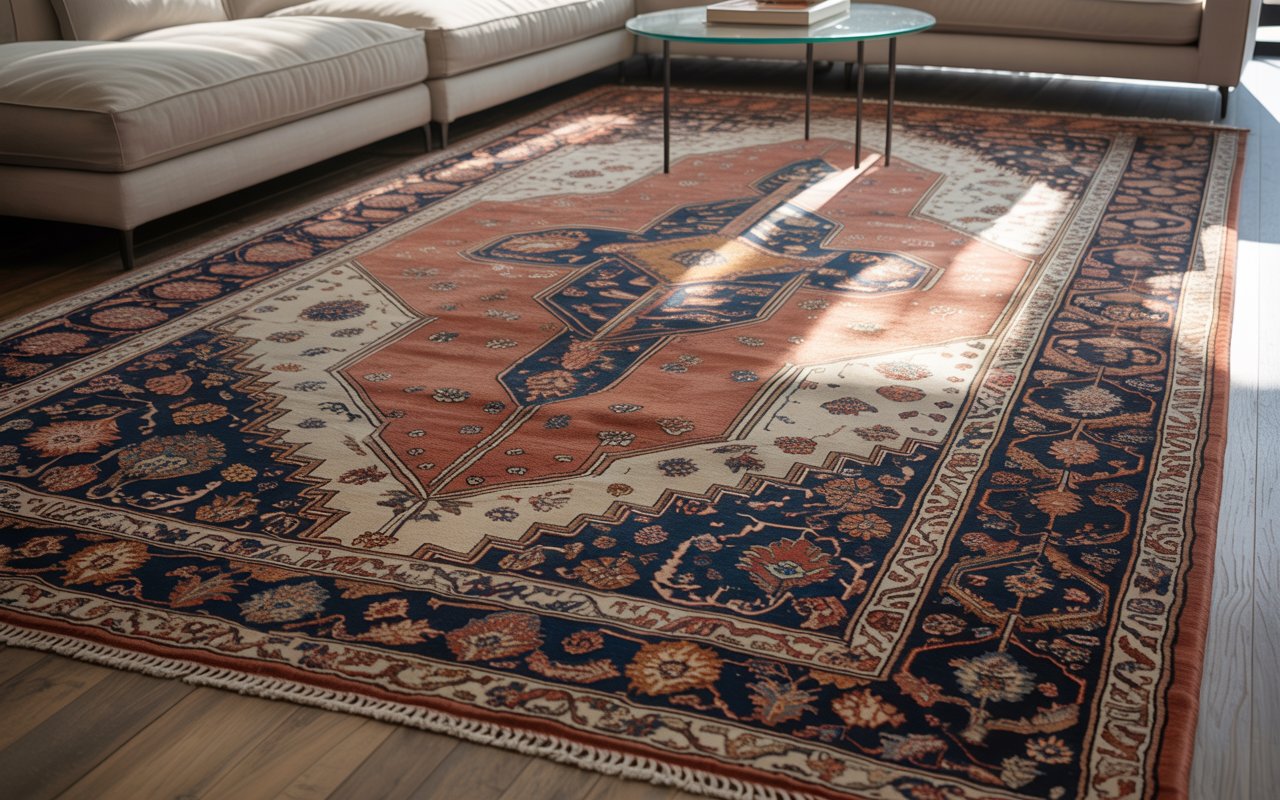
Your living room is often the heart of the home. It is where family gathers, friends visit, movie nights happen, and quiet evenings unfold. Yet many people focus on sofas, tables, and wall décor while overlooking one important element sitting right beneath their feet—the rug.
A good floor covering does much more than fill empty space. It can bring warmth, define areas, soften hard surfaces, reduce noise, and tie a room together like the final piece of a puzzle. Think of it as the stage beneath your furniture. Without it, the room may feel incomplete; with it, the space suddenly feels balanced and welcoming.
This guide explores everything you need to know, from materials and sizes to patterns and maintenance, helping
Why Floor Coverings Matter in a Living Space
Many people see rugs as decorative extras, but they play a much bigger role than that.
Creating Visual Balance
Furniture pieces placed directly on bare flooring can sometimes appear disconnected. A properly placed rug creates a visual foundation that unifies everything.
Imagine your room as a musical band. The sofa, chairs, and tables are the instruments, while the rug acts like the rhythm section keeping everything connected.
Adding Warmth and Comfort
Hardwood, tile, and laminate floors may look beautiful, but they can feel cold. Soft textures instantly make a room feel more inviting.
Benefits include:
- Added warmth during colder months
- A softer surface for children
- Better comfort while walking
- A cozy atmosphere
Reducing Noise
Sound bounces around rooms with hard surfaces. Soft fibers absorb some of that noise and reduce echoes.
This becomes especially useful in:
- Apartments
- Large open spaces
- Homes with children
- Entertainment rooms
Understanding Different Rug Materials
Material affects appearance, comfort, durability, and maintenance requirements.
Wool
Wool is often considered one of the most reliable options.
Advantages:
- Soft underfoot
- Naturally durable
- Resistant to stains
- Long lifespan
Disadvantages:
- Higher cost
- May shed initially
Cotton
Cotton provides a lightweight and casual feel.
Advantages:
- Affordable
- Easy to clean
- Soft texture
Disadvantages:
- Wears faster than wool
- May fade over time
Synthetic Fibers
These include polyester, nylon, and polypropylene.
Advantages:
- Budget-friendly
- Stain-resistant
- Easy maintenance
Disadvantages:
- Can flatten with heavy use
- Less natural feel
Natural Plant Fibers
Examples include:
- Jute
- Sisal
- Seagrass
Advantages:
- Eco-friendly
- Textured appearance
- Durable
Disadvantages:
- Rough texture
- Sensitive to moisture
Choosing the Right Size for Your Space
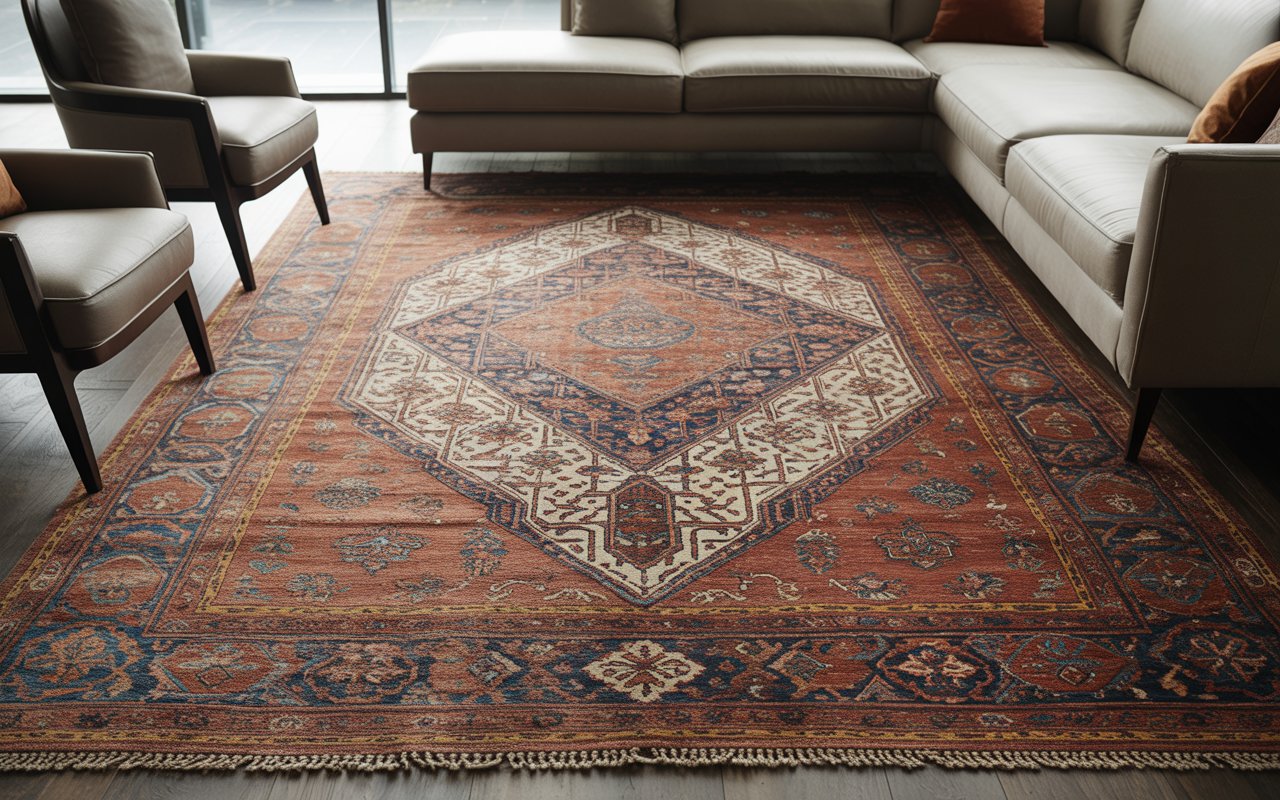
One of the biggest decorating mistakes involves selecting a rug that is too small.
Large Rooms
For spacious areas, consider placing all furniture legs on the rug.
This creates:
- Better visual flow
- Strong room definition
- A more luxurious appearance
Medium Rooms
A popular approach is placing front furniture legs on the rug while back legs remain off.
Small Rooms
Even compact spaces benefit from proper sizing.
Avoid tiny pieces floating in the middle of the room because they can make the area appear smaller.
General sizing ideas:
| Room Type | Suggested Size |
| Small | 5×8 feet |
| Medium | 8×10 feet |
| Large | 9×12 feet |
| Extra Large | 10×14 feet |
Picking Colors That Work Well
Color influences mood more than many people realize.
Neutral Shades
Common choices include:
- Beige
- Gray
- Cream
- White
These create:
- Calm surroundings
- Flexibility with décor
- Timeless appeal
Bold Colors
Rich tones can become a room’s focal point.
Examples:
- Deep blue
- Emerald green
- Rust
- Burgundy
These work particularly well when walls and furniture remain simple.
Dark Versus Light Tones
Dark shades:
- Hide dirt better
- Add depth
- Feel cozy
Light shades:
- Make rooms feel bigger
- Brighten spaces
- Create an airy appearance
Patterns and Designs That Transform a Room
Patterns can dramatically change how a room feels.
Traditional Designs
Classic styles often feature:
- Floral elements
- Borders
- Decorative motifs
These work beautifully in elegant settings.
Modern Patterns
Contemporary choices often include:
- Abstract shapes
- Geometric lines
- Minimal details
Vintage-Inspired Styles
Distressed finishes and faded colors have become increasingly popular because they blend classic and modern aesthetics.
Matching Rugs with Interior Styles
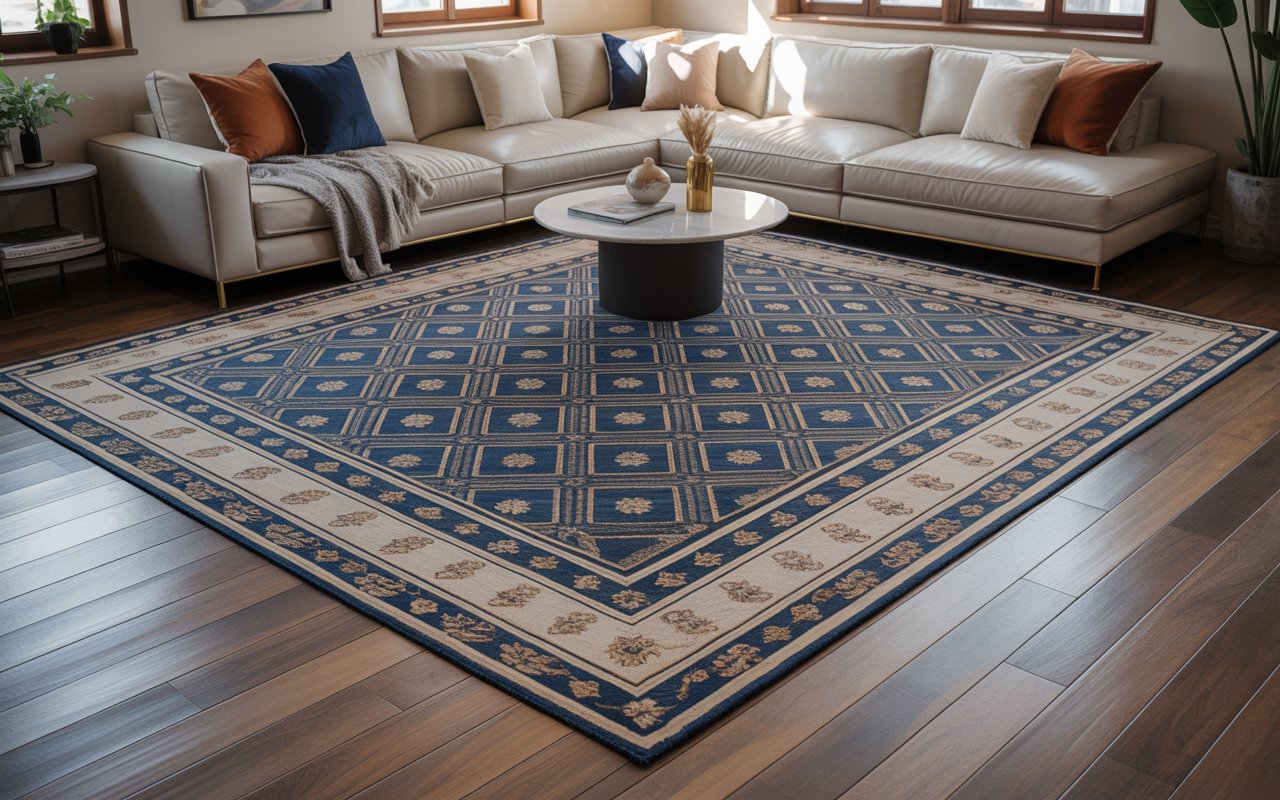
Different decorating styles benefit from different textures and patterns.
Modern Spaces
Consider:
- Simple designs
- Geometric patterns
- Neutral tones
Farmhouse Décor
Popular choices include:
- Braided textures
- Distressed patterns
- Natural fibers
Bohemian Rooms
These often include:
- Layered textures
- Colorful patterns
- Artistic designs
Minimalist Interiors
Less is often more.
Look for:
- Soft colors
- Clean patterns
- Simple textures
High-Traffic Areas Require Durability
Living rooms often receive heavy daily use.
Homes with Children
Look for materials that resist stains and wear.
Helpful features:
- Easy cleaning
- Dense fibers
- Darker shades
Pet-Friendly Choices
Pets bring joy—and fur.
Good options include:
- Low-pile materials
- Stain-resistant fibers
- Durable construction
Avoid long fibers that trap hair.
Understanding Rug Pile and Texture
Pile refers to fiber height.
Low-Pile Options
Characteristics:
- Easier cleaning
- Better for high traffic
- Furniture sits evenly
High-Pile Options
Characteristics:
- Extra softness
- Luxurious feel
- Cozy atmosphere
Shag Styles
These have long fibers and plush texture.
Advantages:
- Comfortable feel
- Warm appearance
Disadvantages:
- Harder maintenance
- Collects dust
Layering Techniques for Extra Style
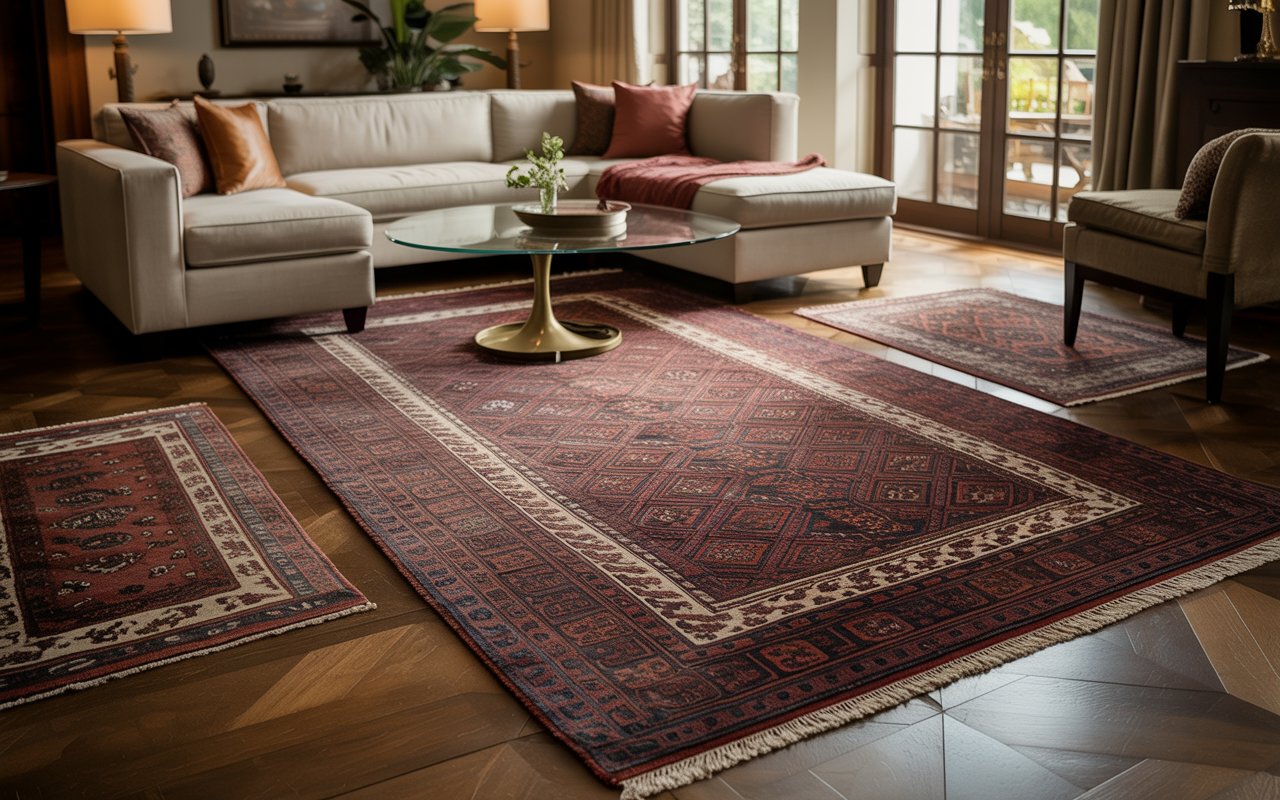
Layering has become a popular design trend.
This involves placing one rug over another.
Common combinations include:
- Natural fiber base with patterned top layer
- Large neutral piece with smaller colorful design
- Simple texture with bold accents
Layering creates:
- Dimension
- Visual interest
- Added comfort
Cleaning and Maintenance Tips
Proper care extends lifespan significantly.
Vacuum Regularly
Routine cleaning prevents dirt from settling deep into fibers.
Frequency:
- High traffic: two times weekly
- Lower traffic: once weekly
Rotate Periodically
Furniture and sunlight create uneven wear.
Rotating every few months helps maintain an even appearance.
Handle Spills Quickly
Quick action reduces permanent staining.
Basic process:
- Blot gently
- Avoid rubbing
- Use mild cleaning solutions
- Dry thoroughly
Budget Versus Investment Pieces
Not every purchase requires a large budget.
Budget-Friendly Options
Advantages:
- Lower cost
- Easy replacement
- Great for changing styles
Premium Choices
Benefits:
- Better craftsmanship
- Longer lifespan
- Higher-quality materials
Sometimes spending more initially saves money over time because quality pieces often last for years.
Common Mistakes People Make
Avoiding a few common errors can dramatically improve results.
Choosing the Wrong Size
Small rugs often make rooms feel disconnected.
Ignoring Maintenance Needs
Beautiful materials may become frustrating if cleaning requirements don’t fit your lifestyle.
Following Trends Without Considering Personal Taste
Trends come and go, but your home should reflect your preferences.
Ask yourself:
“Will I still enjoy this years from now?”
Conclusion
A well-chosen rug does far more than decorate a room. It shapes the atmosphere, adds comfort, and creates a sense of connection among furniture and design elements. Whether you prefer simple textures, bold colors, natural materials, or modern patterns, the right choice can completely transform a space.
Your living room tells a story about the people who live there. The right floor covering quietly supports that story every day—under footsteps, conversations, laughter, and ordinary moments that become lasting memories.
FAQs
1. What size rug should go under a living room sofa?
Ideally, the rug should extend beyond the sides of the sofa and allow at least the front legs of furniture to rest on it.
2. Which material lasts the longest?
Wool is often considered one of the most durable and long-lasting materials due to its strength and resilience.
3. Are light-colored rugs difficult to maintain?
They may show dirt more easily, but regular cleaning and stain-resistant materials can make maintenance manageable.
4. Can I layer two rugs together?
Yes. Layering creates texture and visual depth while adding a more personalized appearance.
5. How often should a living room rug be cleaned?
Vacuuming should happen weekly, while deeper professional cleaning is generally recommended every 12–18 months depending on usage.