You want a good night’s sleep, but the bedding aisle looks like a foreign language. Duvets, comforters, inserts, covers — the labels blur together, and the wrong pick means a bed that’s too hot, too heavy, or too hard to clean. This guide breaks down the real differences so you can choose once and sleep well for years.
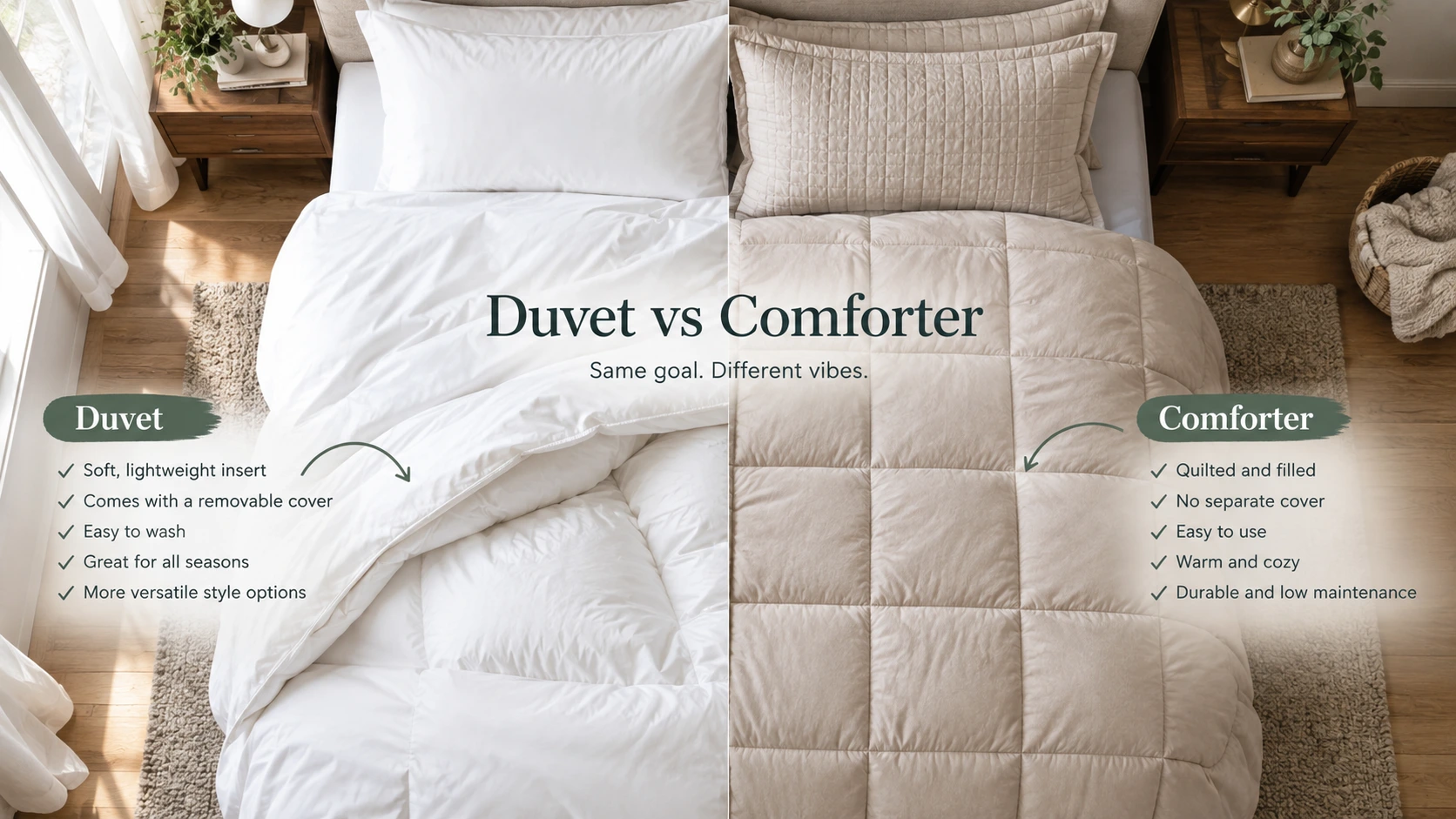
Quick Answer: The fundamental difference is structure. A duvet is a two-piece system made of a plush insert and a removable, washable cover. A comforter is a single quilted blanket with the fill permanently stitched inside, meant to be used without a separate cover.
What Is a Duvet?
A duvet is a two-piece bedding system. The first piece is the insert: a soft pouch stuffed with down, feathers, wool, or a synthetic fill. The second piece is the cover, a removable fabric shell that slides over the insert like a giant pillowcase.
You strip the cover off, toss it in the wash, and put it back on. The insert itself rarely touches your skin or collects dirt, so it stays fresh for years with minimal effort.
- Insert: the warm, fluffy core
- Cover: the washable outer layer, closed with buttons, ties, or a zipper
- Style flexibility: swap covers to change your whole bedroom look in minutes
What Is a Comforter?
A comforter is a single, ready-to-use blanket. Its fabric shell and fill are stitched together in one piece, usually with quilted boxes or channels that hold the filling in place.
You lay it directly on the bed. There’s no cover to attach and no insert to stuff — just spread it out and you’re done. Most comforters ship as part of a matching bedding set with shams and sometimes a bed skirt.
- One solid piece, no assembly required
- Often color-coordinated with pillow shams
- Usually machine washable, though bulky loads need a large-capacity washer
Duvet vs. Comforter at a Glance
| Feature | Duvet System | Comforter |
| Structure | Two-piece: fluffy insert + removable cover | One-piece: fabric shell & fill stitched together |
| Maintenance | Wash cover weekly; spot-clean insert 1–2x/year | Machine wash entire blanket (requires 4.5+ cu. ft. drum) |
| Temperature Control | Highly adaptable (swap linen, cotton, or flannel covers) | Fixed warmth level (determined by sewn-in fill) |
| Bed-Making Effort | Requires interior ties/loops to prevent bunching | Zero hassle — shake out and pull up |
| Average Lifespan | 8–15 years (insert protected from sweat/skin oils) | 3–5 years (repeated laundering degrades batting) |
| Top Sheet Needed? | Optional (cover acts as the barrier against skin) | Recommended (protects blanket from frequent washing) |
| Upfront Cost | Higher (insert and cover purchased separately) | Lower (often sold in complete “bed-in-a-bag” sets) |
Once you see it laid out this way, the right choice usually depends on how much laundry effort you’re willing to trade for flexibility.
Key Differences: Construction, Sizing, and Feel
The table above covers the surface-level differences. The details below are the ones actual buyers run into after the purchase — and the ones most guides skip.
Baffle Box vs. Sewn-Through Construction
Not every duvet insert is built the same way. Baffle-box construction uses small fabric walls between the top and bottom layers, giving the fill room to loft upward instead of shifting sideways.
Sewn-through construction, common in cheaper comforters and some entry-level duvets, stitches straight through both fabric layers. It keeps costs down but compresses the fill at every seam, creating cold spots and less overall loft. If warmth-to-weight ratio matters to you, baffle-box wins every time.
Dimensions and Sizing Quirks (Why Drops Vary)
A duvet and a comforter in the same “size name” often fit differently. Duvets tend to be cut closer to the mattress dimensions, draping just slightly over the sides and ends.
Comforters usually run wider and longer, with a deeper drop meant to cover the mattress and box spring fully. If you’ve ordered a queen duvet expecting comforter-level overhang and been surprised by how little hangs off the sides, this sizing difference is why. Always check the exact drop measurement in inches before buying, not just the size label.
Preventing “Duvet Drift” (The 8-Tie Rule)
Ask anyone who has used a budget duvet cover, and they’ll mention drift: the insert slides, bunches into a corner, or twists inside the cover overnight. This happens almost every time with covers that only have four corner ties.
Look for a cover with eight interior loops — one at each corner plus one at the midpoint of each side. That extra anchoring keeps the insert flat and centered, and it’s the single biggest quality signal most shoppers overlook.
The Burrito Method: Putting On a Duvet Cover Without a Fight
The most common complaint about duvets isn’t the warmth or the price — it’s wrestling the insert into the cover. The roll, or “burrito,” method solves this in three steps:
- Turn the duvet cover inside out and lay it flat on the bed, then place the insert directly on top of it.
- Starting from one end, roll the cover and insert together like a burrito, keeping the layers aligned.
- Reach inside the open end, grab the two far corners of the cover, and pull the whole roll through — then unroll and tie the interior loops.
It sounds unusual the first time, but once you’ve done it, you’ll never go back to stuffing the insert in by hand.
Do You Need a Flat Sheet With a Duvet?
This is one of the most-searched questions on the topic, and the honest answer is: it depends on which method you follow.
- The European method: No top sheet. Sleepers go straight from a fitted sheet to the duvet cover, which acts as the layer against the skin. The cover gets washed weekly to keep things hygienic — this is the traditional approach across much of Europe.
- The American hybrid method: A flat top sheet goes between the sleeper and the duvet cover, the same way it would with a comforter. This adds a layer to launder but lets the duvet cover go longer between washes.
Comforters almost always pair with a top sheet, since the comforter itself is harder to wash often. There’s no wrong choice here — just pick the method that matches how often you’re willing to do laundry.
Duvets vs. Comforters vs. Quilts
Adding a quilt into the mix changes the picture. A quilt is thinner by design: a top layer, a thin batting layer, and a backing layer, all stitched through in a decorative pattern.
- Duvet: thickest and warmest, needs a cover
- Comforter: medium thickness, one piece, no cover needed
- Quilt: thinnest and lightest, often reversible, works well as a summer topper or layering piece
If you run hot at night, a quilt alone — or a quilt layered under a light comforter — usually beats a heavy duvet.
Duvets vs. Comforters vs. Blankets
A blanket isn’t really in the same category, but people ask about it constantly, so it deserves a quick answer. Blankets are woven from fleece, cotton, or wool and have no fill layer between fabric panels.
- Blankets add warmth as a layering piece, not a primary bed topper
- A duvet or comforter is the main insulating layer; a blanket goes on top for extra heat
- In cold climates, many sleepers stack their main topper with a folded blanket at the foot of the bed for backup warmth
Which Is Cooler for Hot Sleepers?
Fill choice matters more than the format here. A lightweight duvet insert — low fill power, paired with a breathable linen or bamboo cover — regularly outperforms a standard polyester comforter for temperature regulation.
Comforters trap heat more consistently because the fill is sealed in one fixed layer with no way to adjust it seasonally. If you sleep hot, prioritize a low-GSM (grams per square meter) cover fabric over the format itself.
Which Is Better for Allergies?
If allergies keep you up at night, cleaning frequency matters more than fill type. Covers wash weekly with almost no effort, which flushes out dust mites and skin cells before they build up.
Comforters trap allergens inside the stitched fill and need a full wash cycle to clean properly — a step many people skip because of the bulk. For allergy-prone households, a duvet paired with a hypoallergenic cover is the stronger option.
Benefits Breakdown
The advantages split cleanly along two paths, depending on what you value more.
Duvet advantages:
- Longer-lasting insert since it rarely gets dirty
- Full style changes without replacing the fill
- Loftier, hotel-like appearance with baffle-box construction
- Fewer washes needed for the bulky component
Comforter advantages:
- Lower upfront cost
- No cover to buy, fit, or tie
- Simpler for first-time bedding buyers
- Matching sets simplify room design
Picking by Season
Layer weight should track your climate, not just your taste. When temperature drives the decision, follow this pattern:
- Hot climates: a quilt alone, or a lightweight, low-fill comforter
- Mild climates: a medium-fill comforter or a low fill-power duvet
- Cold climates: a high fill-power duvet, optionally layered with a quilt
Swapping a duvet cover for a lighter or heavier fabric each season costs far less than buying a new comforter every year.
Which Is the Better Long-Term Budget Choice?
Sticker price tells only half the story. A comforter costs less on day one, but a worn or stained comforter usually means replacing the entire piece.
An insert-and-cover setup costs more upfront since you’re buying two products, yet the insert can last a decade or longer under a rotating set of covers. Over five years, many households spend less on this system than they would on repeatedly replacing comforters.
Cleaning and Maintenance Compared
Care routines differ enough to affect your weekly chores. An insert usually needs a real wash only once or twice a year, while a comforter without a top sheet often needs cleaning every few weeks.
- Wash covers every one to two weeks, same as sheets
- Air out or spot-clean the insert a few times a year
- Wash comforters every two to four weeks, or use a top sheet to extend that window
- Use a large-capacity or commercial washer for bulky comforters to avoid uneven cleaning
Which Is Better for Small Bedrooms and Storage?
Space matters more than people expect. A cover folds flat and slides under a bed or onto a closet shelf, while the insert compresses into a small storage bag.
A full comforter takes up noticeably more closet space because the fill and fabric are permanently joined. If you rotate bedding seasonally in a small apartment, a duvet system packs down smaller and stores more easily.
Common Mistakes to Avoid
- Buying a comforter without a top sheet, which shortens its clean lifespan
- Choosing a duvet insert with the wrong fill power for the local climate
- Assuming size labels guarantee the same drop and drape across formats
- Skipping the interior ties on a duvet cover, which causes insert drift
Frequently Asked Questions
What’s the real difference between a duvet and a comforter?
A duvet is an insert plus a removable, washable cover. A comforter is one finished piece you place directly on the bed with no separate cover to manage.
Do you make your bed differently with a duvet compared to a comforter?
Not really — both sit on top of your sheets as the main warmth layer during daily use. The difference shows up during cleaning and restyling, not in how you make the bed each morning.
Which option is cooler for hot sleepers?
A low-GSM duvet cover in linen or bamboo, paired with a lightweight or low fill-power insert, generally sleeps cooler than a standard polyester comforter. The ability to swap covers seasonally gives duvets the edge for temperature control.
How does a quilt fit into this comparison, and which should I buy first?
Start with a duvet or comforter as your main warmth layer, since a quilt alone is usually too thin for cold nights. Add a quilt later as a seasonal topper or a decorative layering piece.
Are duvets or comforters better for renters who move often?
Renters generally benefit more from a duvet system, since a single insert can be restyled with different covers across multiple apartments without buying new bedding. A comforter ties your whole look to one fixed set.
Can I use a duvet, comforter, and blanket together?
Yes, and many cold-climate sleepers do exactly that. Your duvet or comforter serves as the main layer, with a folded blanket added at the foot of the bed for extra warmth on the coldest nights.
The Bottom Line
Your ideal bedding depends on how much cleaning effort you want, how you budget, and how often you like to refresh your room’s look. Choose a duvet system if you value long-term savings, easier allergen control, and quick style changes. Choose a comforter if you want a simple, affordable, one-step setup you can use tonight.
Whichever way you lean, check the fill power, count the interior ties, and match the weight to your climate before you buy. Make the decision today, and stop losing sleep over bedding you’re unsure about.