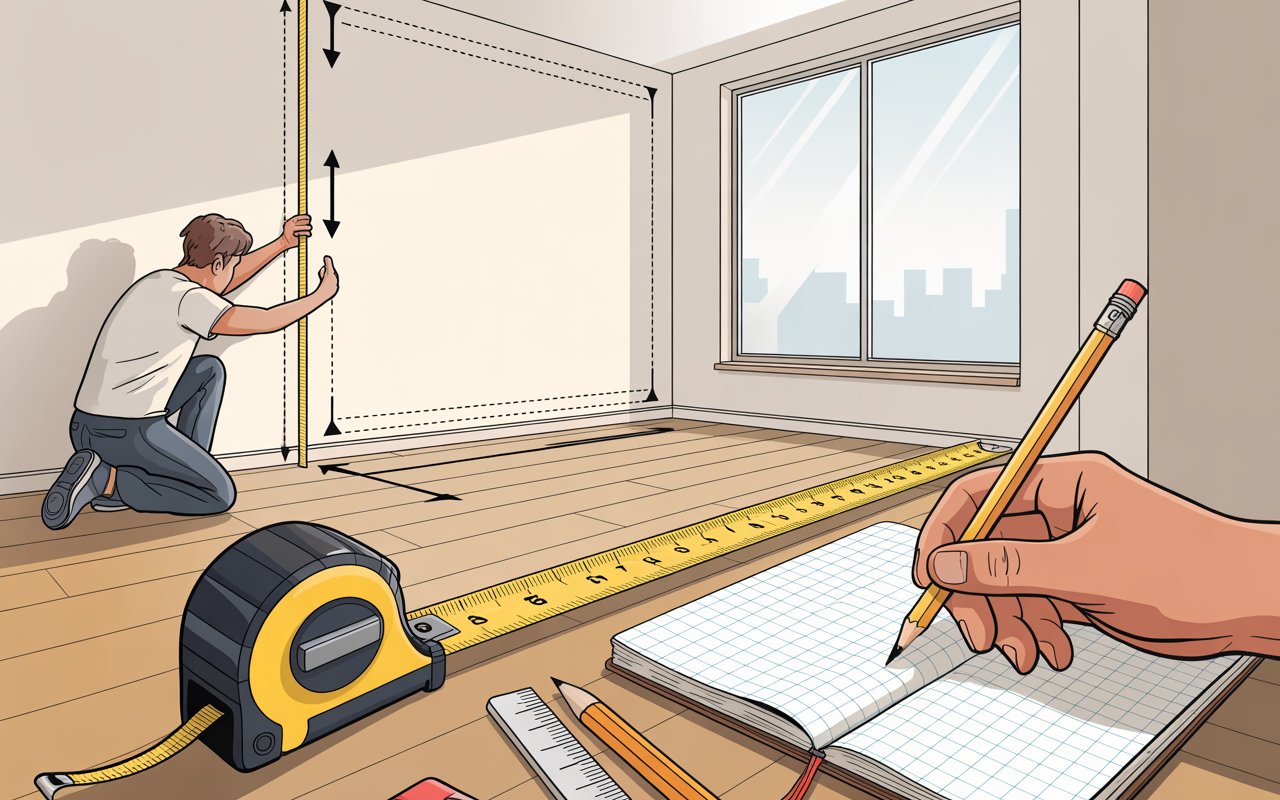
Buying new furniture can feel exciting. You imagine a stylish sofa in the corner, a cozy bed in the bedroom, or a dining table where everyone gathers. Then reality arrives — the sofa blocks the doorway, the bed leaves no walking space, or the dining chairs hit the wall every time someone sits down.
Measuring a room before buying furniture is one of the simplest steps you can take, yet many people skip it. Think of your room like a puzzle. Every piece has its place, and forcing the wrong-sized piece into the picture creates frustration. Accurate measurements help you avoid expensive mistakes and create a space that feels comfortable, practical, and visually balanced.
This guide explains how to measure your space correctly using easy steps that anyone can follow.
Understanding Why Measurements Matter
Many people estimate room size with their eyes. Unfortunately, our eyes can be misleading.
That spacious sofa at a furniture showroom may suddenly look oversized inside your living room. Furniture stores often display items in large open spaces, making pieces appear smaller than they really are.
Measuring provides several benefits:
- Prevents purchasing furniture that does not fit
- Saves money on returns and replacements
- Improves room flow
- Creates a balanced layout
- Makes decorating easier
Even a difference of a few inches can completely change how a room feels.
Gather the Right Tools Before Starting
You do not need expensive equipment. Basic measuring tools work perfectly.
Essential items include:
Tape measure
A standard tape measure is the most important tool. Choose one at least 25 feet long.
Notebook and pen
Write down measurements immediately instead of relying on memory.
Graph paper
Useful for sketching room layouts.
Smartphone
Take photos and use measurement apps if needed.
Pencil
Allows corrections while planning.
Laser measuring device
Optional, but helpful for larger spaces.
Having these tools ready saves time and keeps the process organized.
Measure the Length and Width of the Room
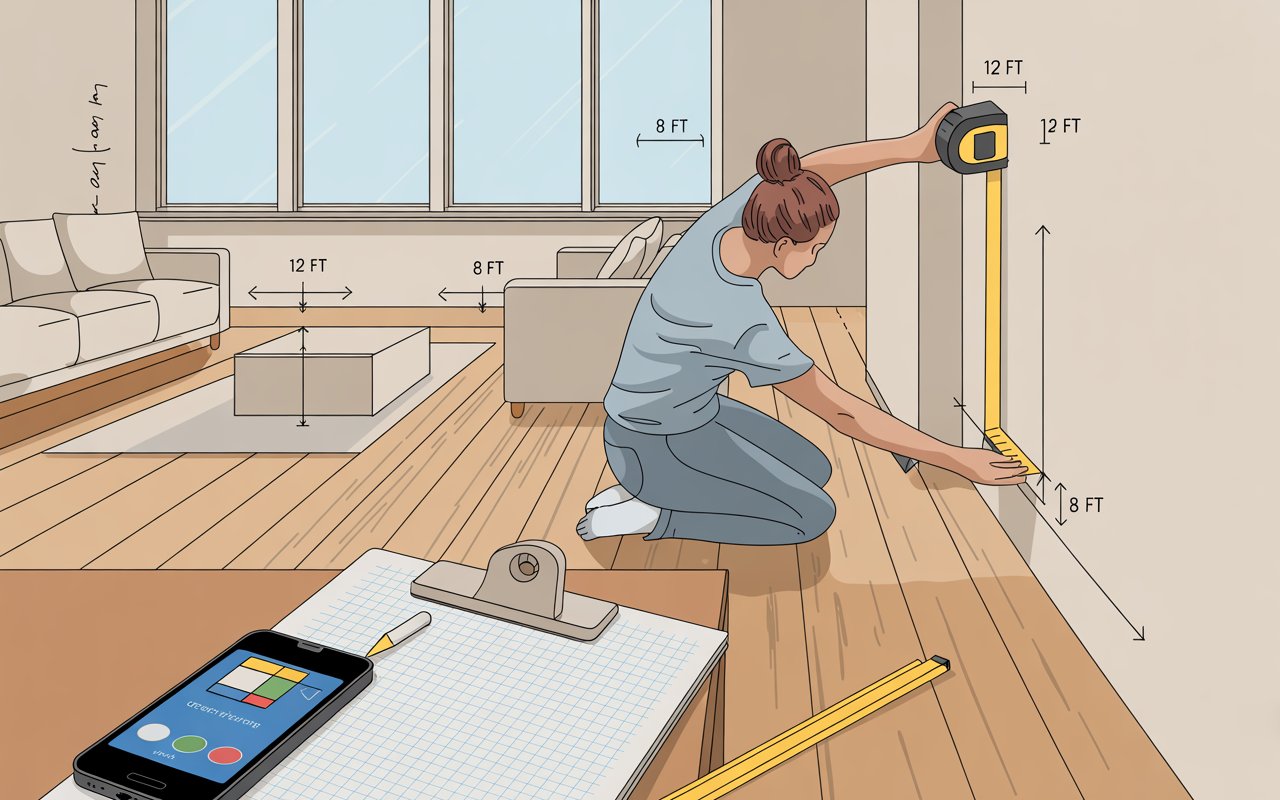
The first step is measuring the room itself.
Stand at one wall and extend the tape measure to the opposite wall.
Record:
- Length
- Width
Take measurements at floor level because walls may not always be perfectly straight.
For example:
- Length: 15 feet
- Width: 12 feet
Write dimensions clearly.
Example:
Living Room: 15′ × 12′
Repeat the process if the room has unusual corners or shapes.
Measure Ceiling Height
People often focus only on floor space and forget vertical dimensions.
Height becomes important for:
- Bookshelves
- Wardrobes
- Cabinets
- Bunk beds
- Tall decorations
Measure from floor to ceiling and record it.
For rooms with sloped ceilings:
Measure both the highest and lowest points.
This helps avoid buying furniture that feels oversized or cramped.
Identify Doors, Windows, and Fixed Features
Rooms contain more than empty walls.
Certain elements affect where furniture can be placed.
Measure and note:
Doors
Record:
- Width
- Swing direction
- Distance from corners
Windows
Measure:
- Width
- Height
- Distance from floor
Built-in features
Examples include:
- Fireplaces
- Columns
- Radiators
- Closets
- Wall shelves
These fixed objects act as boundaries during furniture placement.
Create a Basic Floor Sketch
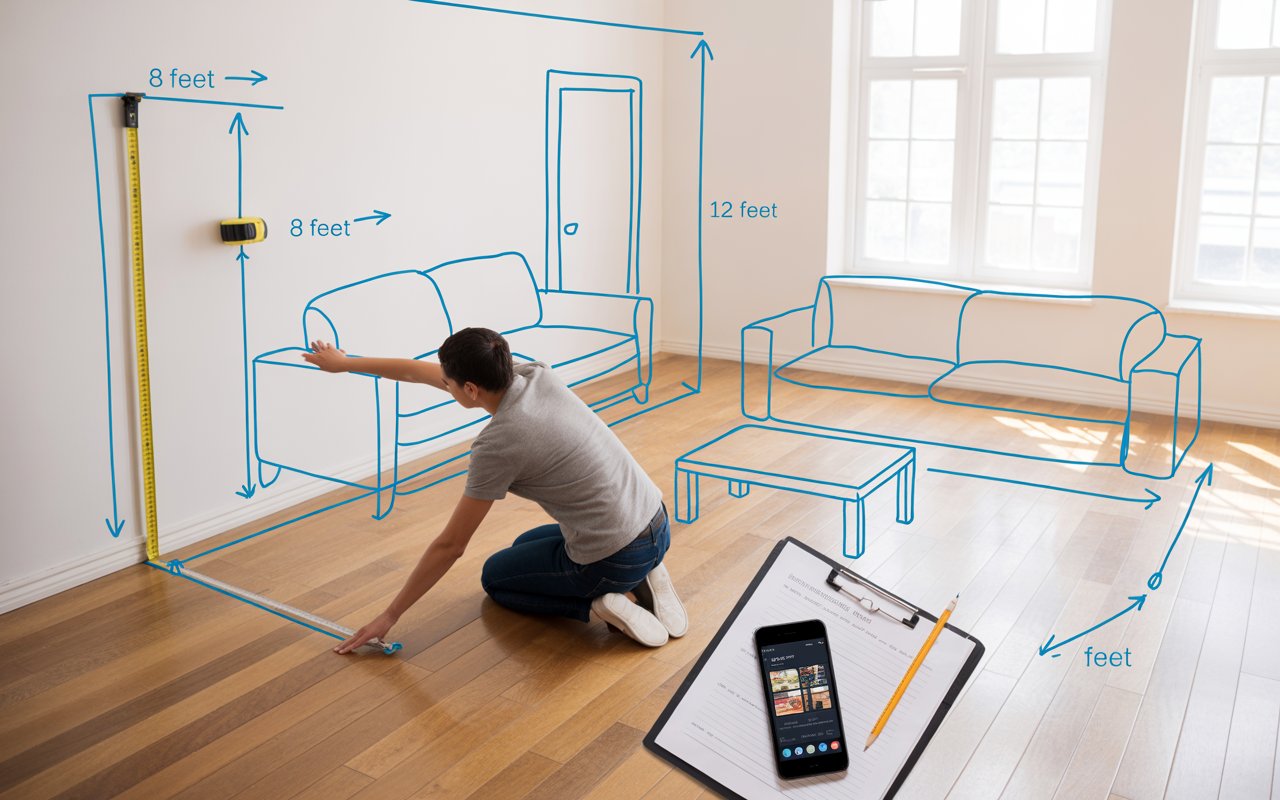
You do not need artistic skills.
Draw a simple shape representing the room.
Include:
- Walls
- Windows
- Doors
- Fixed structures
- Dimensions
Your sketch becomes a visual guide during furniture shopping.
Imagine trying to build a house without a blueprint. A room plan works in the same way.
Even a rough drawing provides clarity.
Leave Space for Movement and Comfort
Furniture should fit the room without turning it into an obstacle course.
People need space to walk comfortably.
General spacing guidelines:
Around sofas
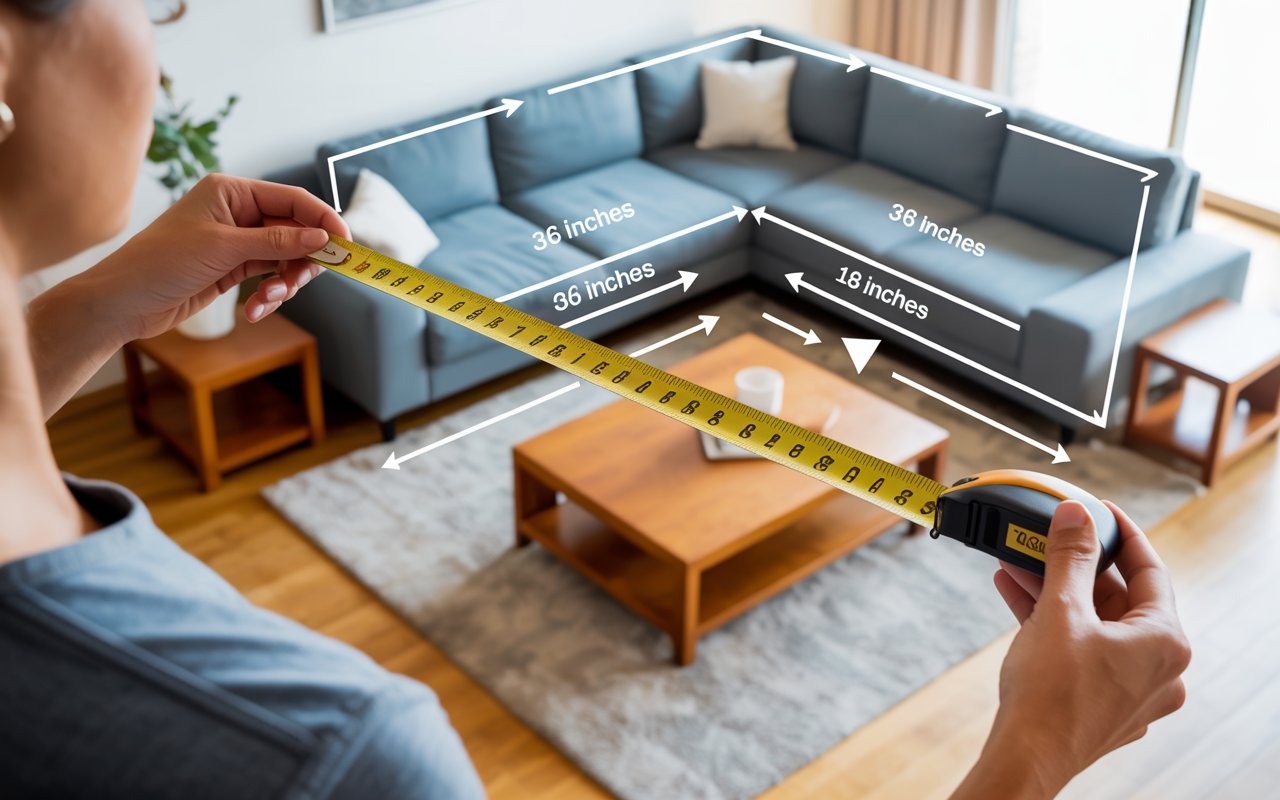
Leave approximately 18–24 inches around seating areas.
Dining tables
Allow about 36 inches behind chairs.
Beds
Leave at least 24 inches around sides.
Hallways and walkways
Maintain roughly 30–36 inches.
These clear paths make a room feel open and inviting.
Measure Entry Points and Access Areas
Many people remember room measurements but forget the route furniture must travel.
Imagine ordering a beautiful sectional sofa only to discover it cannot fit through the apartment door.
Measure:
- Front doors
- Interior doors
- Hallways
- Staircases
- Elevators
- Sharp corners
Record both width and height.
Furniture delivery becomes much easier when you know these dimensions beforehand.
Understand Furniture Dimensions Properly
Furniture measurements typically include:
Width
Distance from one side to the other.
Depth
Distance from front to back.
Height
Distance from floor to top.
For example:
A sofa description might say:
- Width: 84 inches
- Depth: 38 inches
- Height: 34 inches
Do not focus only on one measurement.
Depth often surprises buyers because large pieces can extend farther into a room than expected.
Use Painter’s Tape to Visualize Placement
A simple trick can prevent costly mistakes.
Take painter’s tape and outline furniture dimensions directly on the floor.
Create tape shapes for:
- Sofas
- Beds
- Tables
- Chairs
- Cabinets
Walk around the outlines.
Ask yourself:
- Does movement feel natural?
- Is there enough space?
- Does the room feel crowded?
Seeing furniture dimensions physically often changes initial ideas.
Consider Function Before Final Placement
A room should support daily life.
Think about how you use the space.
Questions to ask:
Living room
Will people watch television, read, or entertain guests?
Bedroom
Do you need extra storage or workspace?
Dining room
Will the area host large gatherings?
Home office
Do you require shelving and equipment space?
Furniture should support your routines rather than simply fill empty areas.
Plan for Future Flexibility
Life changes over time.
Families grow, needs change, and furniture gets replaced.
Leave some breathing room in your design.
Avoid packing every inch of available space.
A flexible layout offers benefits such as:
- Easier rearranging
- Better cleaning access
- Space for future additions
- Reduced clutter
A room with open space often feels larger and more relaxing.
Common Mistakes People Make
Even careful shoppers sometimes overlook important details.
Watch out for these common errors:
Guessing dimensions
Visual estimates often fail.
Ignoring door swings
Doors need room to open freely.
Buying oversized furniture
Large pieces can overwhelm small spaces.
Forgetting walkways
Crowded pathways create discomfort.
Skipping access measurements
Furniture still needs to enter the home.
Not considering room function
Appearance matters, but usability matters more.
Avoiding these mistakes saves time and stress.
Tips for Small Spaces
Smaller rooms require smart planning.
Helpful ideas include:
Choose multifunctional furniture
Examples:
- Storage beds
- Foldable tables
- Ottomans with hidden storage
Use vertical space
Tall shelves maximize storage.
Select lighter designs
Furniture with visible legs often creates a more open appearance.
Avoid overcrowding
Sometimes fewer pieces create a stronger design.
Small rooms can feel spacious with thoughtful planning.
Conclusion
Measuring a room for furniture may seem like a small task, but it can completely change the outcome of your decorating plans. A few minutes with a tape measure can save money, prevent frustration, and help create a room that feels comfortable and functional.
Think of measurements as a roadmap. Without one, you may still reach your destination, but the journey becomes far more complicated. By measuring carefully, considering movement space, and planning layouts before shopping, you can choose furniture that fits naturally into your home rather than fighting against it.
The result is not simply a room filled with furniture. It becomes a space that truly works for everyday living.
FAQs
1. How do I measure an oddly shaped room?
Break the room into smaller rectangles or sections, measure each part separately, and combine the measurements for a complete layout.
2. Should I measure furniture before buying online?
Yes. Product images can be misleading, so always compare furniture dimensions with your room measurements.
3. How much walking space should be left around furniture?
Most rooms work well with around 30–36 inches of walking space for comfortable movement.
4. What is the easiest way to visualize furniture placement?
Use painter’s tape on the floor to create outlines of furniture dimensions before making a purchase.
5. Why should doorways and hallways be measured?
Furniture must fit through entry points during delivery, otherwise even a perfectly sized item may not reach the room.