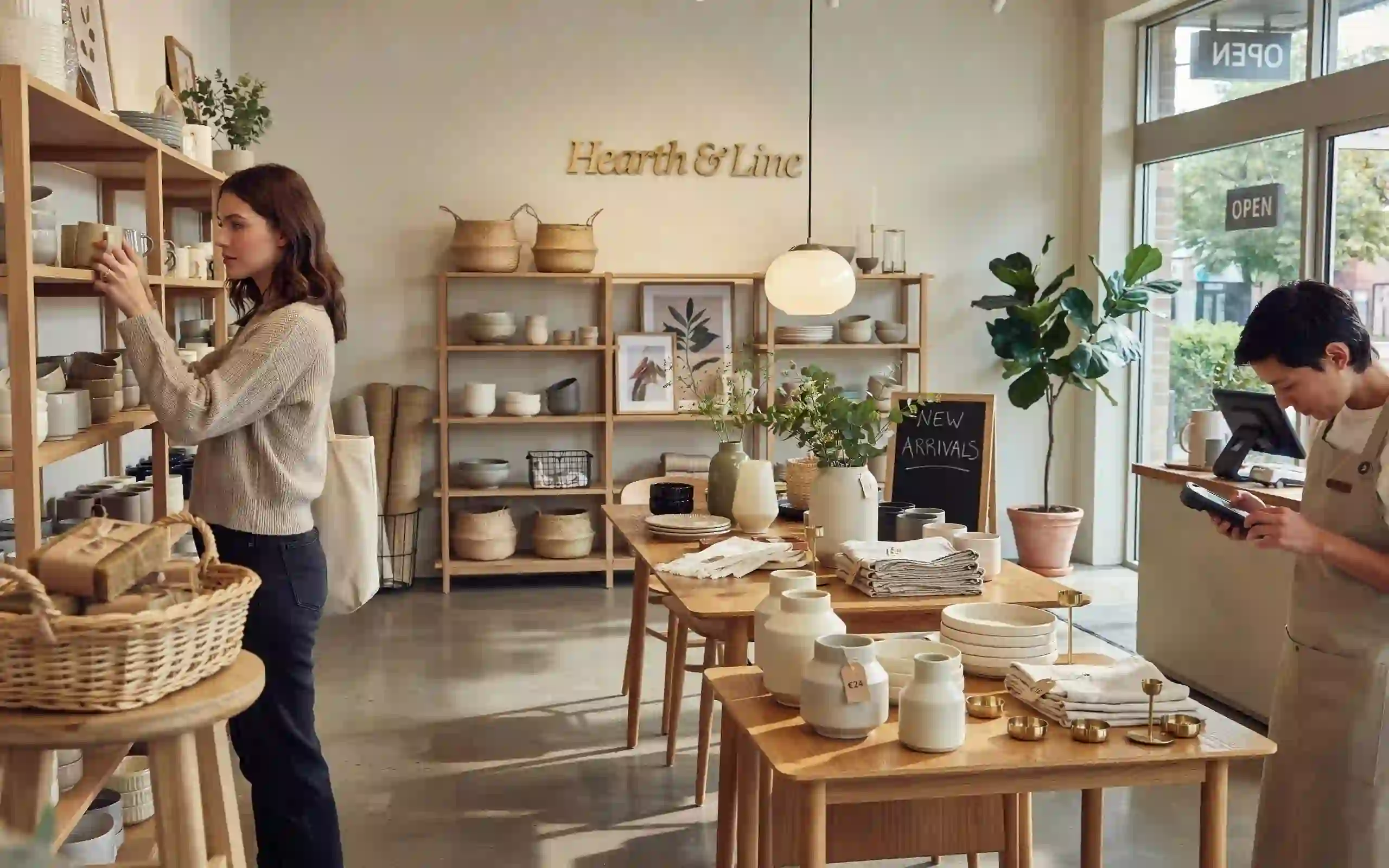
Introduction
Your home deserves better — but the wrong store wastes your time, money, and patience. Most people walk into generic retailers and leave with mismatched pieces that never quite work together. An at home store changes that. It gives you access to thousands of curated home products — furniture, wall décor, textiles, seasonal items, and storage — all under one roof at prices that actually make sense. This guide covers everything worth knowing before your next visit or purchase.
What Is an At Home Store — and Why Is It Different from Other Retailers?
An at home store is a specialty retail format focused entirely on home goods, décor, and lifestyle products. Unlike department stores that split attention across fashion, electronics, and cosmetics, an at home store puts all its floor space toward one purpose: making your living space better.
The product range at a dedicated at home store typically spans furniture, bedding, lighting, kitchen accessories, garden décor, mirrors, rugs, artwork, and seasonal displays. You get depth, not distractions.
At Home — the Texas-based home décor superstore chain — is one of the most recognized examples. With stores averaging 100,000 square feet, it carries over 50,000 products per location. That scale makes a meaningful difference when you’re trying to match a specific style or complete a full-room setup.
What Products Can You Actually Find at an At Home Store?
The product lineup at a well-stocked at home store covers far more ground than most shoppers expect. Here is a breakdown:
Furniture:
- Sofas, sectionals, and accent chairs
- Dining tables, benches, and bar stools
- Bedroom furniture including bed frames and dressers
- Office desks and shelving units
Décor & Accents:
- Wall art, framed prints, and canvas panels
- Mirrors in every size and frame style
- Sculptures, vases, and decorative objects
- Clocks, candle holders, and lanterns
Textiles & Soft Goods:
- Area rugs (multiple sizes, patterns, materials)
- Throw pillows and blankets
- Curtains, drapes, and window panels
- Bedding sets and duvet covers
Seasonal & Holiday:
- Christmas trees, wreaths, and garlands
- Fall harvest decorations
- Spring and summer outdoor entertaining items
- Halloween, Easter, and other holiday-specific displays
Outdoor & Garden:
- Patio furniture and cushions
- Planters, garden statues, and bird baths
- Outdoor string lights and lanterns
Storage & Organization:
- Baskets, bins, and decorative boxes
- Shelving systems and wall-mounted organizers
- Closet accessories and under-bed storage
This variety is exactly why serious home decorators return to an at home store repeatedly — you rarely need to go anywhere else.
How Does an At Home Store Compare to IKEA, HomeGoods, and Wayfair?
| Feature | At Home Store | IKEA | HomeGoods | Wayfair |
| Store Size | Very large (up to 120,000 sq ft) | Large | Medium | Online only |
| Price Range | Budget to mid-range | Budget | Budget to mid-range | Budget to premium |
| Product Count per Location | 50,000+ | ~10,000 | Varies (off-price) | Millions online |
| Furniture Selection | Strong | Very strong | Limited | Very strong |
| Seasonal Décor | Excellent | Limited | Good | Good |
| In-Store Experience | Browsing-focused | Showroom model | Treasure-hunt format | No in-store |
| Assembly Required | Sometimes | Usually | Sometimes | Sometimes |
| Return Policy | 90-day standard | 365 days | 30 days | 30 days |
| Design Inspiration | Room vignettes | Room setups | Inconsistent | Online lookbooks |
Each retailer serves a different shopping personality. IKEA wins on flat-pack furniture systems. HomeGoods offers off-price deals with a discovery element. Wayfair delivers massive online selection. But for walking through a large, well-organized space to find décor, textiles, and seasonal items in one trip, an at home store format is hard to beat.
How to Shop an At Home Store Without Overspending
Smart shoppers treat an at home store visit like a strategy, not a stroll. The scale of inventory can feel overwhelming, and without a plan, you end up buying things that don’t work at home.
Before you go:
- Measure your space. Know your wall dimensions, floor area, and ceiling height.
- Take photos of the room you’re decorating — reference them in-store.
- Set a firm budget and decide on one to three items you’re actively looking for.
- Identify your style (modern farmhouse, contemporary, transitional, boho) so you filter faster.
While you’re shopping:
- Start with the largest item you need (a rug or sofa) and build around it.
- Pick up a small basket for smaller items so your hands stay free.
- Check clearance sections first — at home stores rotate inventory seasonally, meaning great pieces get marked down regularly.
- Don’t buy lighting without knowing your existing fixture type (ceiling mount, plug-in, hardwired).
At checkout:
- Sign up for the store’s rewards or email list before purchasing — first-purchase discounts are common.
- Check if a price-match policy applies if you saw a lower price elsewhere recently.
Which Decorating Styles Does an At Home Store Support Best?
An at home store stocks products across many interior design styles, but certain aesthetics get more floor space and SKU depth than others. Here’s what you’ll consistently find represented:
Modern Farmhouse: Shiplap-style frames, neutral linen textiles, galvanized metal accents, barn wood finishes. This style dominates many at home store floor plans.
Traditional / Classic: Ornate mirrors, rich wood tones, formal candleholders, patterned upholstery. Strong showing in holiday and accent sections.
Bohemian / Eclectic: Woven textures, macramé wall hangings, rattan furniture, global-inspired patterns and terracotta tones.
Contemporary / Minimalist: Clean lines, monochromatic textiles, geometric shapes, matte finishes in black and white.
Coastal / Nautical: Rope accents, blue-and-white palettes, driftwood textures, sea-inspired sculptures.
Industrial: Metal pipe details, raw-edge wood, Edison bulb fixtures, concrete-finish accessories.
If you’re decorating in any of these directions, an at home store gives you enough variety to complete a coherent look without visiting five different shops.
What Are the Best Times of Year to Shop at an At Home Store?
Timing matters when shopping an at home store. Inventory shifts significantly by season, and clearance cycles create reliable windows for deep discounts.
End of Season Sales: After major holidays, leftover seasonal inventory drops 40–70%. The week after Christmas and the week after Halloween consistently produce the steepest markdowns.
Back-to-School (July–August): Strong deals on storage, dorm-friendly furniture, and small-space solutions.
Black Friday / Cyber Week: Major promotions across furniture, rugs, and full-room bundles.
Spring Changeover (February–March): Winter items clear out. Patio and garden collections arrive. Transitional room décor refreshes land on shelves.
Inventory Restocks: Most at home stores receive new floor inventory on a rolling weekly or biweekly cycle. If you don’t find what you want, returning within two weeks often reveals fresh stock.
How to Style Your Home Using Only At Home Store Finds
You can create a fully styled, visually appealing room using products from a single at home store visit. The key is working with a clear framework.
The Rule of Three: Group decorative objects in odd numbers. A shelf with three vases of different heights suggests deliberate design. Two or four feels symmetrical and flat.
Anchor with a Rug: Place your area rug first. Its color palette should guide every other choice in the room — pillow colors, wall art tones, and accent piece finishes.
Layer Textures: Mix hard and soft surfaces. Pair a wooden coffee table with a plush rug, add metal accents through lamp bases or picture frames, and introduce organic texture through woven baskets or ceramic vases.
Control Your Color Count: Choose three colors — one dominant (60%), one secondary (30%), one accent (10%). This applies to every décor purchase you make on the visit.
Use Vertical Space: Wall art, tall mirrors, and floor-to-ceiling shelving make rooms feel larger and more complete. A shelf with three vases of different heights suggests deliberate design. Add One Statement Piece: A bold mirror, an oversized piece of wall art, or a sculptural floor lamp gives a room personality and becomes a natural focal point.
At Home Store for Outdoor Spaces: What’s Available?
Outdoor living is one of the strongest categories at a dedicated at home store. The outdoor section typically covers:
- Seating: Chairs, loveseats, sectionals, hammock chairs, and swing seats in weather-resistant materials.
- Tables: Dining tables, side tables, and coffee tables in aluminum, teak, or powder-coated steel.
- Lighting: String lights, solar lanterns, pathway lights, and tabletop LED candles.
- Planters and garden décor: stepping stones, birdbaths, garden statues, and planters of different sizes made of ceramic, terracotta, metal, and resin.
- Outdoor Rugs: UV-resistant polypropylene rugs designed for patios and porches.
- Seasonal Displays: Spring and summer-specific items including patriotic décor, tropical themes, and entertaining essentials.
Outdoor inventory peaks from March through August. If you’re building a patio setup from scratch, visiting an at home store in early spring gives you the widest selection before popular pieces sell out.
What Do Customers Actually Think About Shopping at an At Home Store?
Real customer feedback on at home store shopping experiences consistently highlights a few recurring themes.
What shoppers love:
- The sheer size of inventory makes it easy to find multiple matching pieces in one trip.
- Prices are fair, especially on rugs, mirrors, and seasonal décor.
- The frequent stock rotation means something new appears on nearly every visit.
- Clearance sections produce genuine bargains — not just items no one wanted.
What shoppers find challenging:
- Large store formats require time. Budget at least 60–90 minutes for a productive visit.
- Assembly instructions on some furniture pieces need improvement.
- Not all locations carry identical inventory, so online inventory lookups before driving in saves frustration.
- Checkout lines during peak seasons (pre-Christmas, pre-Halloween) can run long.
These observations come from verified consumer review platforms including Google Reviews and Trustpilot-listed retail feedback, as well as survey data compiled by retail industry analysts at the National Retail Federation.
How to Use an At Home Store’s Online Platform Effectively
Many at home store chains now offer full e-commerce platforms alongside physical locations. Using both channels together gives you the best results.
Check availability online before visiting: Product pages show in-store availability by ZIP code. This prevents wasted trips.
Use the online lookbook or room inspiration section: Most at home store websites publish styled room galleries. These show exactly how products look together — much more useful than viewing items in isolation.
Set up price alerts or wish lists: Online accounts let you save items and get notified when prices drop or clearance discounts apply.
Curbside and in-store pickup: For heavy items like rugs or large décor pieces, ordering online for in-store pickup saves you carrying items through a 100,000-square-foot store.
Review the return policy online before ordering: Understanding the return window and process saves stress if a piece doesn’t work at home once you see it in your space.
FAQs About At Home Store
What is At Home store known for?
At Home store is known for carrying one of the largest in-store selections of home décor and furnishings available in a physical retail format. With over 50,000 products per location, it covers everything from furniture and rugs to holiday décor and garden accessories at competitive prices.
Is At Home store cheaper than HomeGoods?
Generally, yes — especially on furniture, large rugs, and wall décor. HomeGoods operates an off-price model with constantly rotating, one-off inventory. Comparison shopping and return visits are more predictable because At Home offers constant SKUs at predetermined daily pricing. For seasonal décor post-holiday, HomeGoods clearance sometimes beats At Home prices.
Does At Home store offer a rewards program or credit card?
At Home offers an Insider Perks rewards program that provides members with regular discount coupons, early access to sales, and bonus reward points on purchases. Checking the current program details on their official website before shopping ensures you’re taking full advantage of available savings.
Can I find furniture at an At Home store?
Yes. Furniture is a growing category at At Home store, covering accent chairs, sofas, dining sets, bed frames, and outdoor seating. The selection skews toward mid-size pieces and accent furniture rather than large bedroom or living room collections. For a complete furniture room package, supplementing with a furniture specialist makes sense.
How often does At Home store change its inventory?
At Home store rotates seasonal collections four to five times per year, aligned with major holidays and seasonal changes. Core product lines remain consistent, but limited seasonal collections and clearance transitions happen regularly. Visiting every six to eight weeks reliably surfaces new finds.
Is At Home store good for small apartments?
It depends on what you need. At Home carries a strong range of mirrors, wall art, storage baskets, and accent pieces that work well in compact spaces. Furniture options tend toward standard sizes rather than space-saving designs, so small-space shoppers should measure carefully before purchasing. The décor and textile sections offer excellent value for apartment styling on a budget.
Final Thoughts: Make Your At Home Store Visit Work for You
An at home store gives you something rare in retail — one large, well-stocked place where a full room transformation is genuinely possible in a single trip. The key is walking in prepared: know your measurements, your style direction, and your budget ceiling.
Whether you’re furnishing a new place from scratch, refreshing a tired room, or sourcing seasonal décor for a special occasion, the right at home store visit pays off. Start with the clearance section, anchor your choices around a rug or large statement piece, and build from there.
If you found this guide useful, bookmark it for your next shopping trip or share it with someone who is setting up a new space. Have a specific room challenge you’re working through? Drop it in the comments — detailed questions get detailed answers.
Sources & References
- At Home Group Inc. — Official brand information and store footprint data: athome.com
- National Retail Federation — Consumer spending behavior and home goods retail trends (nrf.com)
- Statista — U.S. home furnishings market size and retail channel data (statista.com)
- Houzz — Annual Home & Design Trend Survey, consumer preferences in home décor retail
- Consumer Reports — Retailer comparison data, return policy tracking, and shopper satisfaction scores